A four-inch hole in a bedroom wall and the identical four-inch hole in the ceiling above it are not the same repair. Ask three contractors to quote both and the ceiling number comes back thirty to sixty percent higher every time, on a patch that uses the same fifty cents of joint compound. Homeowners assume that gap is padding. It isn’t.
I have priced drywall work since 1997, ceilings included, and the honest answer is that gravity changes the math on almost every part of the job: how fast a finisher can work overhead, how thick a coat can go on before it sags, how a texture gets matched without falling back onto the crew, and whether anyone needs to build staging just to reach the patch. None of that shows up in the size of the hole, which is the number most people fixate on. For the wall-only version of this math, see drywall repair cost; this page is the ceiling premium on top of it.
Below are the 2026 ranges I actually write on ceiling drywall repair cost quotes, broken out by what is really driving your job, the repair-versus-replace math, and the five things that push an estimate to the top of its range instead of the bottom.
Ceiling drywall repair cost by job type
These are US ranges as of August 2026, for work finished and ready for paint. If the damage came from a leak, roof, plumbing, HVAC condensate, or an ice dam, the number depends far more on the source than on the job type below, and I have written that up separately in water damage ceiling repair cost. This table covers everything else: cracks, holes, nail pops, sagging, and full replacement.
| Job | What it involves | Typical quote |
|---|---|---|
| Nail pops, a handful | Reset fasteners, two coats, texture touch-up overhead | $200–$400 |
| Small hole, under 6 in (fixture cutout, impact) | Mesh patch, three coats, texture match | $250–$450 |
| Hairline crack, taped properly | Cut out, tape, feather 12–14 in wide, overhead | $275–$500 |
| Large hole, 12 in and up | Backing, cut-in piece, tape, three coats | $400–$800 |
| Sagging section, structural cause | Re-fasten or sister joists, replace board | $800–$2,200 |
| Half ceiling replaced | Remove, hang, tape, finish, texture | $900–$1,800 |
| Full ceiling, average bedroom | Remove, hang, tape, finish, texture | $1,400–$3,200 |
Most single-room ceiling jobs I quote land between $400 and $1,400. Anything quoted under $200 for real ceiling work, in 2026, is either missing a coat or skipping the texture match, and one of those is going to be visible from the couch.
Why ceiling drywall repair cost runs higher than the identical wall job
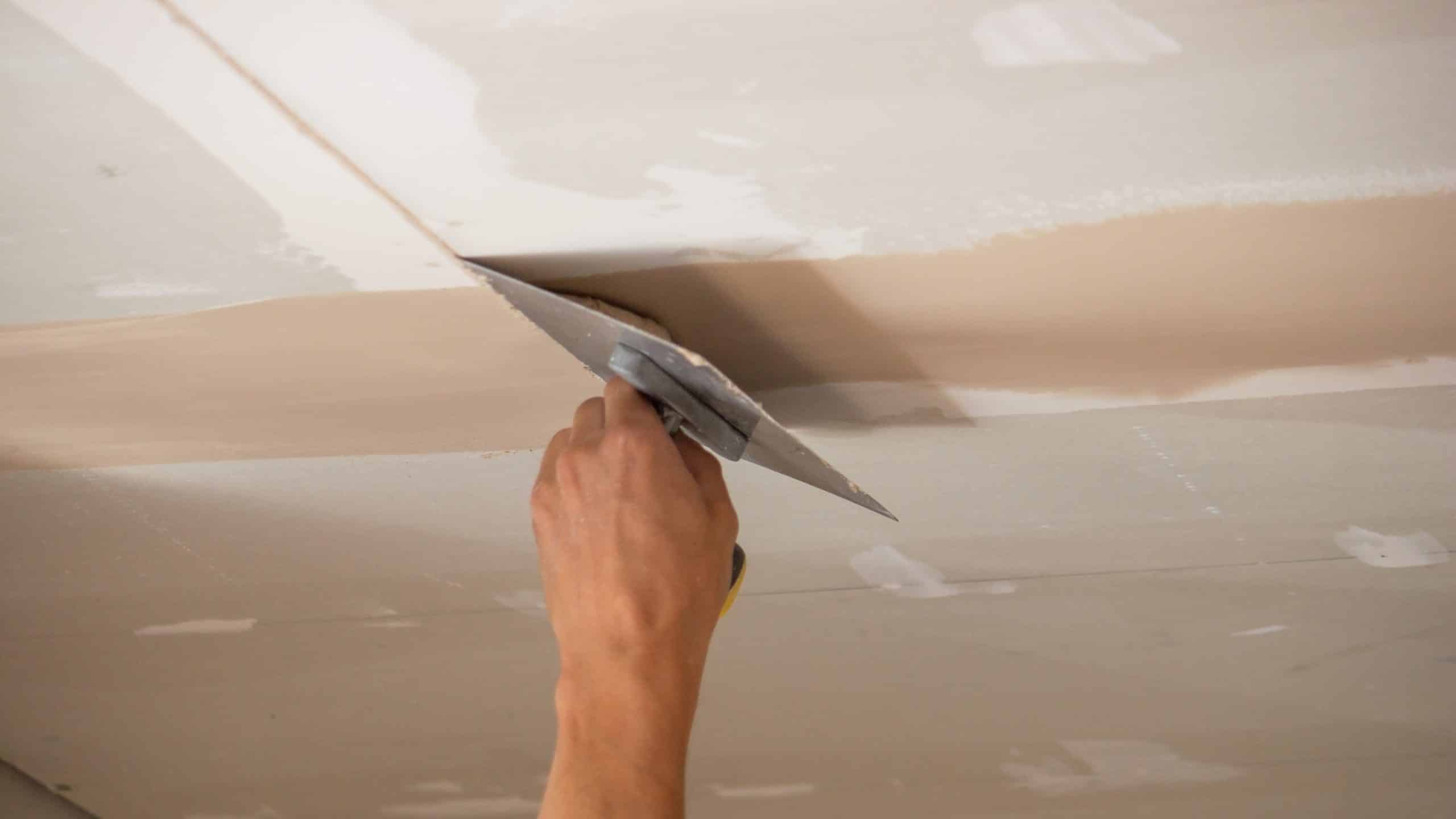
Take the fastest job on the list, resetting a handful of nail pops. On a wall, one finisher stands flat-footed, drives a screw, loads a knife, and moves down the stud line. On a ceiling, the same finisher works with both arms above shoulder height, on a ladder or stilts, repositioning every three or four feet because nobody can safely reach much more than that without moving their base. The screws are identical. The hourly output is not.
- Compound sags before it sets. On a wall, gravity pulls a loaded knife stroke down into the surface, which is roughly what you want. On a ceiling, the same wet compound pulls off the surface and onto the floor, the ladder, or the finisher. The fix is thinner coats applied more slowly and checked more often, which means more trips for the same square footage, not fewer.
- Texture match is closer to mandatory. Far more US ceilings still carry their original spray texture than walls do, because ceilings get repainted less often and rarely get the flat-wall remodel a living room wall eventually gets. Matching it overhead means spraying or hand-troweling above your own head, and overspray falls straight back down onto the person holding the tool, which slows the pass. The full identification key for whatever pattern you’re matching is in drywall texture types.
- Access is a separate line item. A wall repair needs, at most, a step stool. A ceiling repair above roughly 10 ft, a stairwell, or a vaulted living room needs a podium ladder or actual scaffolding, and somebody has to build it, move it, and take it back down. That cost does not exist on the equivalent wall job.
- It’s frequently a two-person job. A wide ceiling patch is awkward to hold and float solo, so a lot of finishers work ceilings in pairs, one supporting the piece while the other screws and tapes. Two people on the clock for one repair is usually the single biggest line-item gap between a wall quote and a ceiling quote.
- Debris falls through the crew’s breathing zone. Sanding a ceiling patch means dust drops straight down through the air the whole crew is working in, for the whole job, not just settling on a drop cloth below a wall. Containment and cleanup take longer for the identical square footage.
None of that is negotiable away. A contractor who quotes ceiling work at wall-job prices is either underbidding a job they will regret, or planning to skip one of the five items above, and the texture match is usually the one that goes first.
What’s actually driving your ceiling repair
Two ceilings with the same size patch can land $500 apart, and the cause is almost always the reason, not the contractor. If you haven’t traced what’s actually happening yet, reading a water stain or checking the ceilings section is the place to start before you price anything. Otherwise, work out which row below you actually have.
| What you’re seeing | Likely cause | Where to go next |
|---|---|---|
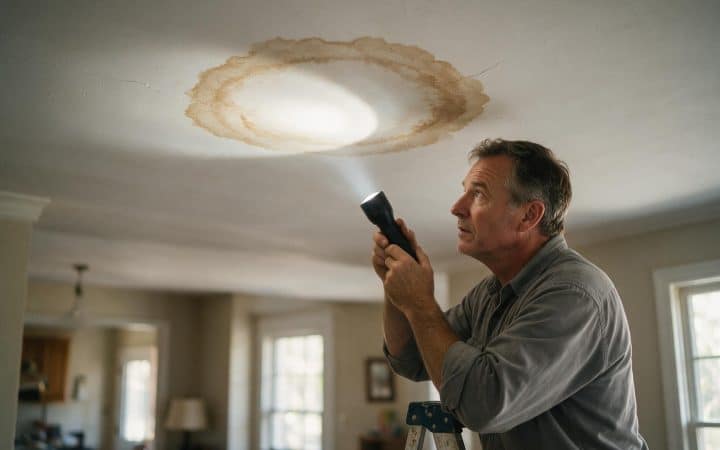
| Brown ring, soft or firm, no active drip | Water damage, source may or may not be fixed | Water damage ceiling repair cost |
| Crack running along a wall-ceiling corner, returns after painting | Truss uplift or seasonal framing movement | How to fix cracks in walls |
| Ceiling visibly bowed or lower than it used to be | Structural: fastener failure, wet framing, undersized board | How to fix a sagging ceiling |
| Small dimples in a grid pattern, fasteners visible | Nail or screw pops from framing shrinkage | How to fix nail pops in drywall |
| Round hole from a fixture, fan, or access panel | Impact or intentional cutout | How to patch a large hole in drywall |
| Musty smell or a patch that keeps returning after painting | Growth inside the cavity, not just on the surface | How to get rid of mold on walls |
| Textured ceiling, house built before 1980 | Possible asbestos-containing texture | Popcorn ceiling asbestos |
The row people skip most is the last one. If the ceiling has a sprayed or hand-troweled texture and the house was built, or last had that ceiling redone, before 1980, get it tested before anyone sands, scrapes, or cuts in to assess the damage. A lab sample runs $30 to $60 and decides whether you’re pricing an ordinary patch or a licensed abatement job. Full detail on the dates, the test, and what a positive result changes about the price is in popcorn ceiling asbestos. If removal, rather than a patch, turns out to be the job, the cost split by scenario is in popcorn ceiling removal cost. For repairs unrelated to the ceiling at all, the broader drywall repair section covers walls the same way.
Textured ceiling, house built before 1980? Test before you price the repair
Sprayed and hand-troweled ceiling textures made before the US restrictions of 1977 and 1978 can contain asbestos, and existing stock kept getting installed into the mid-1980s. Cutting, sanding, or scraping to assess the damage is exactly the wrong first move. A lab sample runs $30 to $60 and decides which repair you’re actually pricing. See popcorn ceiling asbestos for the full process, and the disclaimer for where my advice stops.
Repair or replace: the ceiling drywall replacement cost question
Every ceiling estimate reaches the same fork. Patch what’s damaged, or take the whole plane down and start clean. The math takes about ten seconds once you know the size of the damage relative to the ceiling.
A patch under roughly 4 sq ft blends fine on a flat-painted ceiling and is almost always the cheaper call. Past that, or on a heavily textured ceiling, the labor to feather, sand, and texture-match a patch invisibly starts closing in on the cost of pulling the whole sheet and starting over, especially once a painter has to redo the entire ceiling anyway so a spot repaint doesn’t flash under the light. Full ceiling drywall replacement cost runs $2 to $6.50 installed per square foot in most markets, the same range I use in the water-damage cost breakdown, because the board, the labor, and the finish work cost the same whether gravity broke the ceiling or a leak did. On the wall side of the same decision, drywall water damage repair cost covers the equivalent math for vertical surfaces.
Three situations move me from patch to full replace almost automatically:
- Multiple old repairs are already visible. A ceiling with three prior patch outlines under a raking light is a ceiling where a fourth patch will show too. Replacing the sheet resets the surface instead of adding to the collage.
- The texture can’t be matched. Sand swirl, comb, and some hand-troweled finishes are close to impossible to blend into a patch. Removing and re-texturing the whole ceiling, covered in drywall texture types, is often faster than four failed attempts at matching one.
- Something above the ceiling needs access anyway. Rewiring, adding insulation, or running new ductwork through the joist bay means the ceiling is coming down regardless of how small the visible damage is. Patch the small hole and you’ll be cutting the same section open again within the year.
The board matters as much as the labor
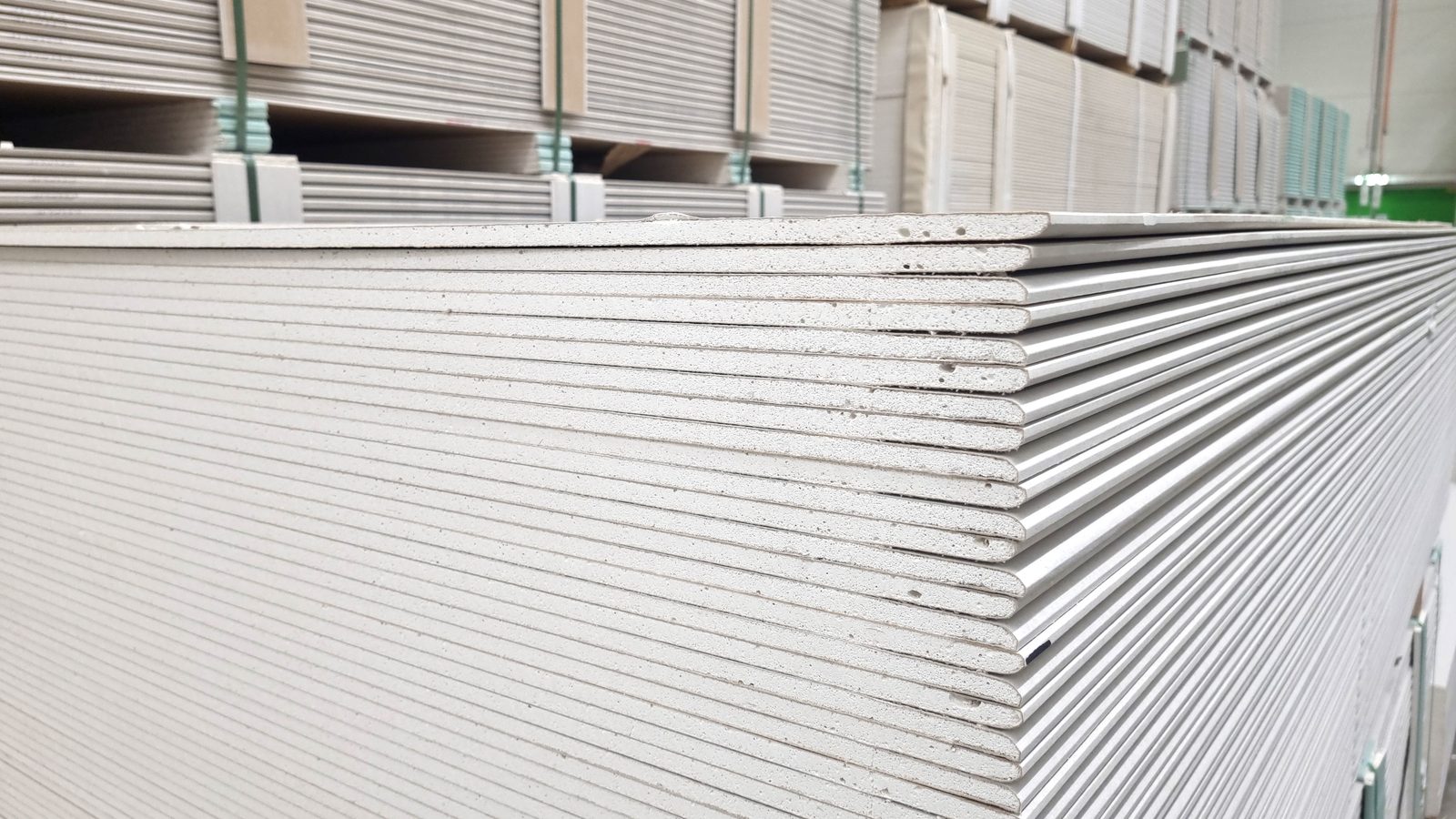
Most homeowners assume drywall is drywall. Ceilings are the one place where the board itself is part of the repair, not just a line on the material list.
Standard half-inch board is rated to span 16 in on center without sagging over time. Push it to 24 in on center, which plenty of production-built houses do to save framing lumber, and ordinary half-inch board will slowly bow between the joists over ten or fifteen years, whether or not anything ever leaked. That slow sag is why some ceilings develop a wavy, uneven surface with no crack, no stain, and no obvious cause. The fix isn’t a better patch. It’s five-eighths board, or half-inch board specifically rated for ceilings with a sag-resistant formulation, re-hung on the same joists.
This is also where the finish-level question from the GA-214 scale shows up on a ceiling. A Level 4 finish, three coats feathered wide and sanded, is the residential standard, and it’s what most ceiling patches are quoted to. A ceiling under a skylight or a bank of recessed lights, where light rakes across the surface at a low angle for part of the day, behaves like the raking-light walls I cover in that guide, and it sometimes needs a full skim coat, detailed in surface prep, to stop every future repair from showing.
Ask what board is going back up, not just what the patch costs
If your ceiling has sagged without a leak or a crack anywhere, ask the estimator whether the joist spacing and the board thickness actually match. A patch on the wrong board, at the wrong spacing, sags again. It’s a five-minute question a rushed quote will skip.
When DIY makes sense, and when a lift changes the math
A small hole in a flat-painted ceiling, in a closet or a low-traffic hallway, at a normal 8 ft ceiling height, is a genuinely reasonable Saturday project. Materials run $15 to $30, the tools are a taping knife and a sanding sponge, and the grit progression for the final pass is the same one I lay out in what grit to sand drywall.
Where DIY savings shrink fastest is texture and height, in that order. A failed knockdown or orange-peel match on a ceiling is more visible than the same miss on a wall, because ceiling light is almost always raking light. And a podium ladder or a mini scaffold rents for $40 to $75 a day, which eats a real chunk of the labor you were trying to save before you’ve spread a single coat. Past about 10 ft, or on a vaulted or stairwell ceiling where a straight ladder can’t sit safely, I tell homeowners to price the job rather than improvise the access. A fall from height is the one mistake on this list without a repair cost, just a much larger bill.
My rule after 29 years of quoting this work: if the ceiling needs anything you’d have to rent to reach it safely, get a price before you rent the ladder. The rental fee is usually the smallest number in that decision. And once the patch is dry and primed, painting the ceiling itself has its own technique, covered in how to paint a ceiling with a roller, so the repair doesn’t flash under the fixture once it’s done.
How to read a ceiling drywall repair quote
-
Check that access is a named line, not buried in labor
If the ceiling is above 10 ft or over a stairwell, staging or a lift should appear as its own line. If it doesn’t and the job clearly needs it, the quote is going to grow once someone actually looks at the space.
-
Confirm the texture match is priced, not assumed
Ask directly: is the texture being matched, and how many attempts are included before it’s billed as extra? A flat-painted ceiling skips this question entirely. A textured one does not.
-
Ask how many coats, and whether they’re feathered wide
Three coats, feathered 12 to 14 in past the damage, is the honest number for a taped ceiling repair. Fewer than that on a real patch is a corner that will show under a light fixture.
-
If water was involved anywhere, ask what confirmed the board is dry
A moisture meter reading, not a guess, should come before any patch goes on. Painting over a ceiling that hasn’t actually finished drying is the single most common reason a “finished” repair needs a second visit.
-
Get the finish level in writing
If GA-214 or a level number shows up on the quote, you’re dealing with someone who prices to the actual standard. If it doesn’t, ask which level is included, especially under a skylight or a bank of recessed lights.
Questions I get on site
How much does ceiling drywall repair cost on average?
Most single-room jobs I write land between $400 and $1,400, covering cracks, holes, nail pops, and small sagging repairs. A simple patch on a flat-painted ceiling can be under $300. A full ceiling replacement with texture runs $1,400 to $3,200 in most markets. Water-damaged ceilings follow a different range entirely, covered in water damage ceiling repair cost.
Why is ceiling drywall repair more expensive than wall repair?
Gravity. Compound sags overhead instead of setting where it’s placed, texture match is harder to fake, access above 10 ft needs staging, and a lot of ceiling patches take two people instead of one. None of that applies to the identical repair on a wall.
Is it cheaper to patch or replace a ceiling?
Patch, almost always, if the damage is under about 4 sq ft and the ceiling is flat-painted or has an easy texture to match. Replace when the ceiling already carries multiple old repairs, the texture can’t be blended, or something above it needs opening anyway.
Does homeowners insurance cover ceiling drywall repair?
Only if the cause is sudden and accidental, like a burst pipe or storm damage. Gradual causes, like a slow-leaking flashing detail or ordinary fastener pops from framing movement, are almost always treated as maintenance rather than a covered loss. Check your own policy rather than a summary of someone else’s.
How long does a ceiling repair take to dry before painting?
24 hours per coat in normal conditions for premixed compound, longer in a cold or humid room, since a ceiling patch is usually thinner per coat than a wall patch to keep it from sagging. Setting-type compound cuts that to a couple of hours per coat, which is why most ceiling crews use it for anything past one coat.
Can I repair ceiling drywall myself?
Yes, for a small hole or a handful of nail pops on a flat-painted ceiling at a normal height. Texture matching and anything above about 10 ft is where a first attempt usually costs more in redone work than hiring it out would have.
Does a textured ceiling cost more to repair than a flat one?
Yes, usually $100 to $300 more per job. Matching knockdown, orange peel, or a hand-troweled pattern overhead takes a test board, the right nozzle or tool, and sometimes a return visit if the first pass doesn’t blend. A flat, painted ceiling skips all of that.
What size ceiling repair needs a lift or staging?
Anywhere the ceiling sits above roughly 10 ft, or over a stairwell, open-plan great room, or vaulted space where a straight ladder can’t be set safely. That access cost is separate from the repair itself and should appear as its own line on the quote.
Figures on this page are ranges collected from US supplier listings and contractor quotes in August 2026. They are not a quote. Regional labor rates move them, sometimes by half, and access, texture, and height move them more than square footage does. How I put these numbers together is on the about page. I update the cost guides on the first of each month. If a number here is off in your market, tell me and I will correct it.