Surface Prep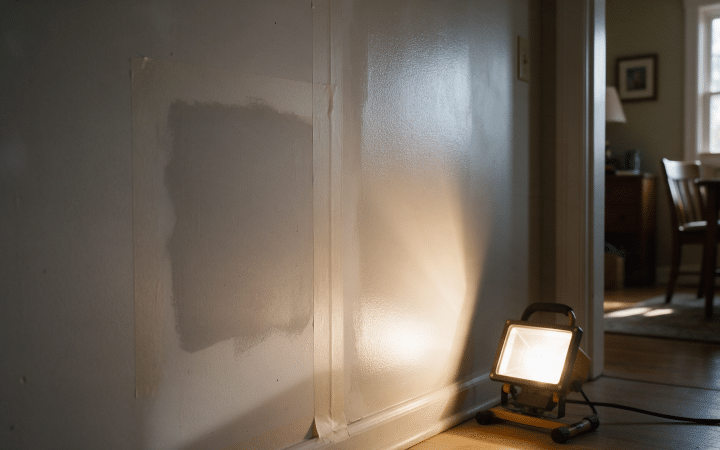
How should primer look on a wall: the flashing test before you paint
Primer that looks patchy or half see-through over a repair isn’t automatically a bad job. Here’s what even coverage actually looks like, why primer flashes over…
Primer that looks patchy or half see-through over a repair isn’t automatically a bad job. Here’s what even coverage actually looks like, why primer flashes over…
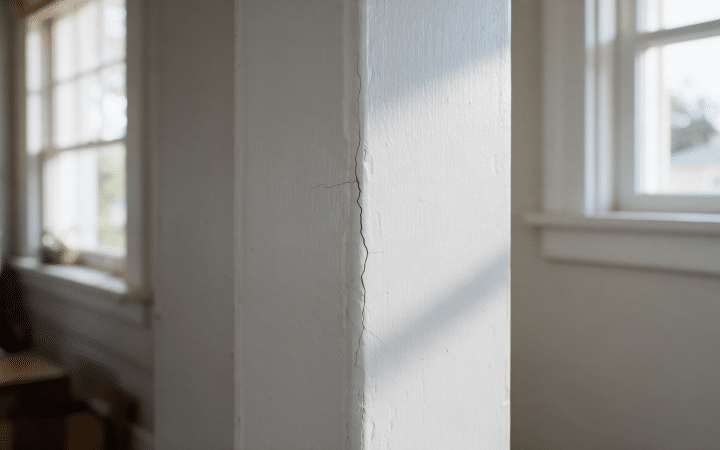
A crack at a wall corner is not one repair. Whether it starts at an inside tape line or a bent outside bead decides the method,…
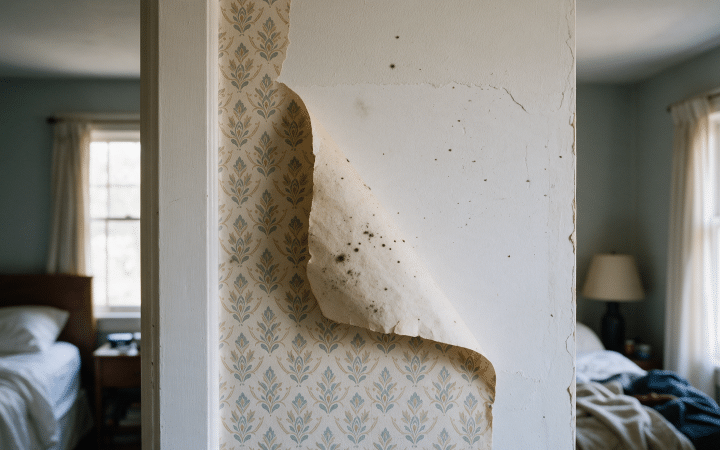
Mold behind wallpaper usually means water is reaching the wall and the paper is trapping it. Here is how to check without stripping, when the wall…
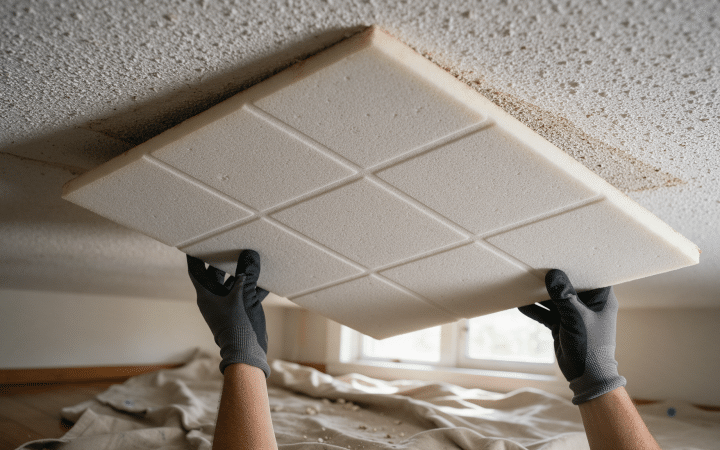
Skimming over popcorn ceiling texture rarely works the way it looks like it should. Here are the methods that actually cover it for good, and the…
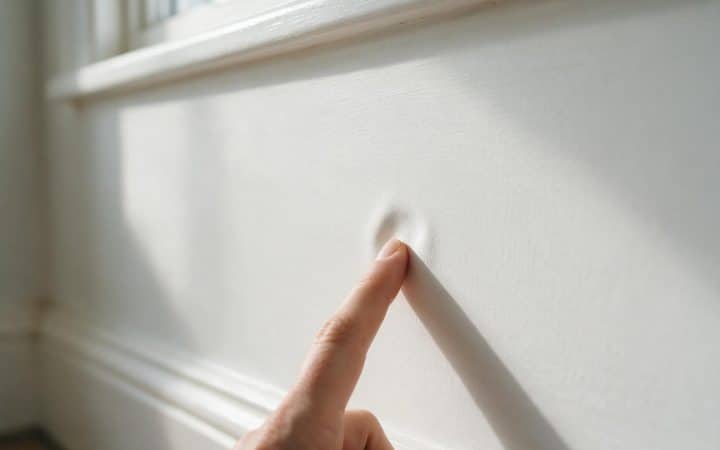
Dry to the touch and ready for a second coat aren’t the same thing, and neither is fully cured. Here’s what actually controls the clock, and…
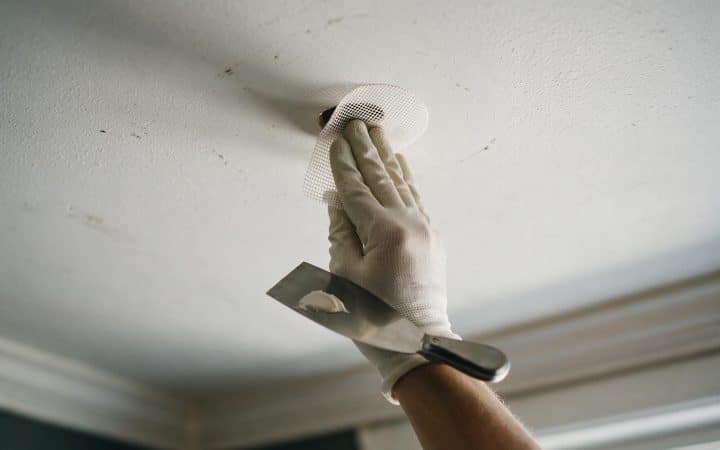
A nail hole patches the same overhead. Past that, gravity changes the method — why joint compound wants to sag on a ceiling, and how to…
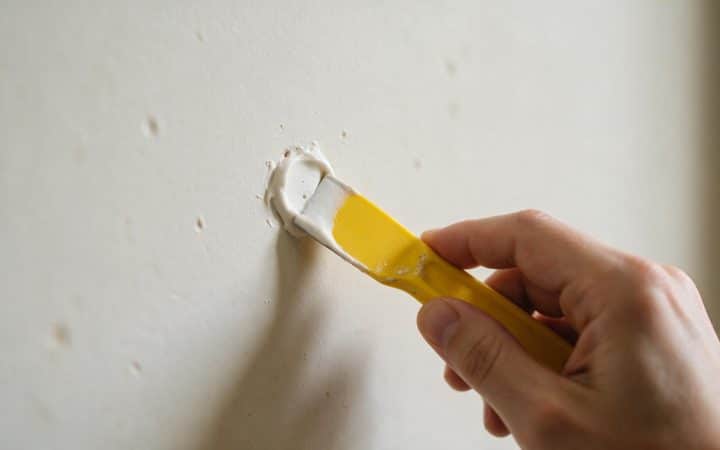
A nail hole, an anchor hole, and a doorknob ding all look like the same small problem. They’re not, and using the wrong fix on any…
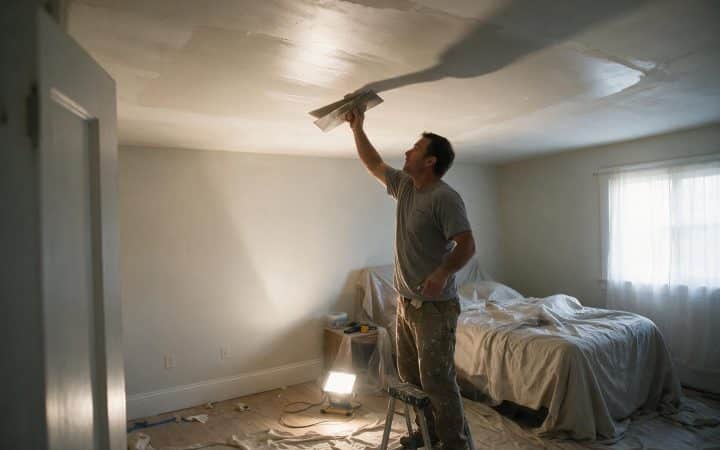
A wall skim coat and a ceiling skim coat use the same mud and different rules. Here’s why gravity, arm fatigue, and a short working window…
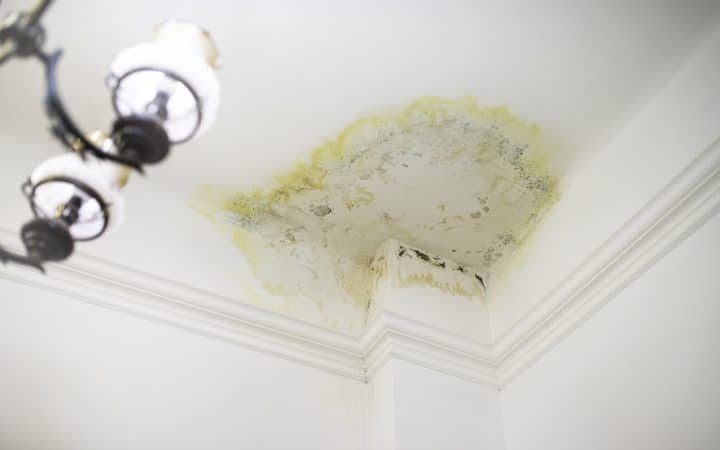
Not every ceiling stain needs a contractor. Here’s the three-part test I use on site to tell a twenty-minute primer job from one that needs a…
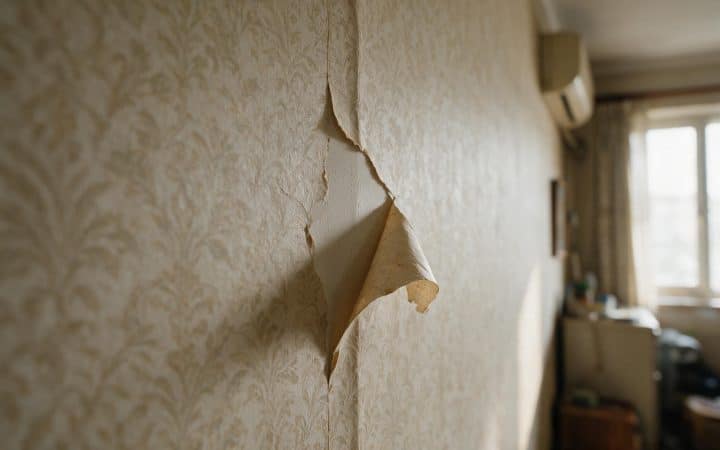
Peeling wallpaper has three different causes, and only one of them is fixed by regluing. Here’s how to tell which one you have before you reach…
Related silos
Holes from doorknobs to studs, corner bead, cracks that keep coming back, and nail pops.
Water stains that bleed through paint, popcorn removal, sagging panels, and hairline seams.
Black spots, condensation on cold walls, and the point where you stop and call someone.