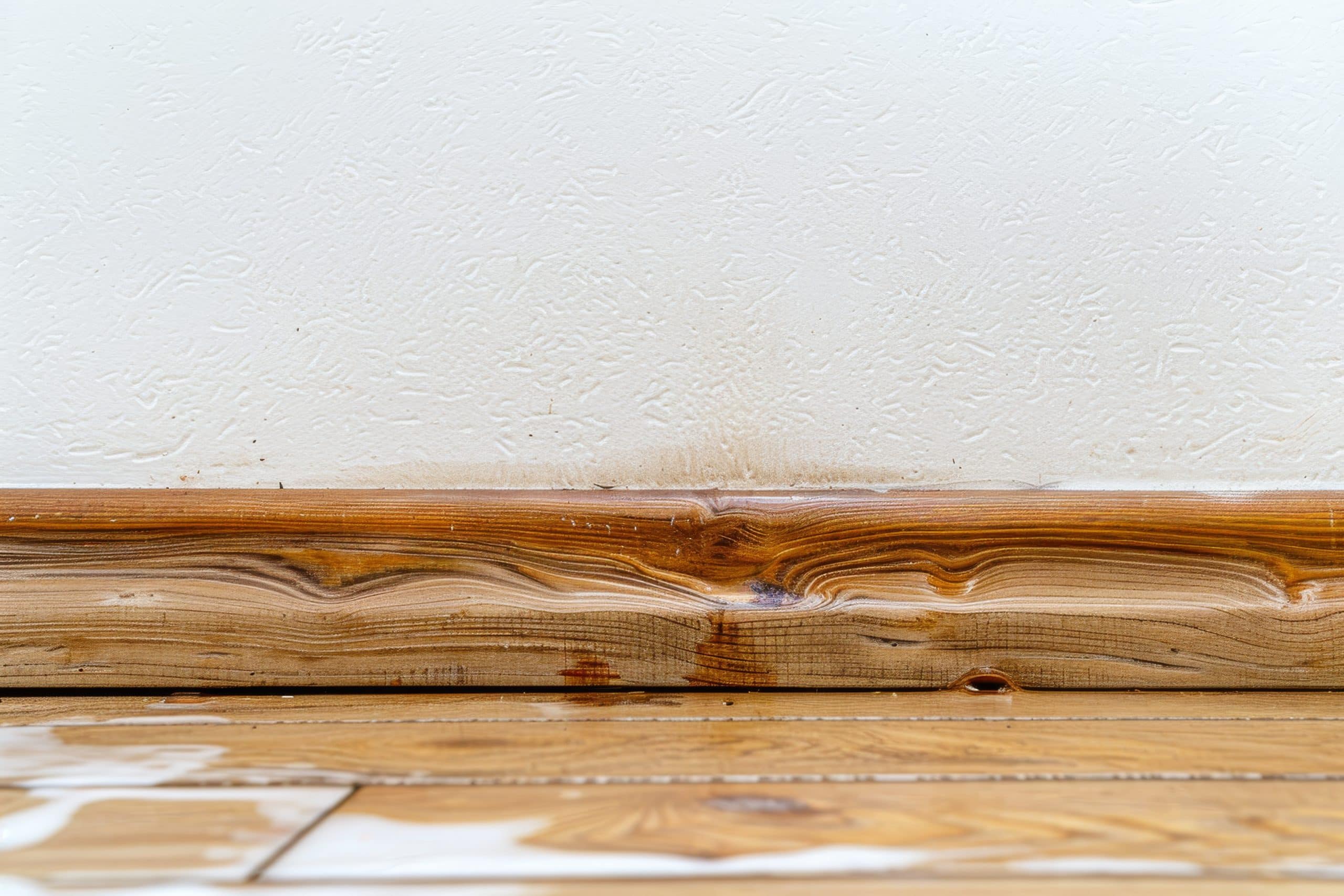
The call I get is almost always the same shape. Someone found a water stain six or eight inches up from a baseboard, got a quote, and the quote says the drywall comes out to roughly two feet off the floor. Then I get the second call, the one asking whether the first contractor was padding the job, because the stain never came close to two feet.
It wasn’t padding. Water moving through a wall does not behave like water moving through a ceiling, and that difference is the whole reason a drywall water damage repair cost on a wall does not scale the way people expect once they’ve seen a ceiling patch quoted. If you’re pricing a ceiling stain instead, our water damage ceiling repair cost guide covers that side of the house. This one is about the water that shows up at floor level and climbs, and the numbers below are the 2026 ranges I’m actually writing on quotes for it, priced since 1997.
Why wall water damage doesn’t stay where you can see it
Drywall is compressed paper and gypsum, and both of those materials pull water sideways and upward through capillary action, the same effect that lets a paper towel climb out of a shallow dish. Set water on a floor against the bottom of a wall and the drywall does not wait for the water level to rise. It draws the water up into itself, through the paper facing and into the gypsum core, well past whatever line ends up visible on the painted surface.
Restoration crews working to the IICRC S500 standard plan for this specifically. Their guidance is that a waterline sitting at the baseboard can saturate drywall another 12 to 18 inches above the visible mark within hours, and a flood cut, the horizontal line where damaged board gets removed, is typically set a minimum of 12 to 24 inches above the highest water mark rather than at the mark itself, with the exact height depending on the water category and what the moisture readings actually show. Cut exactly where the stain ends and you’ve removed the part everyone could already see while leaving the wet part behind the new patch.
That’s the piece a lot of homeowners never get told, and it’s why a wall quote can look aggressive next to what your eyes are measuring. The eye measures the stain. The moisture meter measures the water, and the two numbers are rarely the same.
The check you can do before anyone arrives
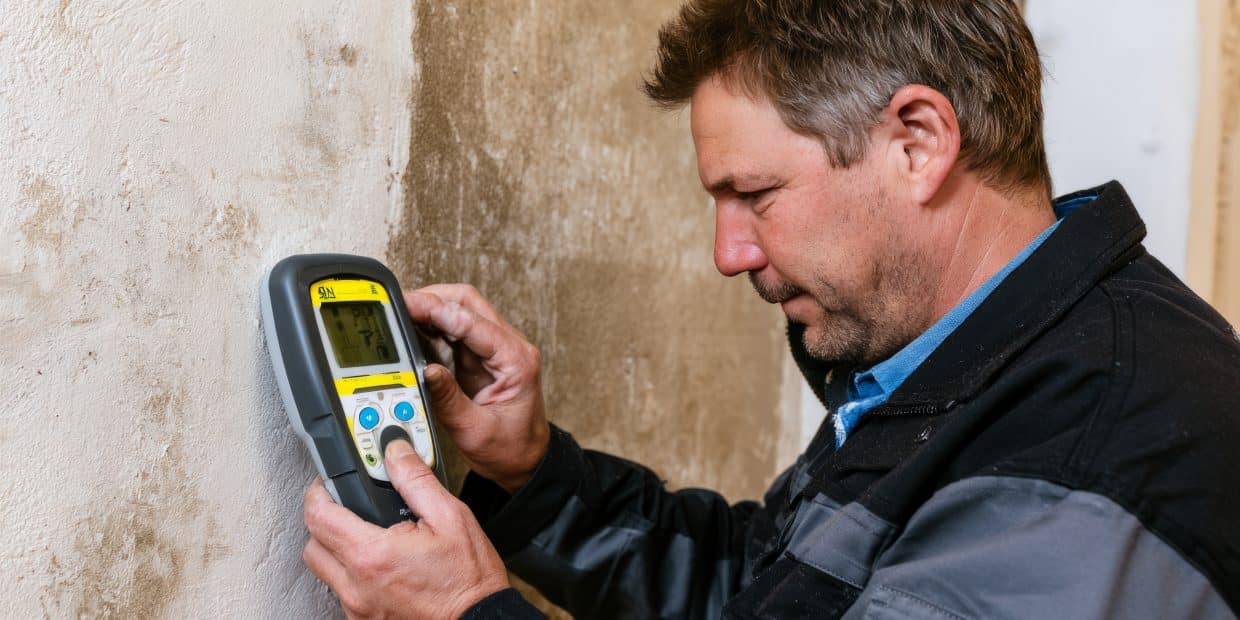
Press a moisture meter’s pins into the drywall at the stain, then again 12 inches above it, then 24. If the reading is still elevated at 24 inches, the flood cut goes higher than that, not lower. A meter runs $25 to $40 and it’s the only way to set the cut line by data instead of by guesswork.
What’s actually sending water into your walls
Four sources account for most of the wall water damage I get called to price, and each one wicks in from a different starting point.
Plumbing inside the wall
A supply line pinhole leak, a failed solder joint, or a cracked fitting behind a sink, tub, or washing machine box lets water into the wall cavity itself rather than onto the floor first. This kind is often the slowest to notice, because the water is climbing the inside face of the drywall from behind, and by the time a stain shows on the room side, the insulation and the back of the board have usually been wet for a while.
Appliance and fixture floods
A washing machine supply hose, a dishwasher line, a toilet supply valve, or a water heater that lets go dumps water on the floor fast, and the nearest wall picks it up through the bottom plate and baseboard before anyone finishes mopping. These are usually easy to date, because there’s a specific afternoon everyone remembers.
Exterior wall intrusion
Failed flashing around a window or door, cracked stucco, damaged siding, or a masonry veneer that has lost its weep holes lets wind-driven rain into the wall assembly from the outside. This one is seasonal and often intermittent, showing up after storms from a particular direction and drying out enough between events that nobody connects the dots for a year or two.
Grading and irrigation at the base
Sprinkler heads that spray straight onto siding, or a downspout dumping right at the foundation instead of carrying water away from it, keep the bottom few inches of an exterior wall wet on a schedule. It reads like a plumbing leak from the inside, but the fix is entirely outside: redirect the water, don’t open the wall.
| Cause | Typical tell | Who fixes the source |
|---|---|---|
| Plumbing inside the wall | Stain grows slowly, no known event, often near a bathroom or laundry wall | Plumber |
| Appliance or fixture failure | Sudden, dateable, water on the floor first | Appliance tech or plumber |
| Exterior wall intrusion | Worse after wind-driven rain, seasonal | Siding, stucco, or window contractor |
| Grading or irrigation | Constant low-level dampness at the base, dry weather doesn’t help | Landscaper or gutter contractor |
Clean, gray, or black: why the source decides who can touch the repair
Not all wall water carries the same risk, and the restoration industry sorts it into three categories under IICRC S500 that matter for pricing as much as they matter for safety.
Category 1 is clean water: a supply line, a water heater, rain intrusion with no contamination. This is water a homeowner can generally handle once the source is off, gloves and a respirator on, and the area ventilated.
Category 2 is gray water: discharge from a washing machine or dishwasher, or water that picked up some contamination on the way in. It carries enough risk that most guidance calls for an antimicrobial treatment on the exposed cavity before it closes back up, which is a real line item on a quote, not an optional upsell.
Category 3 is black water: sewage backups, floodwater from outside, or water that has sat long enough to become a hazard on its own. This tier calls for a licensed remediator with containment, not a weekend project, regardless of how small the visible patch looks.
The category, not the square footage, is what should decide whether you’re pricing a Saturday or pricing a contractor. A three-square-foot stain from a sewer backup is a bigger job than a thirty-square-foot stain from a clean supply line, and any guide that prices this by area alone is missing the part that actually matters.
Flood cut, patch, or full wall: the decision that sets your budget
Once the source is dead and the moisture readings show where the wet material actually stops, this decision takes about as long as it takes on the ceiling side of this question, and it swings the price by the same order of magnitude.
| Condition of the wall | What it needs |
|---|---|
| Stained at the baseboard, firm above the flood-cut line, single event, clean water | Flood cut 12–24 in above the mark, patch, prime, paint |
| Stained, firm, but this is the second time in the same spot | Same repair, but budget for the actual source fix; a repeat stain means the last one didn’t hold |
| Soft or spongy above where the meter reads wet | Cut higher. Firmness is the test, not the paint |
| Insulation in the cavity got wet | Comes out and gets replaced, no exceptions; wet fiberglass doesn’t dry in place |
| Baseboard cupped, swollen, or separated at the miters | Comes off and usually gets replaced rather than reused |
| Category 2 or 3 water, or growth already visible | Antimicrobial treatment on the open cavity before anything closes it up |
| Multiple bays along a shared plumbing wall | Often cheaper to open the whole run at once than to flood-cut one bay, find it isn’t isolated, and reopen next month |
-
Check the baseboard and outlets first
Paint bubbling on the baseboard, trim nails bleeding a rust stain, or an outlet cover that feels damp or cool are all signs the water traveled further than the wall paint shows.
-
Press a grid, not just the stain
Push a fingertip in a checkerboard pattern across and above the visible mark. Firm everywhere but the stain itself is a good sign. Soft anywhere is not.
-
Take a meter reading at 12 and 24 inches
Both above the highest point you can see. If either reading is elevated, that’s your real flood-cut line, not the paint.
-
Pull one section of baseboard
A baseboard is held by a handful of finish nails and comes off clean with a flat bar in about five minutes. Looking behind it settles more arguments than any other step on this list.
-
Run the smell test with the HVAC off
A musty smell that’s stronger at an outlet or baseboard than in the middle of the room means the cavity, not just the surface, is involved.
-
Let the readings set the cut line, not your eyes
This is the step that separates a repair that holds from one that gets reopened in six months.
What drywall water damage repair cost looks like in 2026
US ranges as of August 2026, wall work only. If the source itself needs a plumber, a siding contractor, or a restoration company, that’s a separate bill on top of these numbers, the same as it is on the ceiling side of this question.
| Job | DIY materials | Typical pro quote |
|---|---|---|
| Seal and repaint a small, sound stain, board dry and firm | $20–$40 | $150–$350 |
| Flood cut and patch, single stud bay (under 4 sq ft) | $45–$90 | $350–$800 |
| Flood cut and patch, full wall run (multiple bays, 15–30 sq ft) | $120–$220 | $700–$2,200 |
| Full wall, floor to ceiling, one wall of an average room | — | $1,400–$3,500 |
| Baseboard removed and replaced, per linear foot | $2–$5 | $8–$18 |
| Cavity insulation replaced, per sq ft of wall opened | $0.60–$1.20 | $1.50–$3.00 |
| Antimicrobial treatment, category 2 water, per sq ft opened | — | $2–$5 |
| Category 3 remediation with containment, per sq ft | — | $15–$30 |
The baseboard is the line item everyone forgets to ask about
A flood cut almost always means the baseboard comes off first, and it often doesn’t go back on in reusable shape, especially painted MDF trim that swells the moment it gets wet. Stain-grade wood baseboard survives removal better than paint-grade MDF. Ask which one your wall has before you assume the trim is free.
Why two walls with the same stain price differently
Square footage is the number people fixate on, and it’s rarely the number that actually moves the quote.
- Whether it’s a shared plumbing wall. Access from one side is a patch; a leak that has to be traced through a wall shared with a bathroom or kitchen sometimes means opening both sides to find the actual source.
- Whether the trim is paint-grade or stain-grade. Custom or stained wood baseboard costs more to match than it does to replace a straight run of painted MDF.
- Whether the insulation needs replacing. Dry fiberglass batts stay in. Wet ones come out, and that’s real labor and material on top of the drywall itself.
- Whether the finish has to match a specific sheen. A flat wall in a hallway is forgiving. A wall in satin or semi-gloss under a window shows a patch the way we describe in the skim coat guide, which pushes the job toward a full repaint rather than a touch-up.
- How many bays are actually open. A single stud bay and a five-bay run cost close to the same per bay once a crew is already on site with the wall open, the same trip-charge economics behind every repair on this site.
Will homeowners insurance pay for drywall water damage repair cost
The word that decides most claims is sudden. A standard US homeowners policy typically covers water damage that’s sudden and accidental: a supply line that lets go, a washing machine hose that bursts, a one-time storm event. What most policies exclude is damage from continuous seepage, which an adjuster treats as a maintenance issue rather than a covered loss.
Wall claims run into that line more often than ceiling claims do, because two of the four causes above, exterior intrusion and grading, are maintenance questions almost by definition. Cracked stucco that let rain in slowly over two seasons reads as deferred maintenance to an adjuster, even though the drywall damage looks identical to a sudden pipe burst once the wall is open. A sprinkler head that has sprayed the same six inches of siding for three years tells the same story.
What tends to get covered without an argument: appliance hose failures, supply line bursts, and a specific storm event that can be tied to a date. What tends to get pushback: anything an inspector can plausibly call gradual, which covers most exterior envelope failures.
Photograph the stain with a tape measure in frame, log the moisture meter readings with the date, and get that documentation before any repair starts. It’s the same advice I give on the ceiling side of this question, and it matters even more here, because the sudden-versus-gradual argument is exactly where wall claims get decided.
Where mold changes the job
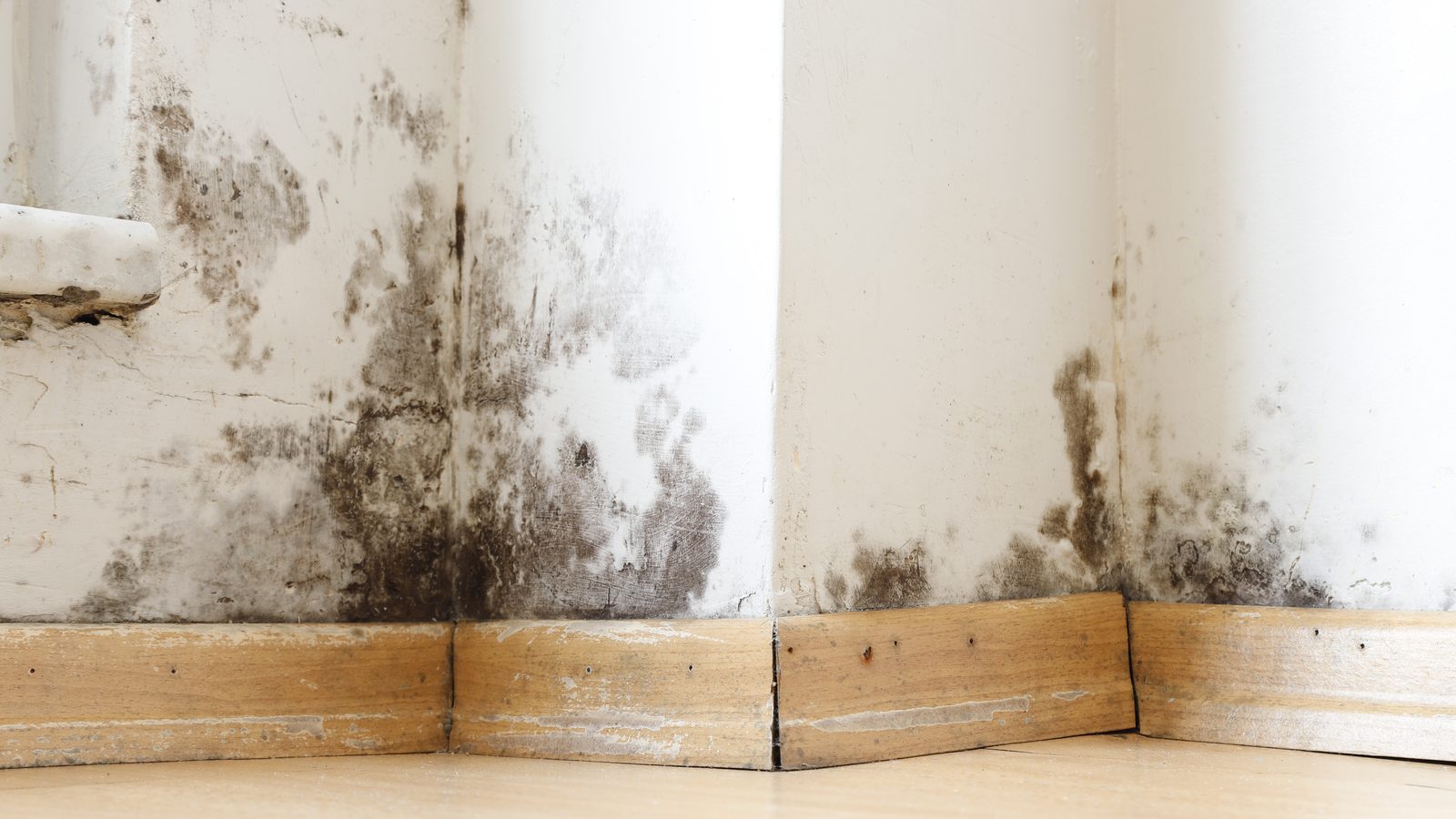
Wet drywall paper is a food source, and mold can establish within roughly 24 to 72 hours of the material staying wet. A wall that sat damp behind a baseboard for even a few days has almost certainly had the opportunity, whether or not anything shows on the painted face.
The threshold worth knowing is the EPA’s rule of thumb: roughly 10 square feet of visible growth, about a 3 ft by 3 ft patch. Below that, a homeowner can generally handle cleanup with basic protection. At or above it, the guidance shifts to a certified remediation professional with containment. We cover the full removal method, what actually kills it, and exactly where that line sits in how to get rid of mold on walls. If you suspect growth inside a cavity you haven’t opened yet, how to detect mold inside walls covers the non-destructive way to check before you cut anything.
Textured walls in houses built before 1980 add a second question before anyone opens anything. Sprayed and troweled textures from that era can contain asbestos, and cutting or sanding into one is exactly the wrong way to find out. Test first.
Two things to check before you cut into an old wall
Texture applied before 1980 can contain asbestos; scraping or sanding it is how fibers get airborne, and the full testing process is in our popcorn ceiling asbestos guide, which applies to wall texture as much as ceiling texture. Paint on a wall in a house built before 1978 can contain lead, and dry-sanding it is an exposure route. Work damp, use a HEPA vacuum rather than a dry brush, and see our disclaimer for where our advice stops on both.
Who to call first, and why the order matters
The expensive mistake is the same one I see on the ceiling side of this question: calling a drywall contractor first because the wall is what’s visible.
- Wall actively wet, or water still tracking in: a restoration company, the same day, for extraction and drying before anyone talks about a patch.
- Stain near a bathroom, kitchen, or laundry wall, no known event: a plumber, and mention which fixtures you’ve already ruled out.
- Stain that shows up after wind-driven rain: a siding, stucco, or window contractor for a flashing and envelope inspection.
- Constant low dampness at the base of an exterior wall in dry weather: a landscaper or gutter contractor before anyone touches the drywall at all.
- Category 2 or 3 water, or visible growth over about 10 sq ft: a mold remediation professional before the wall gets opened any further.
- Source confirmed dead, moisture readings clear at the flood-cut line: now it’s a drywall and paint job, the simplest and cheapest call on this list.
For repairs unrelated to water, a hole from an impact or a doorknob, our guide to patching a large hole in drywall covers the cut-and-float technique in more detail; it’s the same method once a flood-cut section is out. For the full range of drywall repair pricing outside of water damage, see drywall repair cost, and the rest of the cost guides cover the neighboring jobs.
Questions I get on site
How much does it cost to fix water damaged drywall in a wall?
Most jobs I write land between $350 and $2,200 depending on how many stud bays are open and whether insulation and baseboard need replacing. A small, sound stain that just needs sealing and paint can be under $350. A full wall with insulation and trim can clear $3,000.
Can water damaged drywall in a wall be saved?
If it reads firm on a moisture meter and dry to the touch above the flood-cut line, yes, that section stays and only the wet part comes out. Soft, spongy, or crumbling board doesn’t come back, no matter how long it dries.
Is it cheaper to repair or replace a water damaged wall?
Repair, almost always, as long as the damage is limited to a flood-cut section. Full replacement only makes sense once most of the wall is affected or the framing itself needs attention, which is a structural question rather than a drywall one.
How do I know if water reached the wall cavity insulation?
A moisture meter reading behind the baseboard or through a small inspection cut is the only real answer. Insulation that’s been wet loses most of its R-value permanently and holds water against the back of the drywall, which is why it gets replaced rather than dried in place.
Does homeowners insurance cover drywall water damage in a wall?
Only if the cause reads as sudden and accidental. Read the insurance section above; wall claims get denied on the gradual-versus-sudden question more often than ceiling claims do.
How long should a wall dry before it gets patched?
Three to five days minimum with air movement running once the source is fixed, longer if insulation stayed wet and packed against the board. A moisture meter reading under about 12 percent on the gypsum is the real answer, not the calendar.
Is a musty smell from inside a wall a sign of something serious?
It’s a sign there’s still moisture in the cavity, which is a building question worth tracing with a meter or a small inspection cut rather than ignoring. We don’t cover the health side of mold exposure on this site, that’s outside our editorial scope. What we can tell you is that a smell with no visible source is one of the more reliable reasons to open a small inspection hole rather than wait it out.
Figures on this page are ranges collected from US supplier listings and contractor quotes in August 2026. They are not a quote for your wall, and your zip code, the number of bays involved, and what’s behind the drywall all move them. Nothing here replaces a moisture reading and, where the source is unclear, an in-person inspection by a licensed plumber, contractor, or restoration company. If a number is off in your market, tell me and I’ll correct it.