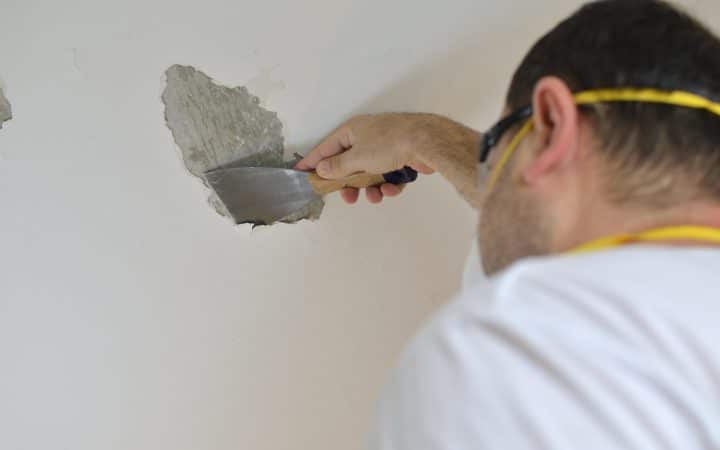
I get this call about eight times a year, and it is always from someone who has already started. They rented a scraper, wet down half a bedroom ceiling, and then a neighbor said the word asbestos. Now they are standing in a room with a wet grey pile on the drop cloth asking me whether they need to move out.
Here is the short version, and then I will take it apart properly. Popcorn ceiling asbestos is real. It was sprayed years later than most homeowners think. And nobody, including me after 29 years of walking ceilings, can identify it by looking at it. A lab has to say so. The test costs less than a gallon of good ceiling paint. What gets expensive is guessing.
What counts as popcorn ceiling asbestos
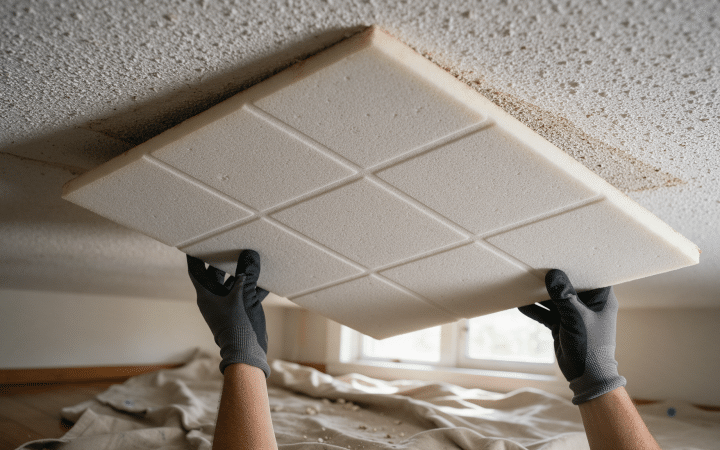
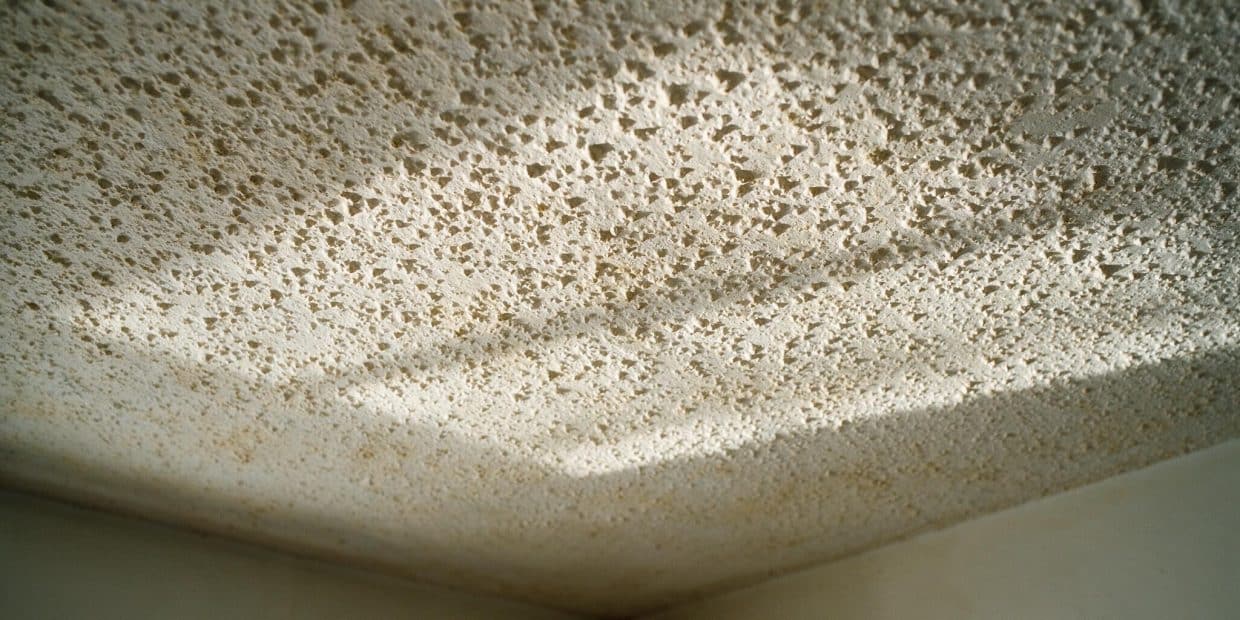
The texture on your ceiling is a sprayed surfacing material. Somebody mixed a dry compound with water, loaded a hopper gun, and shot it at the drywall in one pass. It hid the seams, it hid the nail heads, and it meant the finisher never had to get a ceiling flat. That was the whole point of the product. Builders loved it because a taper could skip a level of finish work on every ceiling in a subdivision.
Some of those mixes carried chrysotile asbestos, usually somewhere between 1 and 10 percent by weight. It was in there for the same reason it was in everything else in that era: it made the material bind, resist sag, and hold a texture without cracking.
The number that matters legally is 1 percent. Above that threshold the EPA treats the material as asbestos containing material, and a different set of rules applies to how it gets disturbed, bagged, and disposed of. Below it, the material is not regulated as ACM, which is not quite the same thing as saying there are no fibers in it.
Intact texture is not the same as dangerous texture
Asbestos in a sealed, painted, undisturbed ceiling is not doing anything to you. It becomes a problem when it is sanded, scraped, drilled, broken by a leak, or knocked loose by a ladder. That distinction runs through everything below.
The dates that matter, and why 1978 is not the cutoff
Every contractor has a date they quote from memory, and half of them are wrong. The regulation came in stages, not in one clean line.
| Year | What actually happened |
|---|---|
| 1973 | EPA restricted spray applied asbestos surfacing materials under the Clean Air Act |
| 1977 | The Consumer Product Safety Commission banned asbestos in patching compounds and textured wall products |
| 1978 | EPA widened the spray ban to cover materials over 1 percent asbestos |
| 1979 to mid 1980s | Existing stock was still legal to sell and install. Crews sprayed what was already on the shelf |
That last row is the one people miss, and it is the reason a 1982 house can still hand you a positive result. Nobody made a warehouse full of unsold hopper compound disappear on the last day of 1978. A supplier in a small market could be selling that inventory three or four years later, and the crew spraying it had no reason to ask.
So the working rule I use on site is simple. Built before 1980, assume it until a lab says otherwise. Built between 1980 and roughly 1986, test it anyway, because the odds are lower but they are not zero. Built after that, the ceiling texture is almost certainly a modern acrylic or gypsum product, though I still test if the house has had a ceiling replaced and nobody can tell me when.
You cannot tell if a popcorn ceiling has asbestos by looking at it
I want to be blunt here because the internet is full of confident nonsense on this point. There is no visual test. Not the size of the nodules, not the color, not whether it sparkles, not whether it feels chalky or crumbles between your fingers.
The sparkle myth is the one I hear most. People are told that glitter in the texture means mica, and mica means safe. Mica was in plenty of asbestos mixes. It was also in plenty of clean ones. All the sparkle tells you is that somebody added mica.
The nodule size myth is the second. Fine spatter, medium popcorn, big cottage cheese lumps: those are spray tip and mix consistency decisions, made by whoever held the gun that morning. They tell you nothing about the powder in the hopper.
I have been wrong both directions. A 1974 ranch I would have bet money on came back clean. A tidy little 1983 condo came back at 3 percent chrysotile. That is why the sample goes to a lab and not to my judgment.
What should trigger a popcorn ceiling asbestos test
You do not need to test a ceiling you are going to leave alone forever. You need to test before anything touches it. Here is how I sort it when a homeowner asks whether it is worth the trouble.
| Situation | Test first? |
|---|---|
| Scraping, sanding, or skim coating the texture | Yes, always |
| Water stain or a sagging patch that needs cutting out | Yes |
| Running new wiring, can lights, a ceiling fan, or a bath fan | Yes |
| Removing a wall that meets the textured ceiling | Yes |
| Repainting an intact ceiling with a roller | Usually no |
| Ceiling stays exactly as it is | No |
The one that catches people is the light fixture. A four inch hole saw through an asbestos ceiling makes a small cloud of exactly the fibers you do not want, and it feels like nothing at all. Six recessed cans in a living room is six of those clouds in an enclosed room with the HVAC running.
Water damage is the other one. A ceiling that has been wet is a ceiling that has lost its bond, and the texture starts shedding on its own. If you are chasing a stain, read the ceiling diagnosis guides before you open anything, because in a pre 1980 house the leak and the asbestos question have to be answered in that order.
How the sample gets taken
My honest recommendation is to pay an inspector. A residential visit runs $200 to $500 and covers one to three samples, and what you buy is not really the sampling, it is the written report with a chain of custody on it. If you are selling the house, pulling a permit, or arguing with a contractor about scope, that document is worth more than the $150 you saved doing it yourself.
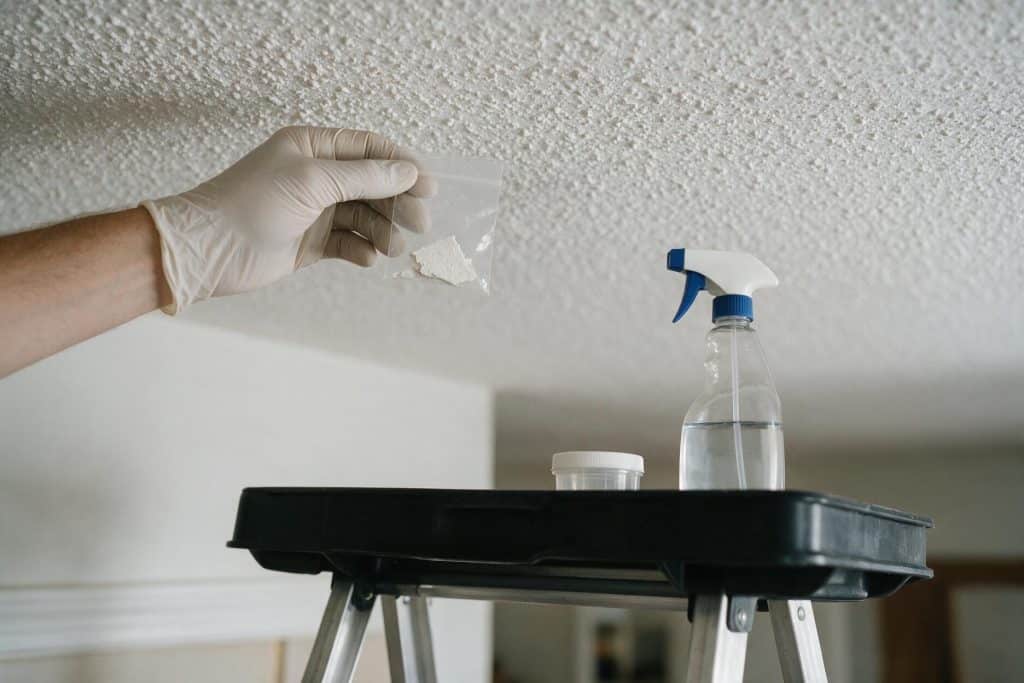
That said, plenty of homeowners take their own sample and mail it in, and it is legal in most places for an owner occupant. If you go that route, the method matters more than the kit. Wet material does not make dust.
-
Check your state and county rules first
A handful of jurisdictions restrict who may collect a sample, and a few require notification even for owner occupied work. Two minutes on your state environmental agency website settles it.
-
Clear the room and shut off the air
Furniture out or covered, HVAC off, windows closed, door shut, plastic on the floor under the spot. You want no air movement carrying anything out of that room.
-
Wet the spot before you touch it
A spray bottle with water and a few drops of dish soap, misted onto a patch about the size of a coaster. Let it soak in for a minute. Dry scraping is the mistake that turns a test into an exposure.
-
Take a small full depth piece
Roughly a teaspoon, cut with a putty knife straight into a zip bag held underneath. Full depth matters because some ceilings got a second texture coat over the original in a remodel, and the layer that matters may be the one underneath.
-
Sample more than one room
Different rooms can be different batches, especially in an addition. Labs charge per sample and it is the cheapest insurance in this whole article.
-
Seal the spot and clean wet
Dab the hole with a bit of joint compound or a strip of tape. Wipe the area with a damp rag and bag the rag. No sweeping, no shop vac, ever. A household vacuum blows fibers straight through the filter and back into the room.
An N100 or P100 respirator and disposable gloves are the minimum if you are doing this yourself. A paper dust mask does nothing here. Neither does holding your breath, which I have watched a grown man attempt.
What a popcorn ceiling asbestos test costs
This is the part that surprises people in a good way. The lab work itself is cheap. It is the only line in this entire subject that is.
| Route | What you get | Typical 2026 price |
|---|---|---|
| Mail in kit, one sample | Bag, form, prepaid mailer, PLM analysis | $55 to $100 all in |
| Your own bag to a lab | PLM analysis only | $25 to $40 per sample |
| Each extra sample | Same analysis, same submission | $25 to $75 |
| Licensed inspector on site | 1 to 3 samples plus a written report | $200 to $500 |
Turnaround from an accredited lab is normally five to ten business days, and most will do 24 hour rush for a surcharge. Whatever route you take, confirm the lab is NVLAP accredited before you mail anything. That accreditation is the difference between a result and a piece of paper.
Three samples cost less than one ceiling repair
Testing a whole house properly lands around $120 to $200. Cleaning up after somebody scraped an asbestos ceiling dry lands in the thousands, because the contamination is no longer in the ceiling, it is in the carpet, the ductwork, and the sofa.
Reading the lab report
The report comes back shorter than you expect. Usually one line per sample, one or two numbers, and some abbreviations.
PLM is polarized light microscopy, the standard method for bulk building materials. The analyst looks at the fibers under polarized light and identifies them by their optical behavior. If your report says chrysotile, that is white asbestos, and it is what almost all ceiling texture contained. Amosite and crocidolite show up in other products more than in texture.
The percentage is an estimate, not a measurement. An analyst eyeballing a slide is reading a visual proportion, so 2 percent and 4 percent are not meaningfully different numbers. What matters is which side of 1 percent you landed on.
Two results deserve a second look. “None detected” from standard PLM is not quite a zero, because the method has a practical detection floor around 1 percent, and a ceiling reported at “less than 1 percent” or “trace” is in the awkward zone. Some states treat trace results as regulated anyway, and some abatement contractors will not touch a trace ceiling without a point count, which is a longer PLM procedure that gives a real number instead of an estimate. If the number sits anywhere near the line and you are planning to disturb the ceiling, order the point count.
If the result is positive, stop scraping
Do not scrape, sand, drill, or vacuum a positive ceiling
Nothing in this article is instructions for removing asbestos texture yourself. Removal is work for a licensed abatement contractor with containment, negative air, and a disposal route. If you have already started, stop where you are, leave the material wet, close the room, and call an accredited abatement contractor for advice before you clean anything up. See our disclaimer.
I am not a certified asbestos remediator and I do not do this work. What I do is estimate the repair that comes after it, which means I have seen the bills from both the right way and the wrong way. The gap is not close.
Your three options, and what each one costs
A positive result does not force you into abatement. It forces you into a decision, and two of the three answers are cheaper than the one everybody assumes.
| Option | What it involves | Typical cost per sq ft |
|---|---|---|
| Leave it alone | Nothing. Repaint with a roller if the surface is sound, avoid drilling | $0 |
| Encapsulate | Sealant sprayed or rolled over intact texture, locking fibers in place | $2 to $6 |
| Cover with drywall | New 1/4 or 3/8 inch board screwed through into the joists, taped and finished | $1.50 to $3 |
| Licensed abatement | Containment, negative air, wet removal, bagged disposal, clearance | $5 to $9, up to $12 with complications |
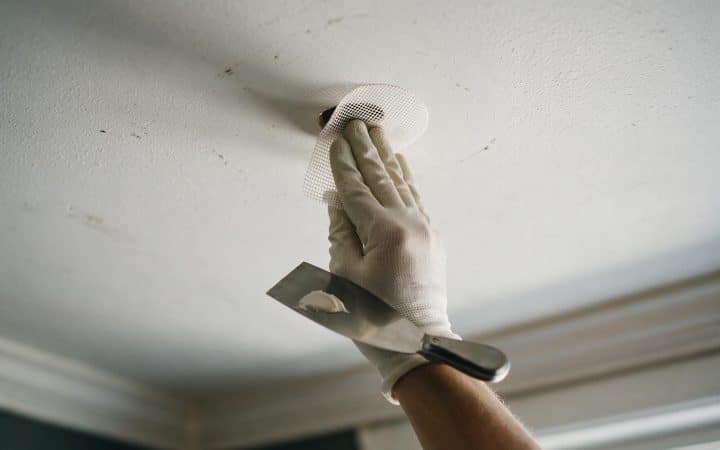
Covering with drywall is the option I push hardest, and it is the one nobody has heard of. You get a flat modern ceiling, the asbestos stays sealed behind gypsum board, and you are not paying the containment premium. The board is thin and light, the screws have to hit joists rather than just the old drywall, and the finished ceiling drops half an inch. For most rooms that is invisible.
Encapsulation only works on texture that is intact. If the ceiling is flaking, cracked, or water damaged, a sealant has nothing to bond to, and rolling over a loose surface pulls material off faster than leaving it alone would have. I have watched a homeowner take down more texture with a roller in ten minutes than a scraper would have in an hour.
Full abatement earns its price in one situation: you are gutting the room anyway, or the ceiling has to come out for structural or water reasons. Paying $6,000 to remove a sound ceiling you were only going to repaint is money you could have put into the rest of the house. The detailed numbers on both routes sit in our cost guides.
When abatement is the only route
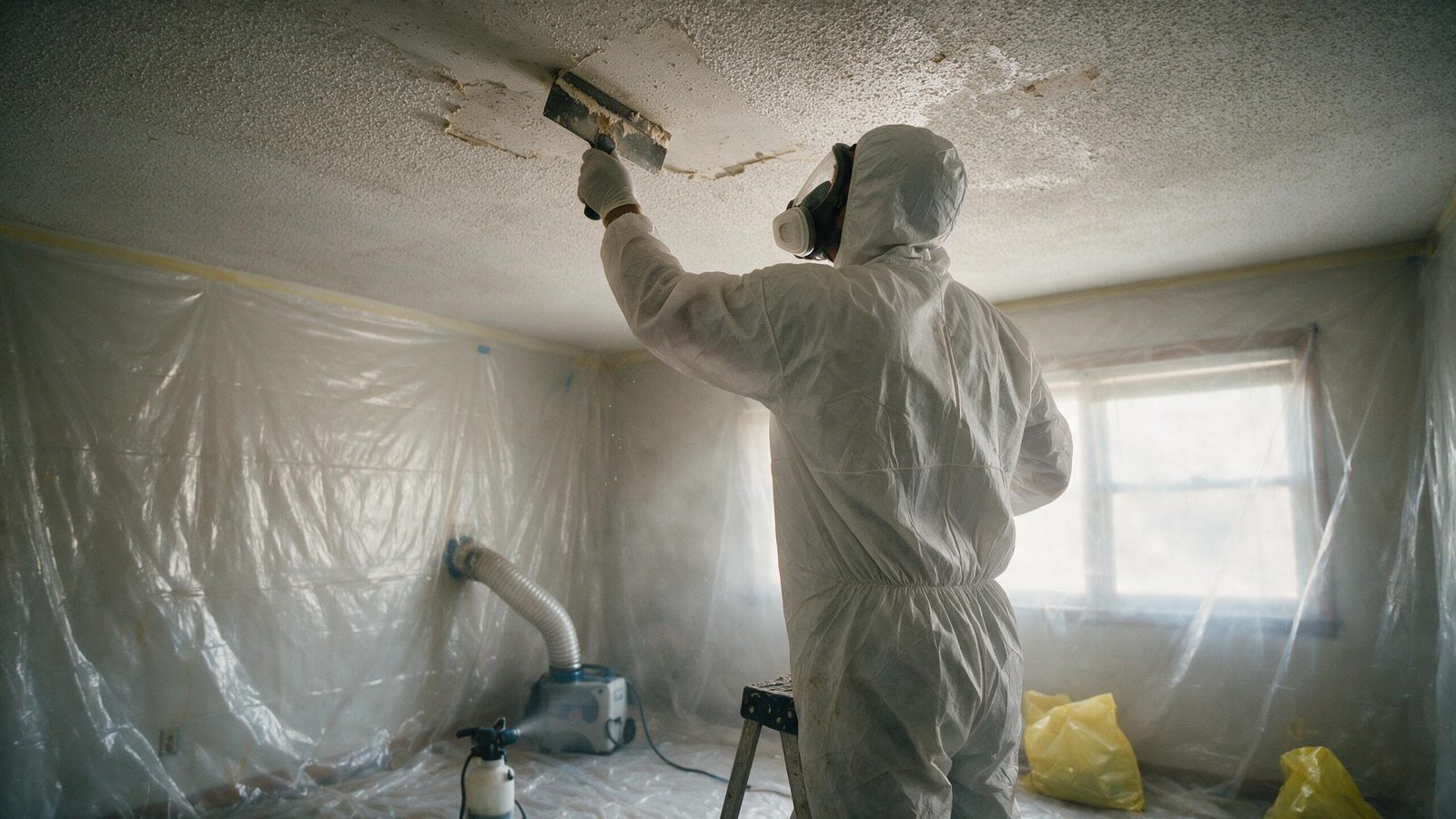
Sometimes the decision is made for you. A ceiling that has already been disturbed cannot be encapsulated honestly. A ceiling that is sagging from a roof leak has to come out, because covering wet gypsum with new board buys you a mold problem in place of an asbestos problem.
When you hire, ask for four things: the state abatement license number, proof of pollution liability insurance, the disposal facility they use, and whether the price includes third party air clearance testing at the end. That last one is the item that quietly disappears from cheap bids. Clearance testing is how you know the containment worked, and a contractor testing their own work is not the same as a contractor being tested.
Expect the crew to seal the room in plastic, run a negative air machine with a HEPA filter, wet everything before it moves, and bag the debris in labeled double bags. If a bidder describes a process much simpler than that, they are not doing abatement, they are doing scraping with extra steps.
Is DIY removal legal? It depends on your state
People are always surprised that there is not one federal answer. There is not.
Federally, single family homes and buildings with four or fewer units sit outside the NESHAP notification and work practice requirements. That exemption is why so many articles say DIY removal is legal. It is also why so many homeowners get in trouble, because the exemption is federal and the enforcement is usually not.
States write their own rules on top. Delaware lets an owner occupant remove asbestos from their own single family home without notifying the state, and explicitly does not extend that to landlords or developers. Florida allows it for an owner occupier of a home that is not for sale or lease, but requires that person to appear and sign the permit application personally. Virginia’s licensing law has no homeowner carve out at all. New York licenses abatement work with narrow exceptions for owner occupants.
Disposal is the part that applies everywhere regardless. Material at 1 percent or more has to go to a facility that accepts it, in labeled sealed bags. It does not go in the household trash, it does not go in a rented dumpster, and the transfer station attendant who waves you through is not the person who gets fined.
My position, which you are free to disagree with: legal and advisable are two different words. The federal exemption exists because regulating work inside private homes is hard, not because the fibers behave differently there.
Questions I get on site
Do all popcorn ceilings have asbestos?
No, and not even most of them. Plenty of pre 1980 ceilings come back clean, because manufacturers ran both formulations at the same time and which one landed on your street was a purchasing decision. The problem is that clean and contaminated look identical, so the base rate does not help you.
Are the home test kits any good?
The kit is a bag, a form, and a mailer. What matters is the lab on the other end, so buy on accreditation rather than on the box. Be careful with anything sold as an instant result, because there is no instant field test for asbestos in bulk material. Microscopy is the method.
Is my family in danger right now?
An intact, painted, undisturbed ceiling is not releasing fibers into your bedroom. Millions of American homes have exactly this ceiling over exactly this bed. The risk comes from disturbance, which is why the whole industry answer is either leave it or have it removed properly, with very little in between.
I already scraped some. What now?
Stop, and do not clean it up dry. Leave the debris wet, shut the door, turn off the HVAC so nothing moves through the ducts, and call an abatement contractor for advice. Many will talk you through it over the phone. The instinct to grab a shop vac and make it look tidy is the single most damaging thing you can do at that moment.
Does a positive result have to be disclosed when I sell?
Disclosure rules are set by your state and this is a question for your agent or an attorney rather than for me. What I can tell you from the estimating side is that a clean lab report in the file is an asset during a sale, and a buyer’s inspector raising the question with no paperwork on hand is a negotiation you will lose.
What I tell homeowners before they pick up a scraper
Test before you touch it, and test more than one room. Take the “leave it alone” option seriously, because it is free and it is genuinely safe for an intact ceiling. If you want the texture gone and the ceiling is sound, price the drywall overlay before you price abatement, because the number is often a third and almost nobody thinks of it.
And keep the lab report. Tape it inside the electrical panel door with the paint colors. In fifteen years, when somebody wants to put a ceiling fan in that room, that piece of paper is going to save them a week.