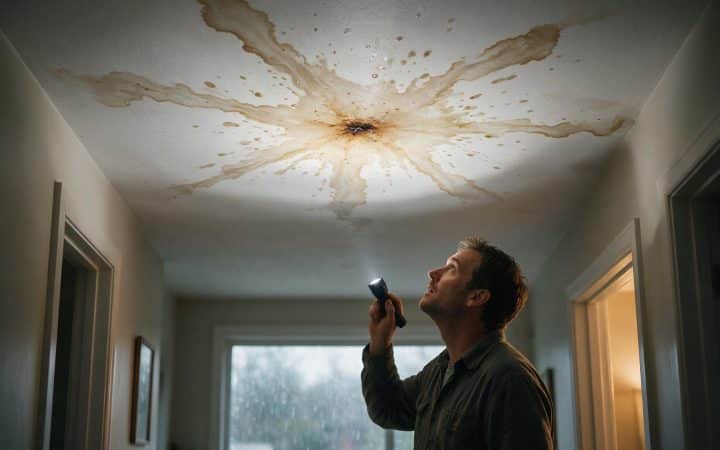
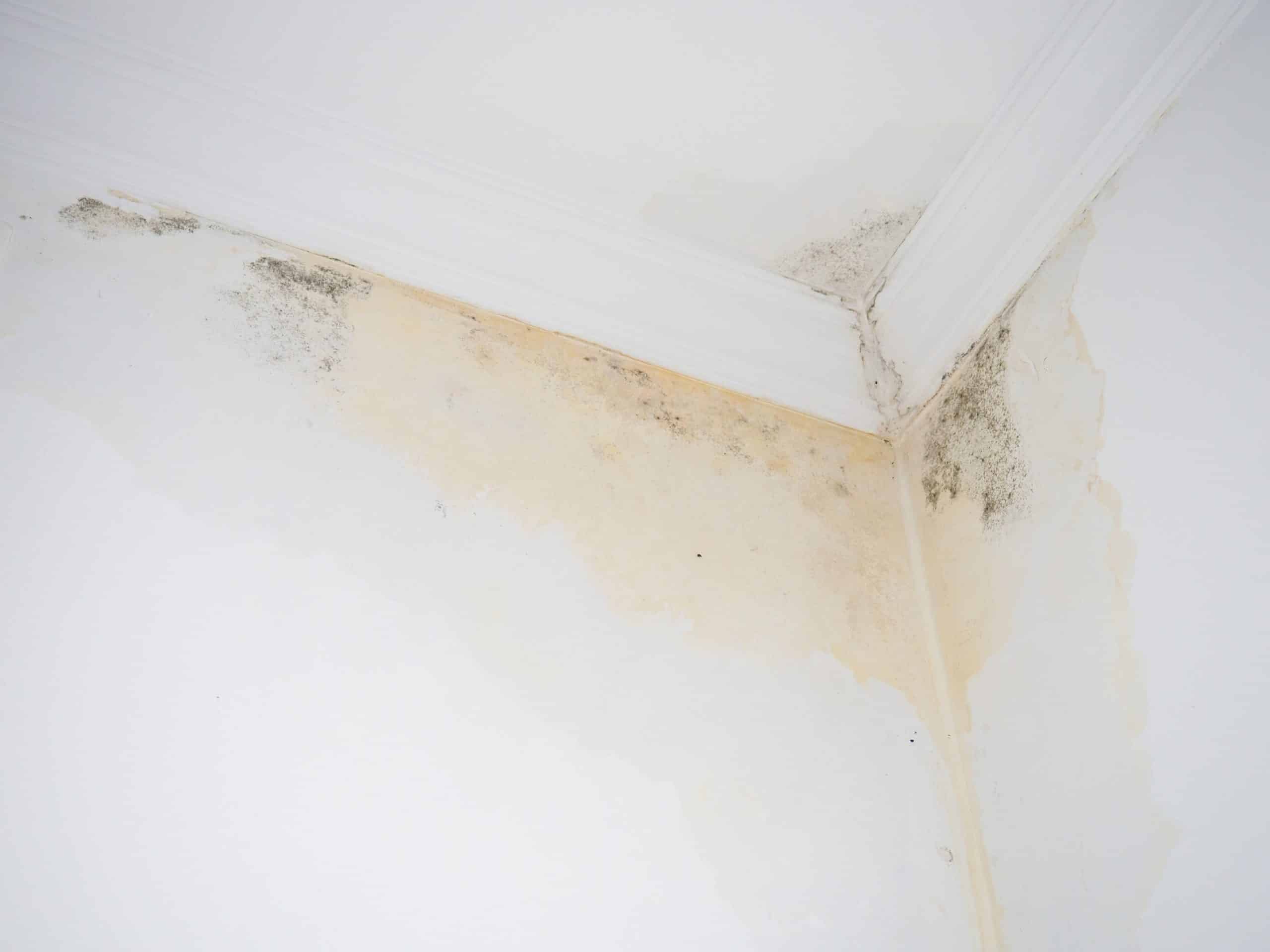
Most of the calls I get about a ceiling stain end the same way. I look up for about ten seconds, tell the homeowner they didn’t need me, and leave. That’s not a wasted trip. It means the damage was minor, and minor water damage on a ceiling has a real, checkable definition. It isn’t a size in square feet, whatever the stain’s diameter makes it look like.
The other calls end differently. Same kind of stain, sometimes the same size, and I’m cutting drywall before I’ve finished my coffee. The difference between those two visits comes down to three checks anyone can do from a stepladder, not how wide the ring is.
What “minor” actually means
I’ve patched two-inch stains that needed the board cut out to the joists, and painted over dinner-plate-sized rings in twenty minutes flat. Size tells you how the damage looks. It doesn’t tell you what the repair is. What actually decides it is underneath the paint, and you can check every bit of it yourself before you buy anything.
| Check | Minor | Not minor |
|---|---|---|
| Feel when pressed | Firm, no give | Soft, spongy, or the paper skin lifts |
| Shape | Flat against the ceiling | Bulging, sagging, or drooping between joists |
| Source | Found and stopped, you can say what caused it | Still unknown, or you’re not sure it’s really stopped |
| History | First time in this spot | Same spot has stained before |
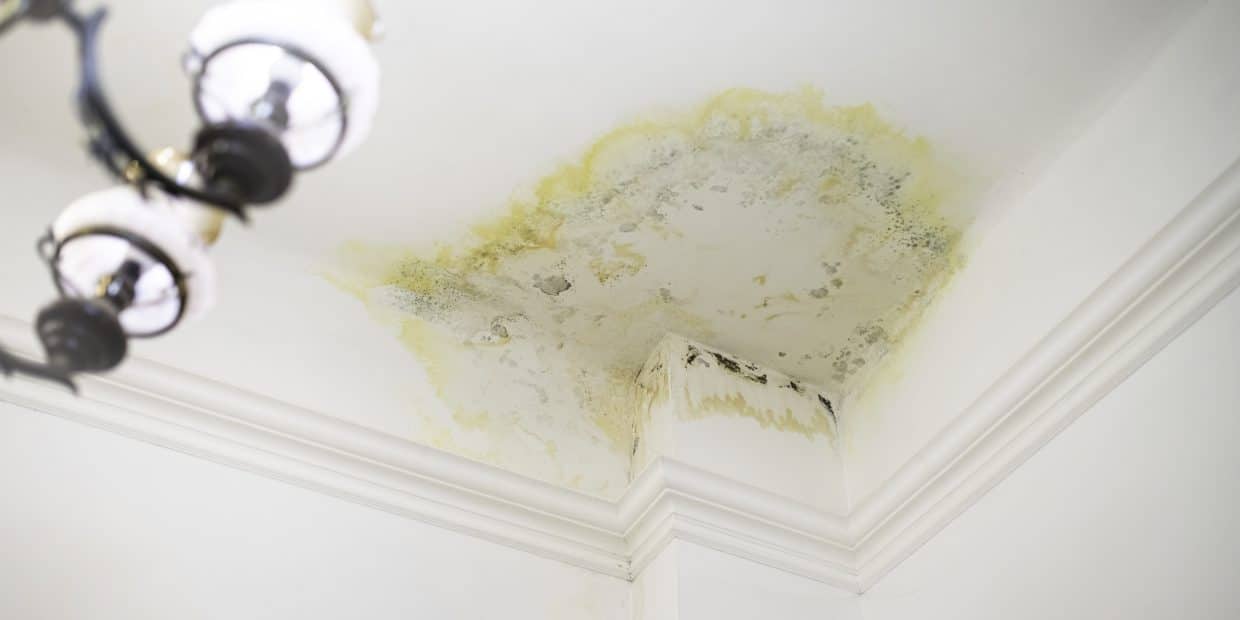
| Smell or growth | None | Musty smell, or any fuzzy or dark growth |
| Size (only once the above all say minor) | Under roughly 2-3 sq ft | Larger, or on a textured ceiling |
The pattern I see most often on the easy side: a supply line under an upstairs bathroom let go once, got shut off the same day, and left a stain about the size of a hand towel. That one’s almost always a primer job. The pattern on the hard side: a ceiling that’s stained twice in the same spot two winters running, because everyone assumed the roofer fixed it the first time.
The push test takes five seconds and beats guessing
Press two fingers flat against the stain, gently. Firm and dry, proceed. Any give, sponginess, or a slightly damp feel under the paint, stop. That board has already lost some strength, and pressing harder on it while you’re on a ladder is how ceilings come down on people. How to fix a sagging ceiling covers what a soft or dropping ceiling actually needs.
Confirm the leak is actually stopped
Skip this step and everything after it is a guess dressed up as a repair. A stain from a leak that got fixed last week is cosmetic: clean it, seal it, paint it, done. A stain from a leak nobody has actually traced yet just hasn’t come back to bite anyone a second time. Roof flashing, a bathroom or kitchen supply line, an HVAC condensate line, and attic condensation cover most of what I find behind a ceiling stain; water stain on ceiling walks through tracing each one back to its source.
Mark the edge of the stain in pencil with today’s date. If the likely cause is rain, wait out one full storm. If it’s plumbing, run the fixture on purpose: shower on for fifteen minutes with someone standing in the tub, or a dozen flushes in a row. If the pencil line hasn’t moved after that, the source is dead and you’re clear to move on. If it has moved, or the same spot has stained before after a leak you thought was fixed, stop here and read water leaking from ceiling when it rains instead.
The fix, if it really is minor
Clean and scrape
Wipe off dust, then scrape any flaking or bubbled paint with a putty knife. Feather the edges with a light hand-sand so there’s no ridge for the primer to show through.
Fill any small crack or gap
A dab of joint compound if the stain sits over a hairline crack or an old nail pop, smoothed flush once it’s dry. If a popped nail is the actual cause of the mark, how to fix nail pops in drywall covers the two-screw fix that keeps it from coming back.
Let it finish drying, not just look dry
A day or two in normal room air is usually enough for a small, once-off stain that’s already confirmed inactive. If it’s a bigger area, or you’re not fully sure, water damage ceiling repair cost covers the moisture-meter check that removes the guesswork.
Prime with an oil- or shellac-based stain blocker
Not ceiling paint, not a regular latex primer. One coat, rolled about an inch past the visible edge of the stain in every direction.
Topcoat once the primer has fully cured
Match the ceiling’s existing sheen, almost always flat or matte, so the patch doesn’t flash as a slightly glossier rectangle under raking light.
Why ordinary ceiling paint won’t hide the stain
This is the step people skip, and it’s the reason a cheap fix reappears through a fresh coat within a week. Regular ceiling paint is latex, and latex stays water-soluble even after it’s dry on the wall. Roll it straight over a water stain and the tannins and minerals left behind by the water dissolve back into the wet paint film as you apply it, then reappear as a faint yellow-brown ghost of the same ring once that coat dries.
An oil- or shellac-based primer works differently. It lays down a film of resin that the stain can’t dissolve into or migrate through, so whatever’s left in the drywall stays sealed underneath instead of bleeding into every coat you put on top of it. It’s a small can and it smells like it, crack a window, but it’s the one product in this whole job that isn’t optional.
Most stain-blocking primers are dry to the touch in about two hours, and the label usually calls for a four-hour wait before the topcoat. Read the actual can though. Cold or humid rooms slow both numbers down, sometimes by a lot.

What it costs to do yourself
For a single sound stain like this, I’m writing $25 to $45 in primer and paint if you do it yourself, $150 to $350 if you call someone to do the same twenty-minute job. That’s the whole number, there’s no bigger figure hiding inside a minor repair. Cost only climbs once the board has to come out, which is a different job with a different price. Water damage ceiling repair cost has the full 2026 breakdown for every step past this one: patching, full ceiling replacement, mold remediation, and what homeowners insurance will and won’t cover.
When it turns out not to be minor
Any one of these, and the checklist near the top of this page already told you: stop treating it as a paint job.
- Soft, spongy, or the paper skin lifts under light pressure, see how to fix a sagging ceiling
- Sagging or drooping between joists, even if it’s since dried out
- The stain keeps coming back in the same spot after a leak you thought was fixed, see water leaking from ceiling when it rains
- Musty smell, or any fuzzy or dark growth on the surface, see how to detect mold inside walls and how to get rid of mold on walls
- Stained area bigger than roughly 10 sq ft, treat it as a mold question before it’s a paint question
- Ceiling is a sprayed or troweled texture and the house predates 1980, test before anything touches it
Textured ceiling, house built before 1980? Stop before you scrape or sand
Popcorn and some sprayed textures applied before the 1978 US ban can contain asbestos, and nothing about how a water stain looks tells you whether yours is one of the batches that does. A lab sample runs about $30 to $60. Popcorn ceiling asbestos covers what triggers a test and what a positive result changes.
The same stop applies past about 10 sq ft of growth, or a musty smell with no obvious source. How to detect mold inside walls covers the non-destructive way to check before anyone opens the ceiling.
Questions I get on site
What does minor water damage on a ceiling actually look like?
A flat, dry, firm stain from a leak you can name and that’s already fixed, usually under a few square feet, with no smell and no history of staining that same spot before. The color of the ring doesn’t change that. Rust, yellow, or dark brown stains can all be equally minor or equally not, color tells you about the mineral content of the water, not the condition of the board.
Will a water stain fade or go away on its own?
The wet-looking sheen fades as the area finishes drying, but the stain itself won’t disappear without a stain-blocking primer under fresh paint. Left alone, it stays exactly as visible as the day it dried, sometimes for years.
Can I use regular ceiling paint instead of a stain-blocking primer?
You can try, and you’ll be back up the ladder within a week when the stain bleeds straight through the new coat. Latex paint doesn’t block a water stain. Only an oil- or shellac-based primer does that.
Do I need to prime the whole ceiling, or just the stain?
Just the stain, plus a margin of an inch or two past the visible edge. Painting the full ceiling afterward is only needed if a spot coat of the topcoat won’t blend, and flat ceiling paint touches up more forgivingly than any other sheen, so most single stains never need a full recoat.
Will a one-time leak cause mold?
Not usually, if the area actually finishes drying within a couple of days and stays dry after. Mold needs sustained moisture, not one wet afternoon. What raises the odds is a leak that ran for a while before anyone noticed, or insulation above the ceiling that stayed wet and packed against the board. How to detect mold inside walls covers how to check if you’re not sure.
Does every water stain mean the ceiling needs to be replaced?
No. Most of what I see on site is a paint-and-primer job, not a demolition. Replacement comes into play once the board has gone soft, the texture won’t blend, or the same spot has failed more than once. Water damage ceiling repair cost breaks down exactly where that line sits.
How do I know the leak is really stopped and not just quiet for now?
Time, not a guess. Mark the stain’s edge in pencil with the date and check it after a full rain cycle or a deliberate plumbing test. If the line hasn’t moved, it’s stopped. If it has, you have an active leak, not a paint project yet.
Figures on this page are national US ranges current as of August 2026 and assume a single, confirmed-dry stain. If your ceiling doesn’t match that description once you’ve run the checks above, the red flags section and water damage ceiling repair cost will point you to the right guide. Tell me if something here doesn’t match what you’re seeing on your own ceiling.