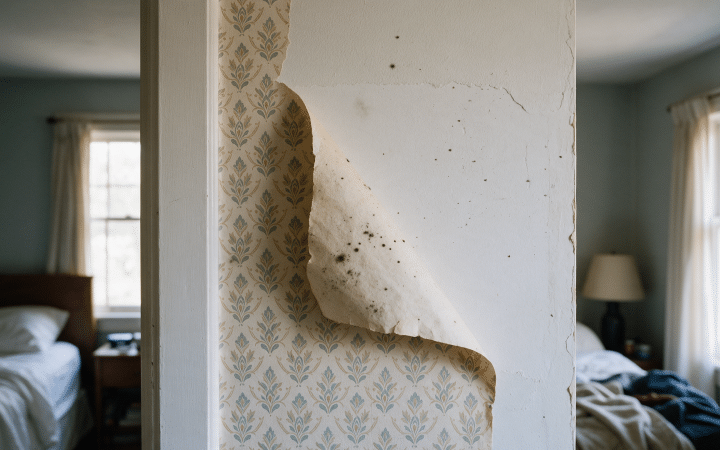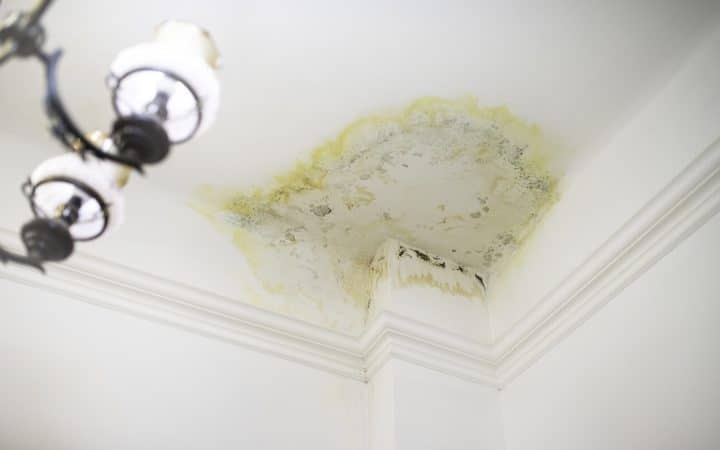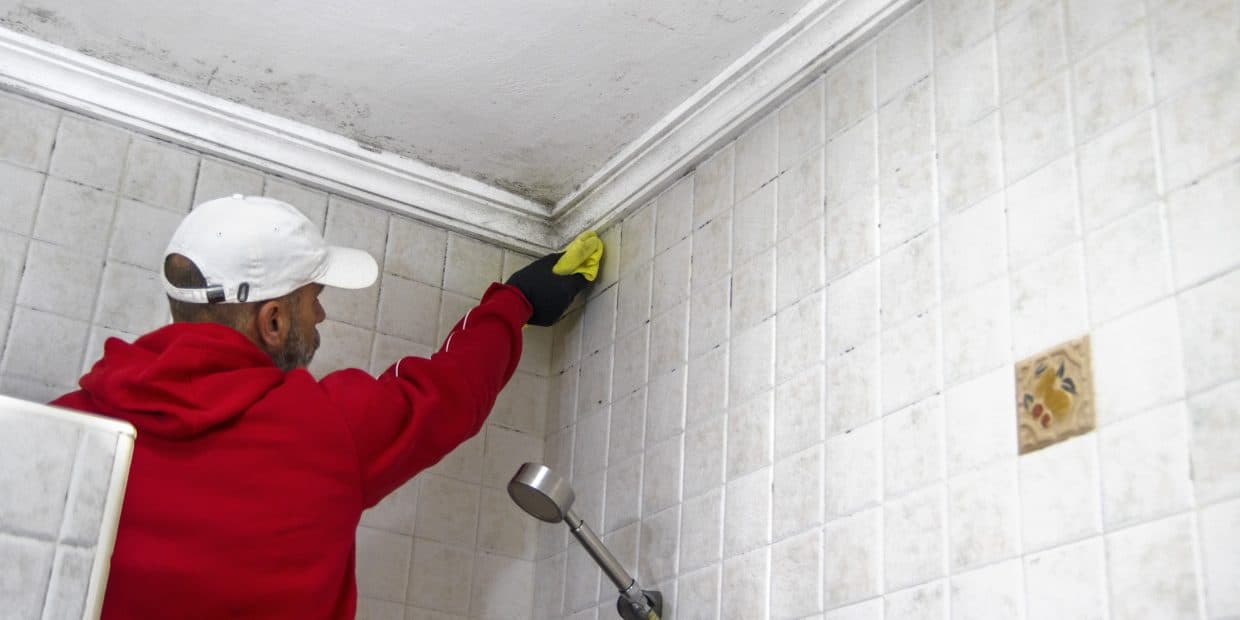
A bathroom ceiling usually grows mold for one of two reasons: steam condensing on a cold surface faster than the fan clears it, or water getting in from above. The humidity version builds up slowly, over weeks, in the corner right above the shower. A leak shows up fast, keeps a hard edge, and returns to the exact same spot no matter how often the fan runs.
Why does my bathroom ceiling have mold when the room gets wiped down every week? Because cleaning does not touch the two things mold actually needs once it has a food source: moisture, and a surface cool enough to hold it. Wiping the spot removes the stain. It does not change the humidity or the duct behind the fan, so the same corner fills back in.
Why does my bathroom ceiling have mold
Every shower pushes warm, moisture-loaded air into the room. That air looks for the coldest surface it can reach, and in most bathrooms that is the ceiling above the shower, especially where an exterior wall or an unheated attic sits just above the drywall. The water vapor gives up its heat there and turns back into liquid, the same way it does on a cold drink on a summer day. A little condensation dries off between showers. A lot of it, happening faster than the fan can pull the air out, keeps that corner damp long enough for mold to take hold.
How much is too much has an actual number behind it. The EPA’s own mold course puts the target for indoor relative humidity at under 60 percent, with 30 to 50 percent as the range to aim for when the house allows it. The same course says a wet surface needs to dry within 24 to 48 hours to avoid growth starting. A bathroom ceiling that stays damp well past that window, shower after shower, is exactly the setup those two numbers are warning about.
| Indoor relative humidity | What it means for the ceiling |
|---|---|
| Under 50% | EPA’s ideal range; a shower still fogs the ceiling briefly, but it clears |
| 50% to 60% | Still inside EPA’s acceptable ceiling, though a cold corner can stay damp longer |
| Above 60%, for long stretches | EPA’s threshold for a moisture problem; mold risk rises even with no leak at all |
Check it with a cheap hygrometer, not a guess
A small hygrometer placed on a shelf in the bathroom will read indoor relative humidity directly. If it sits above 60% for long stretches between showers, the whole house is running wet, not just the ceiling, and no amount of cleaning fixes that on its own.
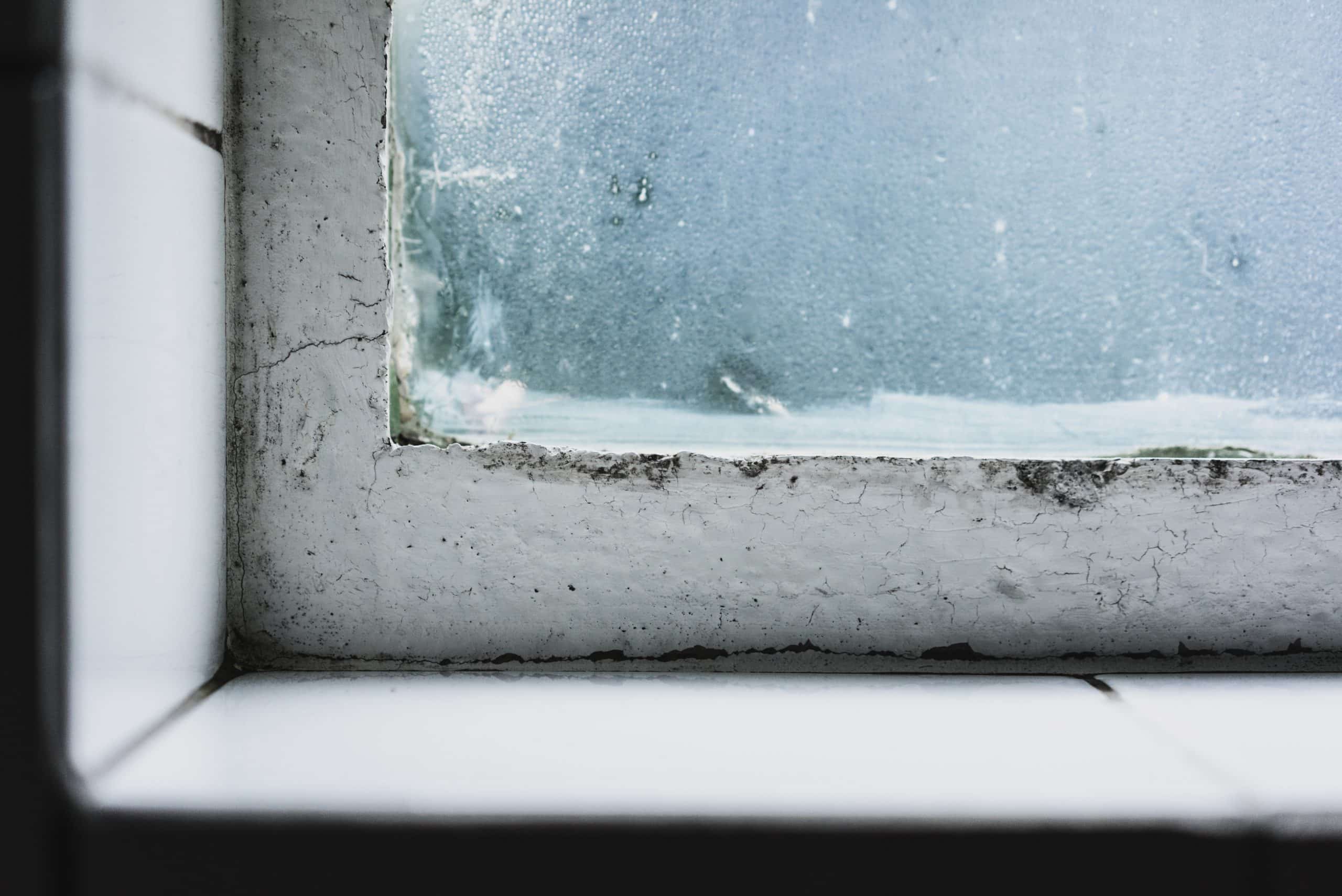
Condensation on a bathroom ceiling and condensation on a window are the same physics on different surfaces. A cold pane fogs for the same reason a cold ceiling does, and the condensation pattern on windows is worth a look if the glass in the bathroom fogs heavily too, since both point back to the same humidity problem.
Is it condensation or a hidden leak
Both problems leave a dark patch in roughly the same spot, so the stain alone will not settle it. The pattern around the stain, and what happens when the fan runs without a shower, usually will.
-
Look at the shape of the stain
A soft, speckled patch that fades at the edges and sits in the corner above the shower head is the condensation pattern. A stain with a harder ring, or one that runs in a line toward a specific fixture or the edge of the room, behaves more like water tracking from somewhere else.
-
Run the fan for a day without showering
If the ceiling is already dry, leave the bathroom alone for a full day with no one showering. A humidity-only ceiling dries out and stays dry. A ceiling that is still damp in the same spot the next morning, with no steam involved, has a water source feeding it from somewhere other than the shower.
-
Check what sits above that spot
A bathroom, laundry room, or any plumbing on the floor above turns this into a plumbing question before anything else. A ceiling that borders the roofline instead points toward flashing or a gutter problem, especially if the stain only grows after rain.
-
Press the spot with a gloved finger
Firm and solid under light pressure means the board itself is fine and this is a surface cleaning job. Soft, spongy, or a dent that stays means the drywall has taken on water from behind, not just picked up surface condensation.
A ceiling that borders a floor above is worth testing with the same firmness test used for a water-stained ceiling before assuming it is humidity. A ceiling that only acts up after rain is closer to a roof leak traced back to its source than to a shower problem, and the early signs a ceiling shows before any stain appears cover what to watch for before it gets this far.
How much airflow a bathroom actually needs
Most bathroom fans move less air than people assume, and the code minimum is a real, specific number rather than a guess. Washington’s building code, which adopts the International Residential Code’s mechanical ventilation table, sets local exhaust for a bathroom or toilet room at 50 cfm for intermittent operation, the kind that runs on a switch or a timer, or 20 cfm if the fan runs continuously. Those numbers are a floor, not a target to aim for exactly, and a fan rated at 50 cfm on a long or twisty duct run can deliver well under that at the grille.
| Fan operation | Code minimum airflow |
|---|---|
| Intermittent (switch or timer) | 50 cfm |
| Continuous (runs all the time) | 20 cfm |
The code also requires that exhaust air go straight outdoors, never into an attic or a wall cavity. A duct that dead-ends in attic insulation is a common reason a bathroom ceiling keeps growing mold no matter how long the fan runs: the moist air never actually leaves the house, it just moves into a colder space right above the same ceiling.
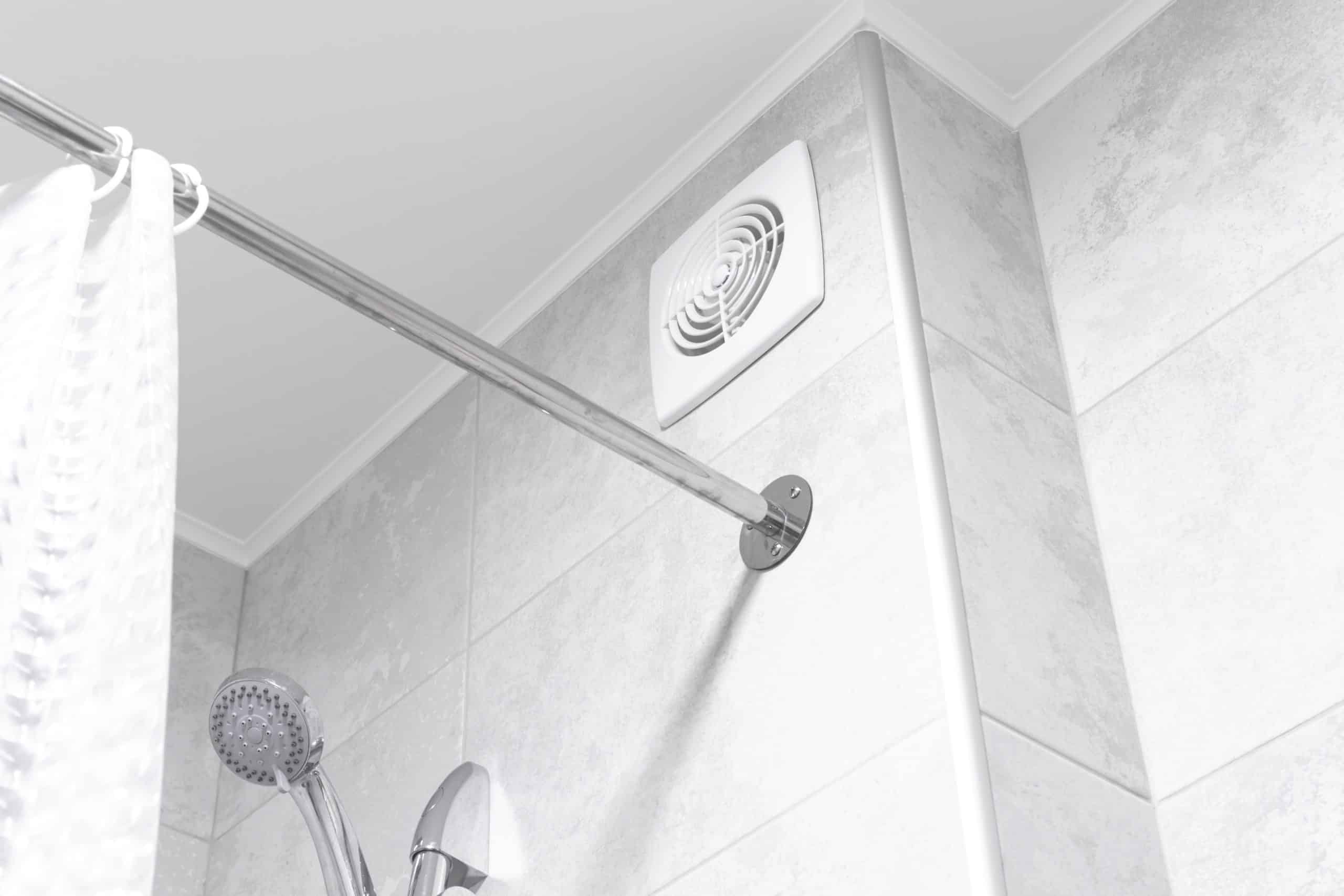
A window can help, but it is not a substitute for a vented fan. An open window changes air pressure and can pull humid air toward a cold surface elsewhere in the room instead of removing it, and it does nothing in winter when it stays shut. If the bathroom has no exhaust fan at all, that is the gap to close before buying anything else.
Why does my bathroom ceiling have mold again after cleaning
Mold comes back in the same spot for one of three reasons, and all three are more common than a cleaning product that failed. The first is a duct that was never actually venting outside. The second is painting over the spot before it was fully dry, which seals moisture under a new film instead of removing it. The third is a change that raised the room’s humidity without anyone noticing, like a longer hot shower routine, a new closed door that used to stay open, or a window that used to crack open and now does not.
Mold-resistant paint has a fungicide in the film and helps a surface that will get wet again no matter what, but it does not lower the humidity or fix a duct dumping into the attic. The full removal steps for a painted surface cover the wash-dry-reprime sequence in detail, including the two-bucket method that keeps a cleaning job from spreading the growth instead of lifting it.
When a bathroom ceiling stops being a cleaning job
Past about 10 square feet, this is not a DIY cleanup
The EPA’s homeowner guidance puts the line for a DIY cleanup at roughly 10 square feet, a patch about 3 ft by 3 ft. Past that size, after a sewage backup or flood water, or if the growth is inside the ceiling cavity rather than on its painted face, the guidance points to professional remediation with proper containment. This page covers building mechanics only; any question about health effects belongs with a physician, not a building guide.
A small, surface-level patch on a sound, painted ceiling is ordinary homeowner work once the moisture source is actually fixed, not just painted over. A ceiling that stays spongy after the duct and the humidity are both sorted out has water sitting in the board itself, and that calls for cutting the section out rather than cleaning it again.
Common questions
Is mold on a bathroom ceiling normal?
A little fogging after a hot shower is normal in almost every bathroom. Mold growing from it is not, and it means the room is staying wet longer than it should between showers, usually from weak airflow rather than anything wrong with the shower itself.
What’s the difference between mildew and mold on a ceiling?
In practice, mildew is the flat, surface-level growth that wipes off a painted ceiling with one pass of a cloth. Mold has some depth to it and tends to leave a shadow behind even after a light wipe. Either one points to the same underlying moisture problem.
Does bathroom ceiling mold come back after cleaning?
It does, reliably, if nothing about the humidity or the fan changed. Cleaning removes the stain that is already there. It does not lower the room’s humidity or fix a duct that empties into the attic, so the same corner fills back in on the same schedule.
Can I just paint over bathroom ceiling mold?
Not without cleaning and fully drying the spot first. Paint rolled over live growth traps the moisture underneath the new film, and the same patch tends to bleed back through within a season, sometimes with the edges softened just enough to look like a new, different problem.
Is an open window enough if there’s no exhaust fan?
Only part of the year. A window helps while it is warm enough to leave cracked open, but it does nothing once it stays shut through winter, which is exactly when a cold ceiling condenses the most. A vented exhaust fan is the part a window cannot replace.
How long should the fan run after a shower?
Long enough for the mirror to clear and the tile to stop feeling damp to the hand, not just until the shower turns off. A fan on a timer switch handles this automatically for anyone who tends to forget to switch it off.
Is black mold on a bathroom ceiling worse than other colors?
Not from a building standpoint. Color comes from the species and what it is feeding on, and it has no bearing on the repair: the size of the patch, the condition of the board, and the moisture source behind it decide the work either way. Anything past that is a lab question and a medical one, and neither belongs on a building guide.
The short version
Check the shape of the stain and what the fan does when it runs alone for a day. A soft patch that dries out and stays dry is a humidity problem: fix the airflow, keep the room under 60 percent relative humidity, and clean the existing spot once it is dry. A patch that stays damp regardless, or feels soft under a fingertip, has water coming from somewhere else and needs that source found before any cleaning sticks. More on diagnosing the water side of a house is in moisture and mold.