A bubble under drywall tape almost always means air got trapped between the tape and the wall before the mud had a chance to bond. Why is my drywall tape bubbling is one of the most common questions after a first taping job, and the honest answer is a process problem, not a bad roll of tape. The fix is quick once you know what you’re looking at: cut the loose section open, fill it with fresh compound, and press the tape back down.
Most bubbles show up within the first day or two, while the mud is still wet enough to tell you what went wrong. A smaller number appear later, after a second coat or even after paint, and that timing is itself a clue to the cause. This guide covers both: the live bubble you can fix today, and the kind that shows up weeks later and usually means something slightly different happened underneath.
Why is my drywall tape bubbling
Paper drywall tape only holds once it’s fully embedded in wet compound on both sides. A bubble is simply a spot where that embedding never happened, and there are a handful of usual reasons for it. According to USG’s own guidance on its Sheetrock taping compound, a blister is “the result of not having enough joint compound under the tape,” which lines up with what most bubbles trace back to on a real wall.
- Not enough mud under the tape to begin with, often from scraping the bedding coat too thin while trying to keep it flat.
- Mud that dried too fast, usually in a hot or dry room, before the tape could fully wet out and grip the board.
- The wrong compound for the job. Topping compound is built for finish coats, not for bedding tape, and it bonds less aggressively than all-purpose or taping compound.
- A dusty or unprimed surface under the tape, which keeps the mud from gripping the paper face of the board.
- Over-wiping the knife across the same pass too many times, which pulls moisture and adhesive out from under the tape instead of just smoothing it.
Puckered tape, a trapped bubble, or a wrinkle: what you’re actually looking at
Not every raised spot in drywall tape is the same problem, and the fix changes depending on which one you have.
| What it looks like | What’s actually happening |
|---|---|
| A soft, hollow spot that gives slightly under a fingertip | A true air bubble: mud never reached that patch of tape |
| A tight pucker or small fold running along the tape | The tape was placed with a crease before the mud set, not an air pocket |
| A wide, shallow wave over several inches | Usually a wrinkle from embedding the tape too fast with too little pressure |
| A hard ridge that doesn’t flex at all | Dried mud trapped under the tape, not air; it won’t flatten by pressing on it |
Don’t paint or sand over a bubble
Paint only makes a bubble stand out more, and sanding tears straight through paper tape. Fix the spot first, then paint.
How to fix a bubble in drywall tape
Press the whole bubble to find its edges
Run a finger over the suspect area and a few inches past it. A bubble often extends further than the part you can see, and you want to open the whole hollow spot, not just the middle of it.
Cut the loose section open
Use a utility knife to slit the bubble and lift the loose paper. Pull away anything that isn’t bonded; a patch that’s half-stuck will just bubble again later.
Clean out the gap
Brush or vacuum out dust and any dried crumbs of old compound. New mud needs to reach bare, clean paper or board, not sit on debris.
Fill the cut with fresh compound
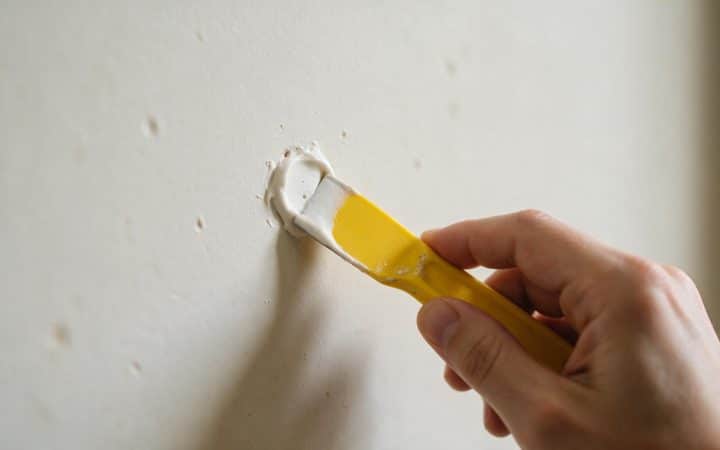
Work a thin layer of all-purpose or setting-type compound into the opening with a 4 to 6-inch knife, covering the full gap.
Press the tape back down and feather the edges
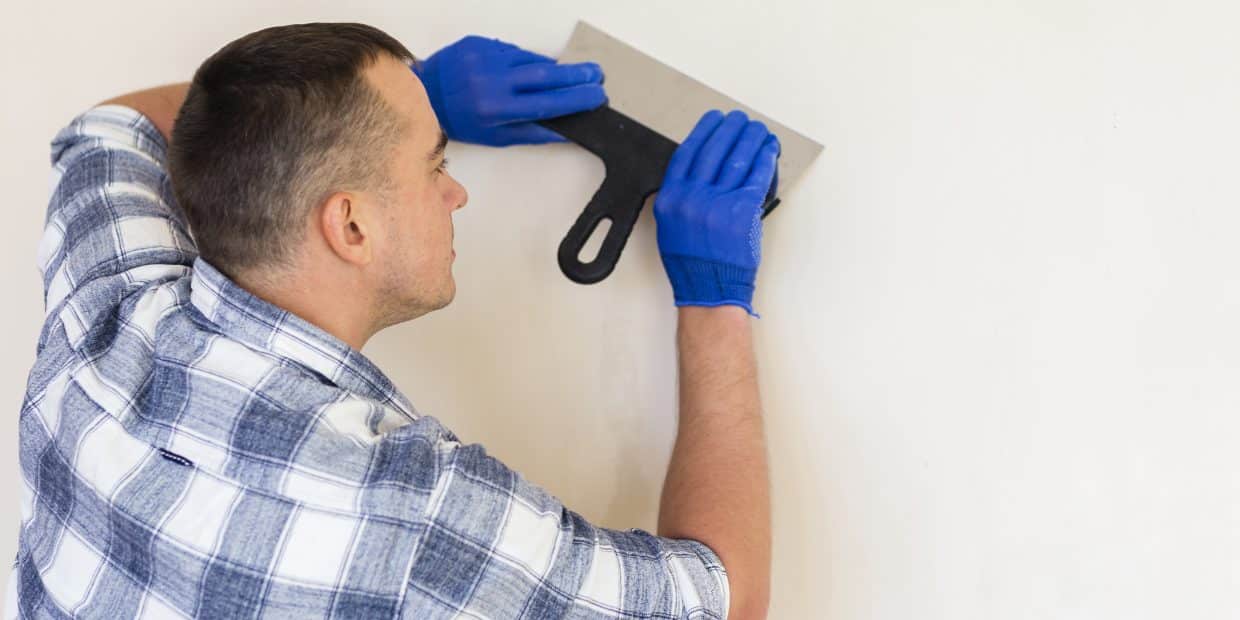
Lay the loosened tape back into the wet mud and smooth it outward from the center, working any trapped air toward the edges instead of burying it again.
Let it dry, then apply a normal finish coat
Once the patch is fully dry, treat it like any other taped seam: a wider fill coat, a final skim coat, then a light sand before primer.
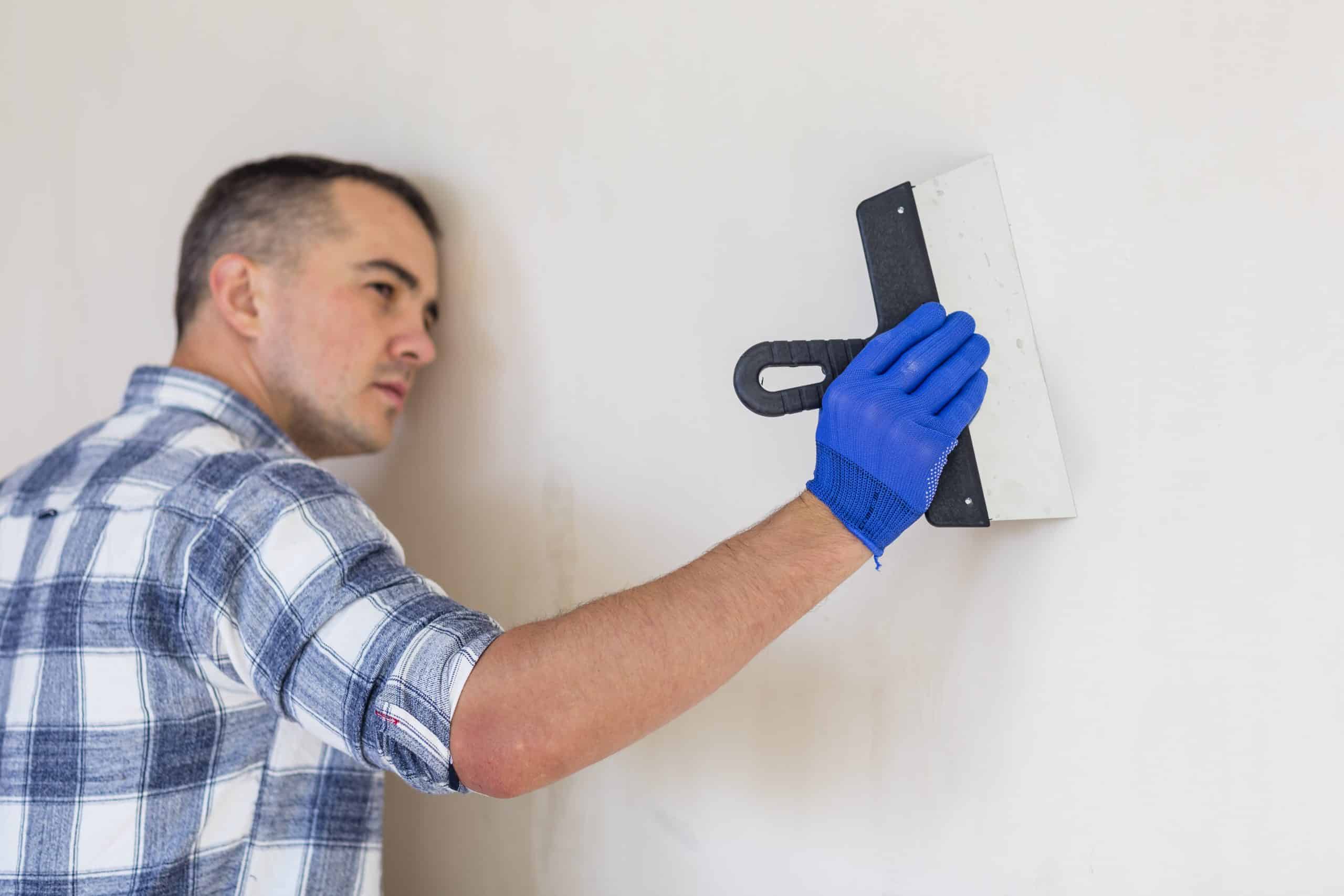
Why is my drywall tape bubbling again after a second coat
A bubble that shows up after the first coat is almost always a dry-mud or dusty-surface problem. A bubble that only appears after the second coat, or after paint, usually has a different cause: the first coat didn’t fully cure before more weight went on top of it, or moisture from the new coat softened an already-thin bond and let it lift. Working the second coat with a lot of water to make it spread easier can do the same thing, since it’s effectively re-wetting a bond that hadn’t set yet.
If what you’re actually seeing is a straight line splitting open rather than a raised, soft bubble, that’s a different failure with a different fix. See our guide to drywall seam cracks for why a seam reopens and which tape holds up better the second time. And if the tape is lifting right where a nail or screw has popped through the paint nearby, the two are often related. Our guide to fixing nail pops in drywall covers why that happens along the same framing member.
Paper tape or mesh tape: which one bubbles less
Paper tape needs a full bedding coat under it before it goes on; it has no adhesive of its own, so every bubble with paper tape traces back to the mud underneath. Self-adhesive mesh tape sticks to the board on contact, which feels like it should solve the bubbling problem, but mesh still needs a skim coat of compound pressed through it to bond properly, and a skim coat applied too thin or too fast can leave the same kind of hollow spot under the mesh instead of under paper. Our guide to setting-type joint compound covers why a setting compound, sometimes called hot mud, bonds faster and resists this kind of early bubbling better than all-purpose compound on a first coat.
Cutting into tape on a wall painted before 1978
US homes painted before 1978 may have lead-based paint under later coats. A homeowner working on their own house isn’t bound by the EPA’s RRP rule the way a paid contractor is, but the same precautions are worth following: keep the area damp while you cut, use a HEPA vacuum instead of a dry brush, and never dry-sand down to bare board on an old painted seam. See our disclaimer for the full rundown.
Stopping tape bubbles before they start
- Wipe or vacuum the seam free of drywall dust before you ever embed tape; dust under tape behaves like dust under a bandage.
- Use enough compound that mud squeezes out along both edges of the tape as you embed it, not just enough to make the tape stick flat.
- Bed the tape with firm, even passes instead of many light ones; over-wiping pulls out the moisture the bond depends on.
- Let each coat dry fully before the next one. A fan or open window speeds this up more reliably than a thicker coat does.
- Keep the room at a normal indoor temperature while the compound cures; very cold or very humid air slows the bond without you noticing it.
When a bubbling patch means more than bad taping
- Several bubbles spread across one whole sheet, rather than one spot, often points to a hanging problem behind the tape, not a taping mistake. Our guide to patching a large hole in drywall covers what a poorly fastened board looks like once it’s opened up.
- A bubble that sits near a brown stain, a musty smell, or soft board underneath it isn’t a taping problem at all. Check our guide to minor water damage before you patch over it.
- Bubbling that keeps showing up along a corner specifically, rather than a flat seam, usually points to the corner bead instead of the tape. See our guide to drywall corner cracks for that separate repair.
- If this is your third attempt at the exact same spot, something underneath still isn’t being addressed. It’s worth a second opinion before a fourth try.
Common questions
How do I fix puckered drywall tape?
Treat a pucker the same way as a bubble: cut it open, clean out the gap, and bed it again with fresh compound. A small pucker from a crease in the tape usually opens and lies flat without needing to remove much more than the folded section itself.
Should drywall tape be wet before it goes on the wall?
No. Paper drywall tape is embedded into wet joint compound, not wetted first. Pre-soaking it can actually work against the bond, since the compound needs to be what the tape grips, not a layer of water.
How do I keep drywall tape from blistering next time?
Use enough compound that a little squeezes out past both edges of the tape as you bed it, work it in with firm even passes instead of many light ones, and start on a clean, dust-free board. Most repeat blistering traces back to one of those three.
Does drywall paper tape go bad before you use it?
Old tape that’s gone stiff, yellowed, or started to curl at the edges can be harder to embed cleanly and is more likely to pucker during bedding. A roll stored flat and dry in normal conditions usually stays fine for years.
Why does my drywall tape keep bubbling in the exact same spot?
Because whatever caused it the first time, usually a thin bedding coat or dust under the tape at that one spot, is still there under the new patch. Re-mudding over a bubble instead of cutting it open first just hides the same gap again.
Does drywall tape need to be completely covered in compound?
Yes. Any dry spot of tape that isn’t bedded in compound is a future bubble waiting to happen. Check the tape under raking light once the bedding coat is on; a dry patch looks slightly duller and flatter than the wet compound around it.
Read what the bubble is telling you before you reach for the knife
A single bubble that appeared while the mud was still fresh is almost always a quick, cheap fix: cut it open, clean it out, and re-bed it. Spend the extra minute checking the cause, dry mud, dust, or too little compound, so the same spot doesn’t bubble again under the next coat. If what’s showing up is spreading across a whole sheet, tied to a stain or soft board, or sitting on a corner rather than a flat seam, it’s a different repair than this one. Our drywall repair guides cover those cases in more depth, and our surface prep guides cover getting the wall ready for paint once the patch is dry.
Guides on this site are for general information about routine home maintenance. Suspected asbestos, mold over 10 sq ft, or structural water damage should be assessed by a licensed professional in your state.