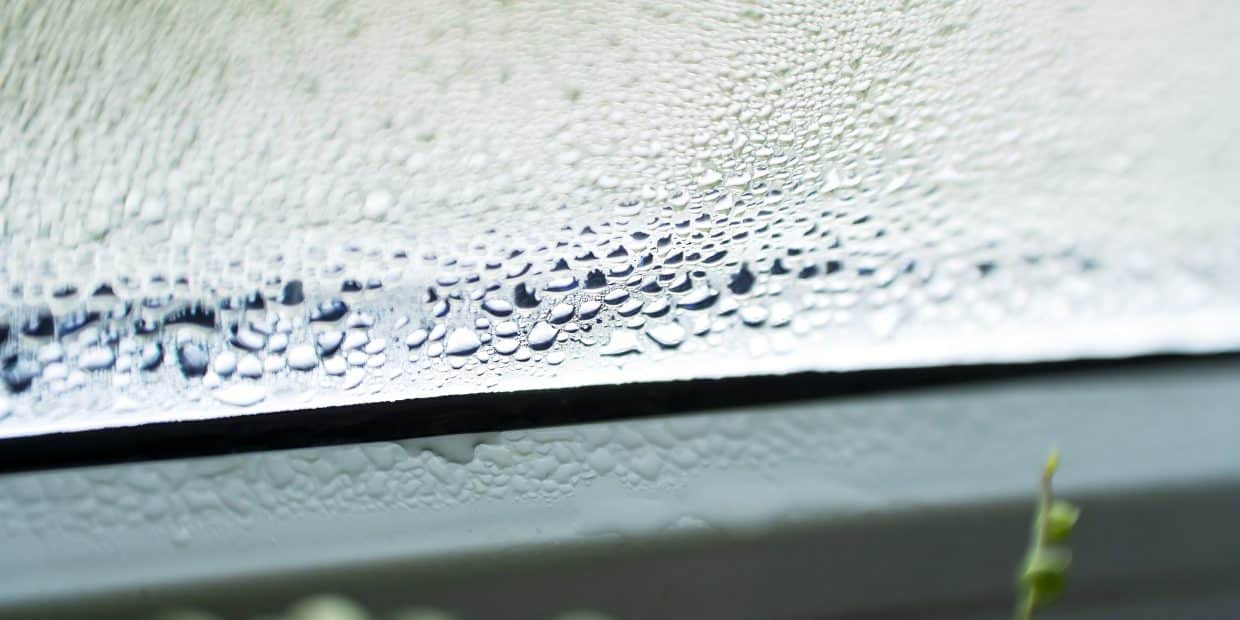
Condensation on windows is usually the first thing a homeowner notices and the last thing they think to act on. It shows up as a puddle on the sill in January, gets wiped up with a towel, and gets wiped up again the next morning. Most people treat it like weather. It is not weather. It is your coldest interior surface telling you, in real time, that the air in the house is carrying more moisture than that surface can handle.
That distinction matters because glass is not special. It is just the first place the problem shows up, the way a canary is not special either, it is just the first thing in the room that reacts. The same physics that fogs your window is working on the header framing above it, the drywall in the corner behind your curtains, and the cavity around every stud that touches an exterior wall. Glass just shows it fastest, because glass is by far the coldest surface in most houses.
This page is about reading that signal correctly: telling a humidity problem from a failed window seal, finding out what the water is doing to the sill and jamb while you are still deciding whether to worry about it, and fixing the cheap thing before anyone talks you into the expensive thing.
What this page does not cover
This is a building science page, written from the framing and finishing side, not a health page. I am a contractor and estimator, not a doctor and not an indoor air quality specialist, and nothing here is advice about mold exposure or respiratory risk. If someone in the house has a health concern tied to a damp window, that conversation belongs with a physician. See who I am and the disclaimer for where my advice stops.
Why the glass fogs before anything else does
Warm air holds more water vapor than cold air. When that warm, humid indoor air touches a surface cold enough to pull its temperature down to the dew point, the water it was carrying comes out of the air and lands on that surface as liquid. That is condensation, and it is not choosy about where it happens. It happens on whatever surface is coldest.
In almost every house, that surface is the window. A stud bay with fiberglass batt insulation is doing R-13 to R-21 worth of work keeping the indoor face of the wall close to room temperature. A single pane of glass is doing something closer to R-1. Even a decent double-pane unit with a low-E coating rarely clears R-3 at the center of the glass, and the aluminum or vinyl spacer bar at the edge of the unit is often colder still, which is exactly why the fog usually starts as a rim around the perimeter of the pane before it fills in the middle.
| Surface | Typical R-value | Why it fogs first, or doesn’t |
|---|---|---|
| Single-pane glass | About R-1 | Barely insulates at all, drops to near-outdoor temperature fast |
| Double-pane glass, center | R-2 to R-3 | Better, but still the coldest flat surface in most rooms |
| Window frame, aluminum with no thermal break | Under R-2 | Conducts cold straight through, fogs even when the glass doesn’t |
| Exterior wall, insulated stud bay | R-13 to R-21 | Warm enough that condensation rarely forms on the flat field |
| Exterior wall corner or header, thermally bridged | Lower than the field around it | Can condense quietly behind paint with no visible glass to warn you first |
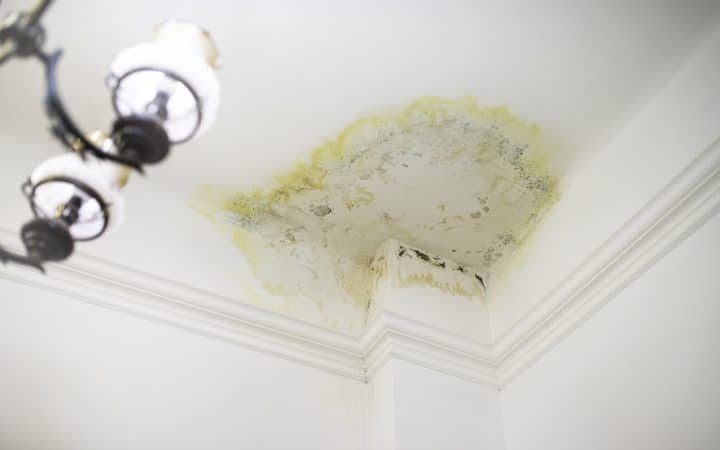
That last row is the one worth sitting with. The window fogging is not really the problem. It is the warning. A wall corner or a window header with less insulation in it is doing the same thing the glass is doing, just slower and out of sight, and by the time that shows up it is paint bubbling or a musty smell rather than a puddle you can wipe up in ten seconds. I cover how that specific pattern reads on drywall in how to get rid of mold on walls, under the section on cold-wall growth. Same mechanism, different surface, much harder to catch early.
There’s a rough number behind that word “dew point” worth knowing, because it explains why the same house fogs on some nights and not others. Air at 70°F and 40% relative humidity has a dew point around 45°F. Any surface in that room colder than 45°F, which most window glass is on a winter night, is going to collect moisture. Push the room to 50% relative humidity and the dew point climbs to about 51°F, meaning even a somewhat better-insulated window can now fog too. That six-point jump in humidity is often the entire difference between a window that’s dry and one that’s dripping, and it’s why chasing humidity down a little goes further than most people expect.
How much water your house is actually adding to the air
Humidity doesn’t come from nowhere, and the numbers surprise most people the first time they see them written down. A family of four breathing and giving off body moisture overnight adds roughly a pint of water to the air. Cooking a meal on the stovetop without lids on the pots can add another pint or two. A single hot shower without the fan running puts out about half a pint in ten minutes, and it keeps evaporating off the wet tile and towels for an hour after. Drying a load of laundry on an indoor rack instead of outside or in a vented dryer is the biggest single item on the list, often five pints of water released straight into the room air.
| Source | Roughly how much water, per use |
|---|---|
| A family of four, overnight (breathing and body moisture) | About 1 pint |
| Cooking a meal, pots uncovered | 1-2 pints |
| One shower, fan off | About 0.5 pint, plus ongoing evaporation for an hour after |
| Laundry line-dried indoors, one load | Around 5 pints |
| A row of houseplants or an open aquarium | Small but constant, adds up over a season |
None of these numbers need to be exact to be useful. Add them up for an average day in your house and it’s easy to see how a family can push several gallons of water into the air over a week without anyone running a humidifier on purpose. That water has to go somewhere. If it isn’t leaving through an exhaust fan or a cracked window, it’s landing on the coldest surface it can find, which is almost always the glass.
Reading where it forms tells you what it is
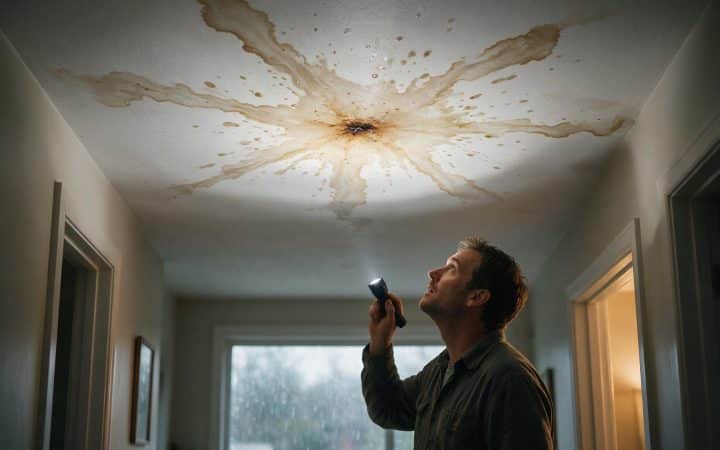
Not all window condensation means the same thing, and the location and shape of it is diagnostic, the same way a stain’s shape on a ceiling tells you where the water traveled from. Before you fix anything, spend a week just watching it.
| Pattern | What it usually means | What to check |
|---|---|---|
| Thin line along the bottom edge, gone by mid-morning | Normal overnight cooling, nothing alarming on its own | Track it for a week before doing anything |
| Whole pane fogged, worst in the corners | Humidity load is higher than the glass can handle, or the frame has weak insulation | Indoor humidity reading, frame material and age |
| Haze sitting between the two panes, won’t wipe off from either side | The sealed unit’s seal has failed, this is a window defect, not a humidity problem | Confirm with the wipe test below, then it’s a glass or window replacement, not a fix at the wall |
| Only the windows in one room fog | A local moisture source: an unvented bathroom, an aquarium, drying laundry, houseplants | What’s actually happening in that specific room? |
| Every window in the house fogs, every cold night | Whole-house humidity is running too high for the season | A hygrometer reading in two or three rooms, not just one |
| Old single-pane windows fog, the newer replacement windows across the room don’t | The difference is glass R-value, not “the house got more humid” | Nothing wrong with the house, the older unit is just colder |
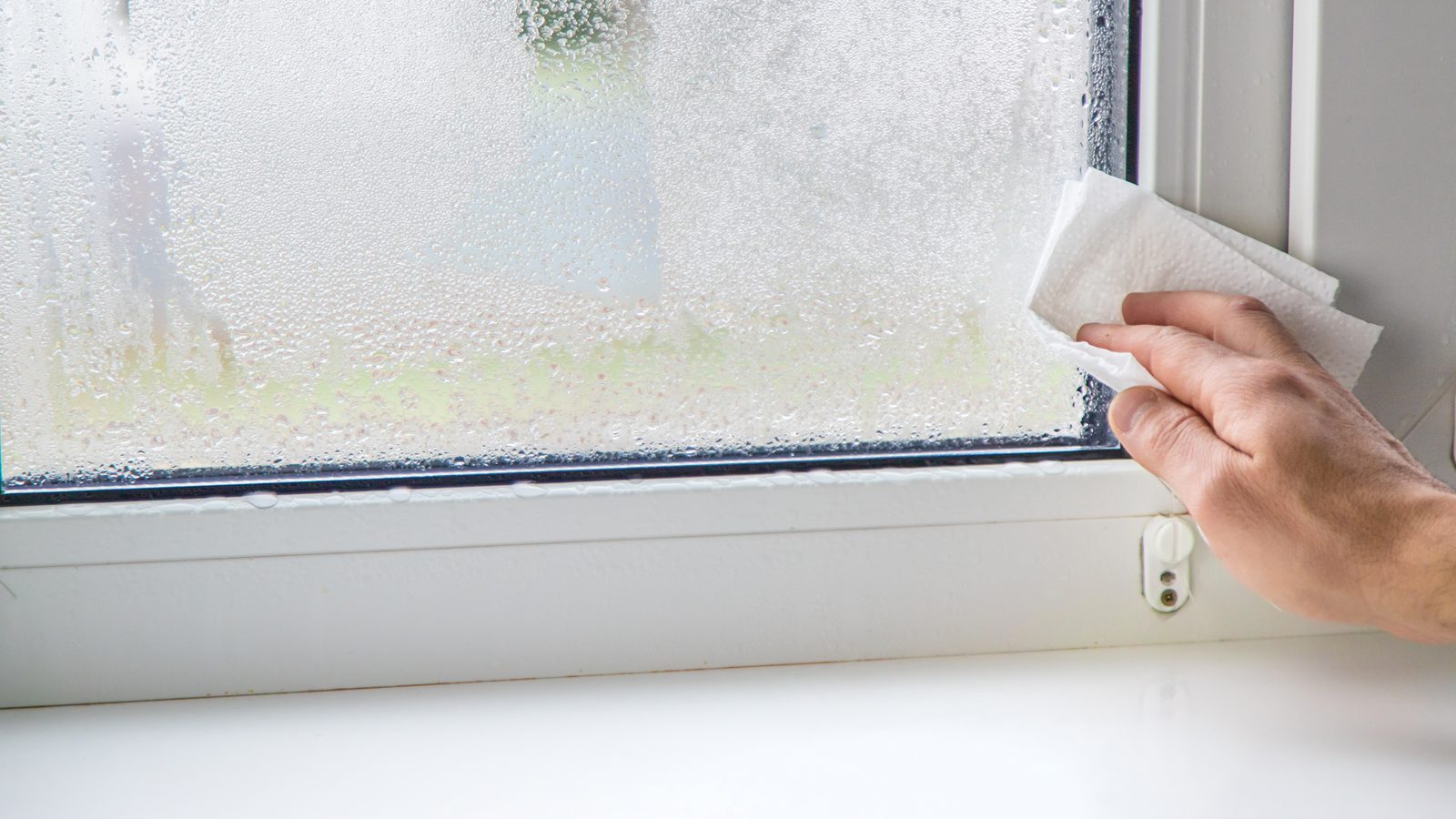
The wipe test settles the third row for good. Run a dry finger across the fogged glass. If it clears and the moisture was on a surface you could touch, that is ordinary condensation and it is a humidity and temperature question. If the haze sits behind the glass where your finger can’t reach it, on the inside of a sealed double-pane unit, no amount of ventilation or dehumidifying will touch it. The argon gas leaked out and moist air got into the gap between the panes years ago. That single pane of glass, or the whole sash depending on the window, needs to be replaced. It is a manufacturing failure, not something happening in your air.
What it does to the sill and jamb while nobody’s looking
Here is the part that gets skipped in almost every article on this topic, because most of them are written by window companies with an obvious reason to keep the conversation on glass. Water that beads on a pane doesn’t stay on the pane. It runs down, pools on the sill, and sits against the same wood or vinyl trim and drywall return every single morning, all winter, for years, because nobody thinks of a wiped-up puddle as an ongoing event.
That daily cycle is exactly what wood coatings and paint are not built for. Paint on a sill can tolerate the occasional wetting. It cannot tolerate standing water every morning from November through March. What I see, in roughly that order, is the paint losing its sheen right at the sill first, then fine cracking along the grain, then bubbling where water has gotten under the film, and finally, on an older wood sill that’s been ignored a few seasons, soft spots you can push a fingernail into. By the time it reaches that last stage the sill itself, not just the paint on it, needs to come out and be replaced, which is carpentry work well past a repaint.
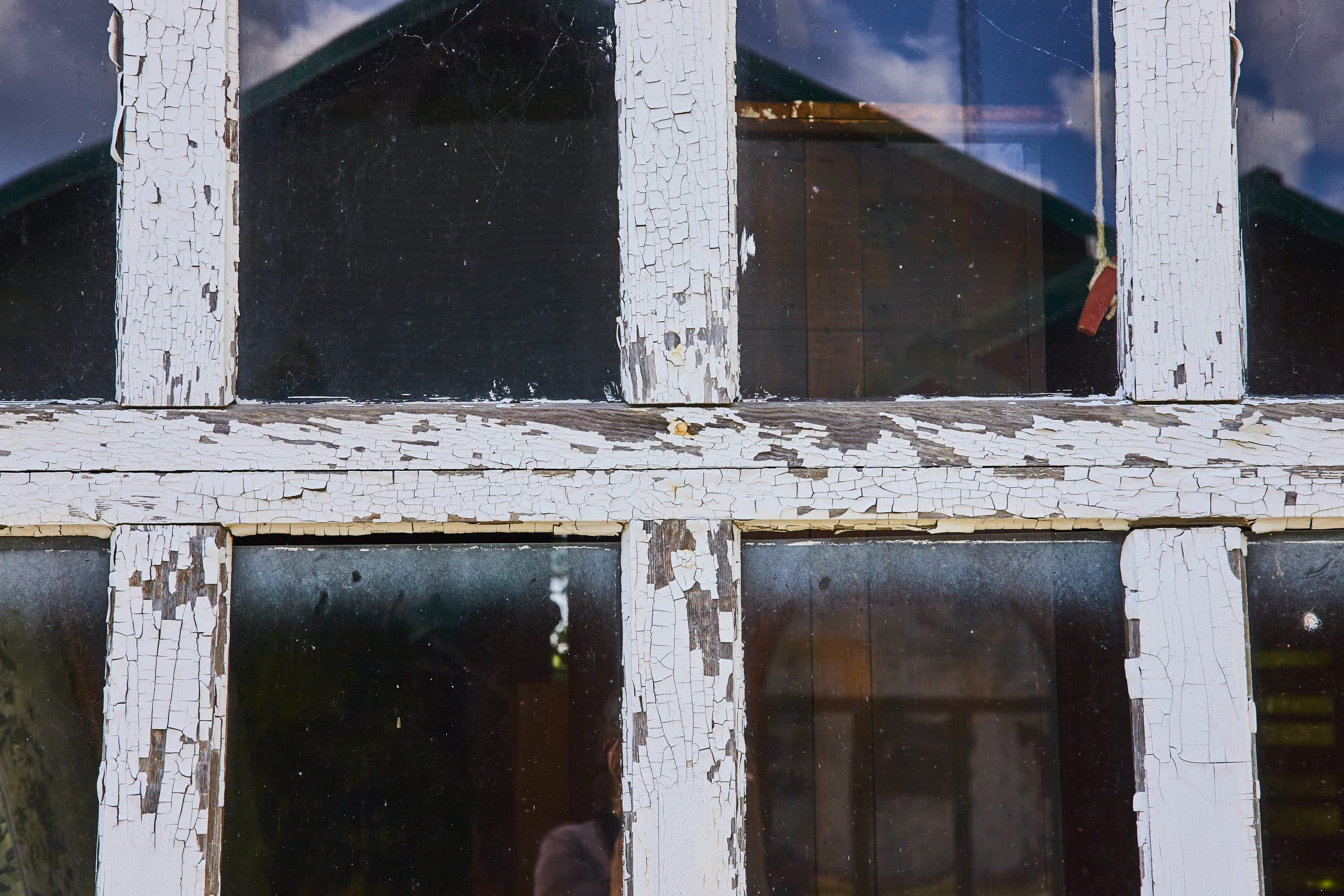
The jamb, the vertical trim on each side of the window, tends to go quieter and later than the sill, because it isn’t collecting standing water directly. What it gets instead is elevated humidity sitting right against it for hours at a time, which over a few seasons is enough to lift caulk lines, soften the drywall return where it meets the frame, and, in the cases I get called out for, start the same cold-corner growth described in getting rid of mold on walls. If you want to check whether it has already reached that stage without opening anything up, the non-destructive sequence in how to detect mold inside walls, the smell test at an outlet, a moisture meter reading against a baseline, applies just as well to a window jamb as it does to the middle of a wall.
Press the sill before you repaint it
Two fingers, firm pressure, center of the sill and again at both corners where it meets the jamb. Firm and springy, it’s a repaint. Soft, or a surface that dents and stays dented, the wood is done and painting over it just hides the problem for one more season. It’s the same test I use on drywall, and wood fails it the same way.
Window problem or house problem: the wipe test decides
People tend to jump straight to “I need new windows” the first time a sill floods, and sometimes that’s the right call. Often it isn’t. The two causes need completely different fixes, and confusing them is how someone spends four thousand dollars on windows and still has a wet sill the following January because the actual problem was never the glass.
If the moisture wipes off from the room side, you’re dealing with humidity meeting cold glass, a house-side problem you can usually fix for the price of a hygrometer and some changed habits. If it’s trapped between two panes and won’t clear no matter what you do to the air in the room, that’s the window itself failing and no amount of running fans will change it. Older single-pane windows carry a third possibility that isn’t really a failure at all: they were never going to perform like a modern double-pane unit, and some fogging on the coldest mornings is just what R-1 glass does. The question there isn’t whether it fogs, it’s whether the fogging is bad enough, often enough, to justify the cost of doing something about the glass rather than the air.
What actually cuts condensation on windows
Assuming the wipe test says humidity, not a failed seal, the fixes go roughly in order from free to expensive, and I’d work down this list in order rather than skipping to the bottom.
| Fix | What it actually does | Where it falls short |
|---|---|---|
| Run bath and kitchen exhaust fans during and 20 minutes after | Removes moisture right where it’s produced, before it spreads through the house | Does nothing if the fan vents into the attic instead of outside, check that first |
| Lid on pots, dryer vented outside, laundry dried outside or in a vented room | Cuts moisture at the source rather than chasing it after the fact | Small habits, but they add up to gallons of water per week in some households |
| Crack a window for 10 to 15 minutes, especially in bedrooms overnight | Swaps humid indoor air for drier outdoor air directly | Only works when outdoor air is actually drier, check a hygrometer rather than assuming |
| Keep curtains and blinds slightly open | Lets warm room air reach the glass instead of trapping cold, still air right against it | Doesn’t fix a genuinely high indoor humidity level on its own |
| Portable dehumidifier in the worst room | Pulls water out of the air directly, fast results | Ongoing cost to run, and treats a symptom if the source is unaddressed |
| Weatherstrip and caulk the window | Stops cold air infiltration that chills the frame and the glass near it | Won’t touch condensation caused by humidity alone |
| Interior storm panel or exterior storm window | Adds a second air gap, raises the temperature of the innermost glass surface above dew point | Extra pane to clean, and it won’t fix a house running at 65% indoor humidity |
The pattern in that table is worth naming directly: the free and cheap fixes address the humidity, and the expensive fixes raise the temperature of the glass so it can tolerate more humidity before it fogs. Both work. Only one of them is worth trying first.
The sequence I’d actually run
-
Track the pattern for a week before touching anything
Note which windows fog, how bad, what time it clears, and whether it’s every night or just the cold snaps. This tells you whether you’re chasing a whole-house problem or one room.
-
Run the wipe test on the worst window
Dry finger across the glass. Clears from the room side, it’s humidity. Trapped between the panes, it’s a seal failure and the rest of this list won’t fix it, skip to a glass replacement quote instead.
-
Buy a $15 hygrometer and put it in the worst room
Read it morning and night for a few days. Above roughly 45% relative humidity in cold weather, the air is carrying more water than most windows can tolerate without fogging.
-
Kill the moisture sources before you buy anything
Exhaust fans on and staying on after cooking and showering, lids on pots, laundry not drying on an indoor rack. This is the free fix and it’s often enough on its own.
-
Check where the bathroom fan actually vents
Pull the attic hatch and look. A fan that dumps into attic insulation instead of outside is adding humidity to the house from a hidden source, and I find this more often than homeowners expect.
-
Crack a window daily if the hygrometer stays high after that
Ten to fifteen minutes of fresh air exchange in a bedroom or living room, more if the house is newer and tightly sealed, since a tight house has nowhere for that moisture to go on its own.
-
Press the sill and check the jamb before you repaint anything
Two-finger test from the callout above. Firm, it’s cosmetic. Soft, the wood comes out before new paint goes on, or the paint fails again within a season.
-
Only then price storm panels or new glass
Once humidity is under control and the window is still fogging on cold mornings, that’s the point where raising the glass temperature with a storm panel, better weatherstripping, or new insulated glass is the right next step, not the first one.
When it isn’t really about your air
A few situations don’t fit the standard humidity story, and it’s worth ruling them out if the usual fixes aren’t working.
The frame itself is the cold path
An older aluminum-frame window with no thermal break will fog on the frame itself even in a house running perfectly ordinary humidity, because bare metal conducts outdoor cold straight to the indoor face with almost nothing slowing it down. Weatherstripping around the sash helps stop drafts, but it does nothing about that conduction path. If the frame fogs before the glass does, or fogs when nearby vinyl or wood windows in the same house don’t, the frame material is the cause, not your air.
One room is doing its own thing
A single room that fogs while the rest of the house stays dry almost always has its own moisture source sitting in it: an unvented bathroom, an aquarium, a row of houseplants, or a dryer vent duct that’s come loose and is dumping into a closet or crawlspace behind the wall instead of outside. Chase the source in that room specifically before assuming the whole house needs a dehumidifier.
New construction runs wet for a season
Framing lumber, drywall mud, paint, and fresh concrete or masonry all carry water when they go in, and they release it slowly as they cure. A brand-new house, or a room that just had a full renovation, can fog its windows for most of a first winter for reasons that have nothing to do with anyone’s habits and everything to do with the building itself drying out. That settles down on its own within a year in most cases.
Recent air sealing without added ventilation
A house that just had air sealing or insulation work done, without anyone thinking about how moisture will now leave the building, can go from fine to foggy within a season. Tightening a house closes off the small, uncontrolled gaps that used to let humid air leak out on its own. That’s a good thing for heating bills and a bad thing for a window if nobody added a fan, a trickle vent, or a mechanical ventilation system to replace the airflow that got sealed up.
What fixing it costs in 2026
The spread here is enormous on purpose, because the honest fix for most houses costs almost nothing and the fix people jump to instead costs thousands.
| Fix | DIY, 2026 | Notes |
|---|---|---|
| Hygrometer | $10-$25 | Buy two, put one in the worst room and one as a baseline elsewhere |
| Weatherstripping and caulk, per window | $10-$30 | Materials only, an afternoon of work for a house full of windows |
| Portable room dehumidifier | $120-$300 | Plus the electricity to run it through the cold months |
| Bathroom exhaust fan replacement, DIY | $60-$150 | Pro install runs $150-$450 if the vent run needs rerouting to daylight |
| Interior storm window panel, per window | $40-$150 | DIY-friendly, removable in summer |
| Exterior storm window, installed | $150-$400 per window | Pro job in most cases, adds a real air gap at the glass |
| Sill or jamb repaint after drying and firm-testing | $40-$120 per window | Stain-blocking primer if there’s tannin staining, covered in painting walls |
| Rotted sill or jamb replacement, carpentry | Not a typical DIY job | $200-$600 per window, pro, before repainting |
| Full window replacement, double-pane low-E, installed | Not typical DIY | $450-$1,200 per window, pro |
A $15 hygrometer and a week of habit changes solve more of these than a $6,000 window order
I’ve priced full-house window replacements for people whose actual problem was a bathroom fan venting into the attic and a family of five drying laundry on an indoor rack. New windows can be the right call. They’re rarely the first thing to try, and they won’t fix a humidity problem the old windows weren’t causing in the first place.
Keeping it from coming back
The target range most building groups land on is 30 to 50% relative humidity indoors, with the lower half of that range for the coldest months, since colder glass tolerates less humidity before it fogs.
| Season | Target indoor RH | Why |
|---|---|---|
| Coldest months | 30-35% | Glass is at its coldest, so the tolerance for humidity is lowest |
| Shoulder seasons | 35-45% | Comfortable range with less pressure on cold surfaces |
| Warm months | Under 50% | Condensation risk drops, but this is also the range that keeps mold pressure low generally |
Beyond the humidity target, the habit that actually prevents the sill damage is checking it. Once a week through winter, run a finger along the bottom of each window frame before the puddle has had all night to sit there. It takes thirty seconds and it’s the difference between wiping up water and repainting a sill.
Questions I get on site
Does condensation on windows mean my house is too airtight?
Sometimes, but tightness alone isn’t the problem, it’s tightness without a way for moisture to leave. A well-sealed house that had air sealing done without anyone adding mechanical ventilation, like a bath fan upgrade or a fresh-air intake, will hold onto humidity that used to leak out through gaps. The fix is usually ventilation, not loosening up the house again.
Is condensation trapped between the panes dangerous?
Not dangerous, but it means the sealed unit has failed and it won’t clear on its own. Most double-pane windows can have just the glass unit replaced inside the existing frame, which is considerably cheaper than a full window replacement, so get a quote for that before assuming you need the whole window redone.
Will a dehumidifier fix it completely?
It will help a lot if humidity is genuinely the cause, but it’s treating a symptom if the source keeps producing water faster than the unit removes it. A dehumidifier running constantly next to an unvented bathroom fan is fighting a losing, expensive battle. Fix the source first, then see how much dehumidifying you still need.
Does condensation on windows cause mold?
The water sitting on the sill and running into the jamb can feed growth on the wood, trim, or drywall return around the window if it’s left standing long enough. It’s a structural and material question rather than a health one from where I sit, and how to get rid of mold on walls covers where a homeowner cleanup ends and a professional job begins.
Should I fix the humidity or replace the windows first?
Humidity, almost always. New windows raise the temperature the glass can tolerate before fogging, but they don’t cap how much water is in the air, and I’ve seen brand-new triple-pane windows fog in a house that never addressed an unvented bathroom. Fix the source, track it for a few weeks, and only then decide whether the glass itself still needs upgrading.
Can condensation freeze and crack a window?
Frost forming on cold glass is common and won’t crack it on its own. What can cause damage over time is repeated freeze-thaw cycling at a wood sill that’s absorbing that water, since wood swells wet and shrinks dry, and enough cycles of that will eventually open up the paint film and joints faster than normal wear would.
My single-pane windows fog every cold morning. Is that normal?
For a lot of older houses, yes, some. Single-pane glass has so little insulating value that it will fog at humidity levels a double-pane window handles fine. The question isn’t whether it fogs at all, it’s how bad and how often, and whether the sill is being dried out or left wet. If you’re checking and drying it regularly and the paint is holding up, ongoing light condensation on old glass isn’t an emergency, it’s a known trade-off of that glass.
Doesn’t cracking a window in winter just waste heat?
A little, for the few minutes it’s open, but a fogged window is already losing heat through that thin, cold glass around the clock, and a wet sill or rotted jamb costs far more to fix than the heat lost from ten minutes of fresh air. Ten to fifteen minutes of exchange once or twice a day is a small trade against the alternative of a saturated house and a repaint job every other spring.
Humidity targets here follow the range most ASHRAE and EPA moisture guidance converges on for residential interiors. R-value figures are typical published ranges for the glass and frame types named, not a measurement of your specific window. Prices are US ranges current as of August 2026 and will vary by market and window size. If your windows are doing something that doesn’t fit any of the patterns above, tell me about it and I’ll take a look. More on how I work is on the about page, and the rest of this section lives under moisture and mold. For what the repair side of this costs across the site, see the cost index.