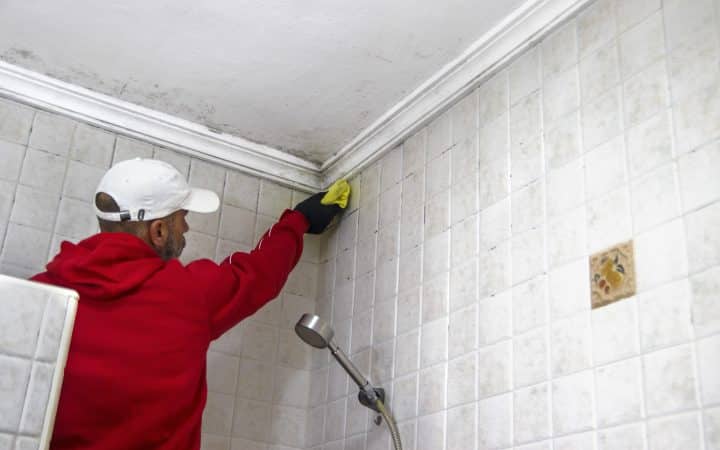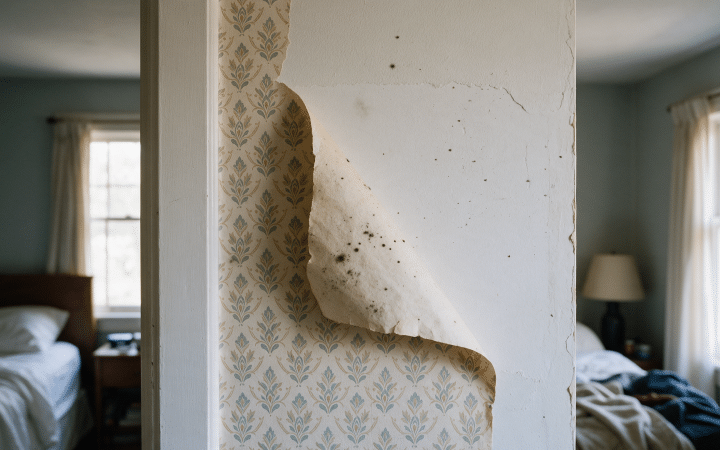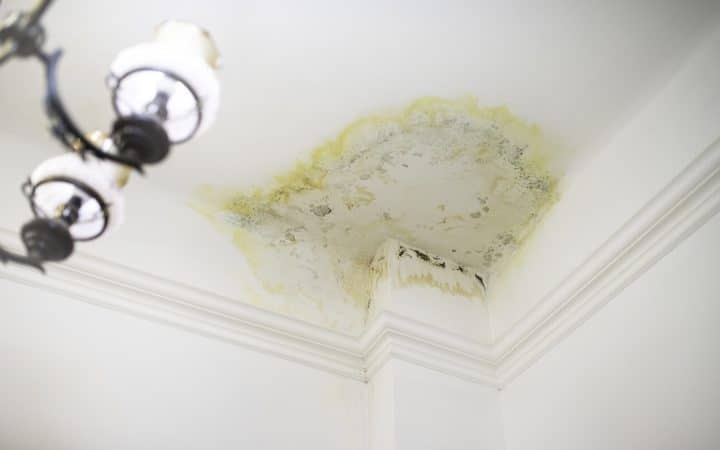
A musty smell, a soft patch of drywall, or a stain that keeps reappearing all point to the same question: is there mold growing where you can’t see it? The way to detect mold inside walls is to combine a sensory check with a moisture reading, then confirm what’s actually there with a small inspection hole, before you call anyone or buy a test kit. None of that requires tearing into the wall first.
Most of what gets sold for this job, air-sampling kits, lab panels, handheld “mold detectors,” promises more certainty than it delivers. The federal agency that studies indoor air quality for a living recommends against routine air sampling for exactly that reason. What actually narrows the problem down is cheaper and more direct: look, smell, measure moisture, and if those three agree something is wrong, open a small hole and look at the back of the board.
Why a smell or a stain alone does not prove anything yet
Mold needs three things to grow: a food source, a comfortable temperature, and moisture. The paper facing on drywall supplies the first two permanently, so the only variable that changes from wall to wall is water. That means a musty smell tells you moisture is present somewhere, but not where, how much, or whether it has actually started feeding anything yet. A stain can be old and dry. A smell can be coming from a damp basement two rooms away and traveling through the ductwork. Treat either one as a reason to test, not as a diagnosis on its own.
How to detect mold inside walls without cutting into it
Start with the two checks that cost nothing and take about five minutes combined. Walk the wall with your nose first: a musty, earthy smell that gets stronger near an outlet, a switch plate, or a baseboard gap usually means the cavity behind it is venting damp air into the room, since those openings are gaps in whatever vapor barrier the wall has. Then press a fingertip against any suspect area. Drywall that gives slightly and does not spring back has already taken on water in the core, whether or not anything is visible on the surface yet.
| Method | What it tells you | What it misses |
|---|---|---|
| Visual and smell check | Where water reached the cavity, how active the problem feels | The exact species, and anything inside a closed, unventilated cavity |
| Moisture meter reading | Whether the material behind the surface is still wet | Visible contamination level, and whether the moisture has fed anything yet |
| Small inspection hole with a light | What is physically on the back of the board | Anything a few feet away from the hole |
| At-home air-sampling kit | A spore count in that room’s air on that day | Whether those spores came from inside the wall, outside air, or normal background |
| Lab air or surface sample | A documented result for a dispute or a sale | Nothing about location, source, or what to do next |
Check outlets and switch plates first
An outlet cut into drywall is one of the few places the vapor barrier is already broken. If a smell is stronger there than in the middle of the room, the cavity behind that section of wall is the one to investigate first, long before you reach for any tool.
What a moisture meter reading actually means
A pin-type moisture meter pushes two small probes through the paint and into the gypsum core, then reads the electrical resistance between them, which drops as the material gets wetter. A pinless meter does the same thing without piercing the surface, using a sensor pad instead. Either way, the reading describes the material right under the probes, not the whole wall and not the air in the room. A high reading low on a wall that feels completely dry to the hand is one of the more reliable signs that the cavity is still wet, because surface paint dries long before the board behind it does.
A single reading from one spot is not enough. Take several across the suspect area and compare them to a reading from a wall you know is dry, in the same house, on the same day, since humidity and the meter’s own calibration shift the baseline. A reading that climbs the closer you get to a baseboard, a window, or a plumbing wall points you toward the source instead of just confirming there is one.
When a small inspection hole tells you more than any test kit
If the smell and the moisture reading agree that something is off in a specific spot, the next step that actually answers the question is looking at the back of the board. A dime-sized hole, drilled low on the wall where the baseboard will cover it afterward, turns guessing into looking. It costs about two minutes and a patch of joint compound, not a lab fee.
Know what’s behind the wall before you drill
Walls hide wiring and, less often, plumbing. Use a stud and wire detector before you drill anywhere, and if the hole is going in near an outlet or switch, shut off that circuit at the breaker first. If a detector reading is unclear or you are not confident where a line runs, stop and call an electrician or plumber instead of drilling blind.
-
Pick the spot
Choose a point low on the wall, in the area where the smell or moisture reading was strongest, ideally where a baseboard will hide the patch afterward.
-
Check for wiring and plumbing
Run a stud and wire detector over the spot. If an outlet or switch sits nearby, turn off that circuit at the breaker before you drill.
-
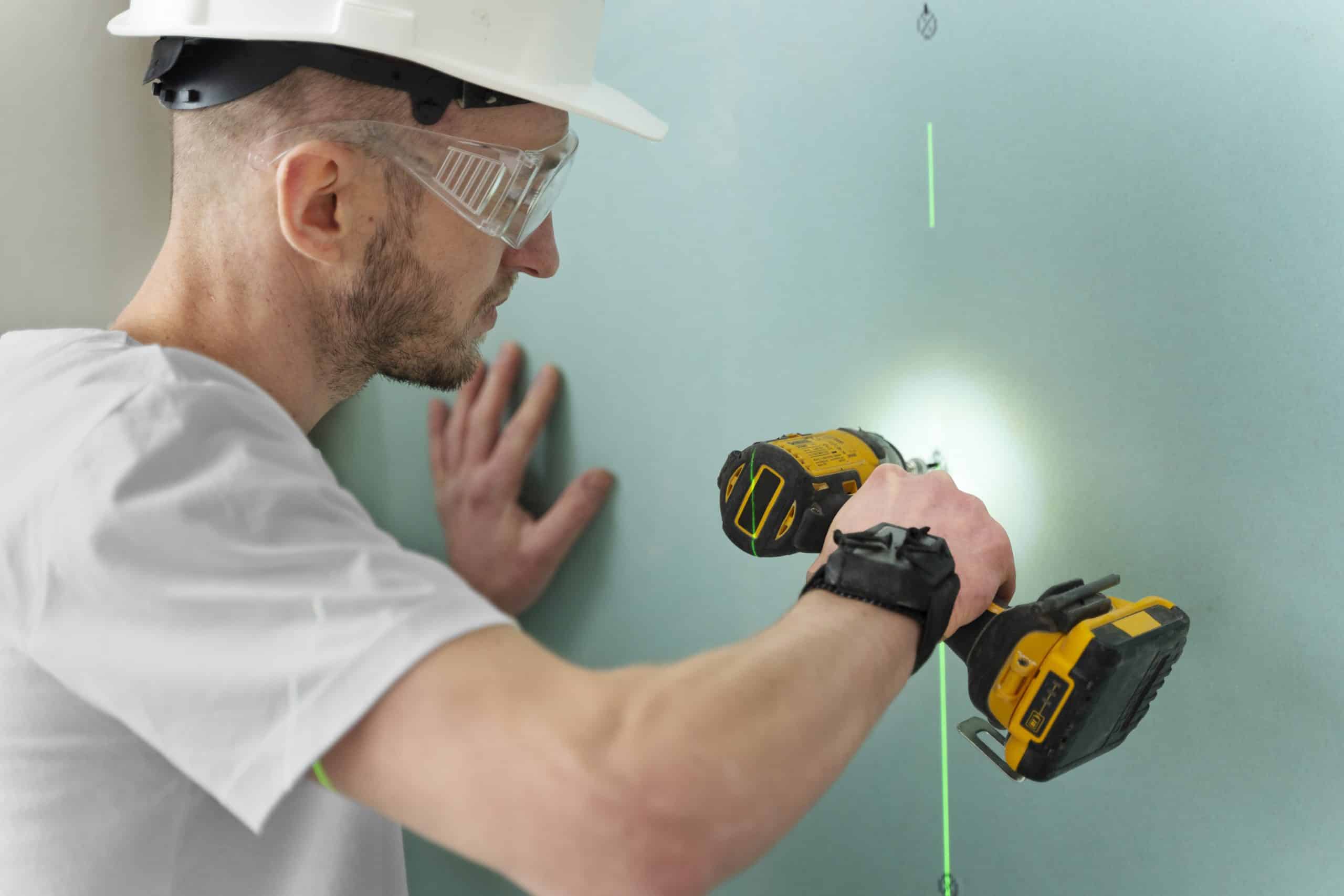
Drill a small pilot hole
A 3/8 to 1/2 inch bit is enough. Stop as soon as you feel the bit break through the back of the board.
-
Look, do not just feel
A phone flashlight angled into the hole, or a cheap borescope camera, shows the back of the drywall and the top of the insulation. You are looking for discoloration, fuzzy growth, or wet, darkened material.
-
Bag anything that comes out
If dust or debris falls out of the hole, wipe it up with a damp cloth rather than brushing it dry, so nothing gets stirred into the air.
-
Patch the hole
Once you have seen what you needed to see, a small piece of mesh tape and joint compound closes it. The repair itself is the smallest job on this page; see how to repair a dent in drywall for the same patching technique.
Why health agencies are skeptical of air-sampling test kits
The home test kits sold for this, a petri dish you leave out for 48 hours or a cassette you mail to a lab, measure spores in the air of one room on one day. Spores are present in the air of essentially every building on earth, so a positive result does not tell you where they came from, and a negative result does not rule out a colony growing quietly behind a wall that simply was not releasing spores that morning. The CDC’s National Institute for Occupational Safety and Health states plainly that it does not recommend routine air sampling for mold in building evaluations, and that visual inspection and musty odors are more dependable indicators than air sampling results. Its own guidance leans on a structured walkthrough tool instead, the Dampness and Mold Assessment Tool, built to find and prioritize moisture problems rather than to count spores.
That does not mean lab testing is worthless. It earns its cost in two situations: a dispute with a landlord, insurer, or home seller where you need a documented result, or a case where the smell is obvious and persistent but a visual check and a moisture meter cannot locate it. For an ordinary homeowner trying to decide whether to open a wall, the inspection hole from the previous section answers the question for less money and in less time.
How to detect mold inside walls when nothing looks wrong yet
Not every case starts with a visible stain. A wall can run damp for months behind an unremarkable painted surface, especially on an exterior wall in a cold climate or behind furniture pushed tight against the wall. The tells at this stage are smaller: paint that has started to bubble or lift with no water source visible above it, a baseboard that has started cupping away from the wall, or a section of drywall that feels slightly springy under your palm compared to the wall next to it. Any one of these is a reason to run the moisture meter over that section before it becomes an obvious problem, not after.
When to stop testing and call a professional
The EPA’s own homeowner guidance draws the do-it-yourself line at roughly 10 square feet of visible growth, a patch about 3 feet by 3 feet, mainly because of how much airborne material gets generated once you start disturbing anything bigger than that without containment. The same logic applies to what you find through an inspection hole: a dry cavity with a stained but firm paper backing is still a DIY job. Visible growth spreading across framing, insulation, or more than a couple of square feet of the back of the board means the containment and the cleanup are no longer a weekend project. For what that boundary looks like in practice and how to clean up what is within it, see how to get rid of mold on walls.
| What you found | What it usually means | What to do next |
|---|---|---|
| Dry reading, no smell, surface stain only | Likely an old stain or dried residue, not active growth | Clean and repaint, then watch the spot |
| Elevated moisture, no visible growth yet | Water is present but has not fed anything yet | Find and stop the water source first |
| Growth on the back of the board through the hole, cavity dry elsewhere | A contained, localized problem | Usually still a cut-and-patch job |
| Growth on framing, insulation, or past the hole’s edges | The cavity itself is compromised | Time for a professional, with containment |
Two related cases get their own page because the mechanism is different enough to matter. A wall covered in wallpaper hides mold behind wallpaper differently than painted drywall does, and a bathroom ceiling has its own test for telling condensation from a hidden leak. If condensation on the windows nearby is also a daily sight, that is usually the same humidity problem showing up on the coldest surface in the room first.
Common questions
Can you smell mold before you can see it?
Often, yes. A musty, earthy smell is frequently the first sign, especially from a wall cavity that is still closed up. Treat the smell as a reason to check with a moisture meter and, if needed, a small inspection hole, rather than something to identify by nose alone.
Does a moisture meter work through paint and wallpaper?
A pin-type meter works through paint without trouble, since the probes puncture the surface. A pinless meter reads through a reasonable thickness of paint or a single layer of wallpaper, but thick paper, foil-backed wallpaper, or several layers of old paint can throw the reading off, so a pin-type check is more reliable on a wall with a complicated finish history.
What is the difference between a borescope and just drilling a hole and looking with a flashlight?
A borescope camera feeds a thin, flexible lens through a small hole and shows the inside of the cavity on a screen, which lets you see around corners and farther into the wall. A phone flashlight through the same hole only shows what is directly visible from the opening. For a quick check right at the hole, a flashlight is usually enough; a borescope earns its cost when the suspect area is larger or harder to see directly.
Do at-home mold test kits actually work?
They measure something real, spore counts in room air on a given day, but that measurement rarely answers the question a homeowner actually has, which is whether there is an active colony inside a specific wall. A visual check, a moisture reading, and an inspection hole answer that question more directly and for less money.
Is a musty smell always mold?
No. The same smell can come from a damp crawlspace, a musty HVAC duct, wet carpet padding, or even a forgotten damp towel, and it can travel through a house far from its actual source. A musty smell is a reason to investigate, not a confirmed diagnosis.
Should I drill a hole just to check, even if nothing looks wrong?
Only if the smell or the moisture reading already pointed you toward that specific spot. Drilling exploratory holes across a wall with no evidence to narrow the search does more damage than it is worth. Let the sensory check and the meter tell you where to look first.
When should a professional test instead of a homeowner?
When the visible growth is already past roughly 10 square feet, when the smell is strong but a moisture meter and an inspection hole both come up dry, or when the situation is turning into a dispute with a landlord, insurer, or buyer who needs a documented result rather than a homeowner’s own reading.
The decision in one line
If the smell is faint, the meter reads dry, and nothing feels soft under your palm, there is nothing to open up yet. If two of those three disagree with the third, a dime-sized inspection hole settles it for less than the cost of a single lab panel. More on reading the water side of a house is in moisture and mold, and the patching side of any hole you open is in the drywall repair hub.