A drywall repair almost never costs what the hole is worth. The filler in a doorknob-sized hole runs about twelve dollars. The quote for the same hole lands somewhere between $180 and $350, and every client who reads that line asks me the same question.
So here is the honest answer, written by someone who has priced this work for a living since 1997. I run a building company from a desk now: estimates, quotes, site supervision. I have put a number on tens of thousands of square feet of patching and finishing. The numbers below are the ones I use, with the reasoning left in.
What a drywall repair cost looks like on a real quote
These are US ranges as of August 2026, for a repair done properly and finished ready for paint. Paint itself is usually a separate line.
| Job | What it involves | Typical quote |
|---|---|---|
| Nail pops, a handful | Reset screws, two coats, sand | $150–$300 |
| Small hole, under 6 in | Mesh patch, three coats | $150–$350 |
| Doorknob hole | Patch, three coats, texture match | $180–$350 |
| Large hole, 12 in and up | Backing, cut-in piece, tape, three coats | $250–$500 |
| Half sheet replaced | Cut out, refasten, tape, finish | $300–$600 |
| Full 4×8 sheet replaced | Remove, hang, tape, finish, texture | $400–$800 |
| Ceiling patch | Same work, overhead, plus texture | $350–$800 |
| Hairline crack, taped properly | Cut out, tape, feather 12 in wide | $200–$400 |
| Water-damaged ceiling section | After the leak is fixed: cut back, replace, stain-block, finish | $600–$1,600 |
Most single-room jobs I quote fall between $250 and $800. Anything under $150 is not a real number in 2026, and I will explain why in a minute.
Where the money actually goes
Take a $400 patch on a wall. Roughly:
- Labor: $260 to $310. Two or three visits, because compound has to dry between coats. A finisher bills $60 to $110 an hour in most metros, less in low-cost markets.
- Materials: $20 to $45. Compound, tape, a scrap of board, sandpaper, primer.
- Trip and setup: $60 to $120. Drop cloths, plastic, dust containment, hauling the debris away.
- Overhead and margin: whatever is left, which on a small job is thin.
The material is five to ten percent of the bill. That is the whole reason drywall repair cost feels wrong to people. You are not buying compound. You are buying three separate trips by someone whose feathered edge does not show under a lamp.
Dry time is what you are paying for, not work time
A doorknob patch is maybe 40 minutes of hands-on work spread over three days. Nobody drives across town three times for 40 minutes of billing, so the trips get priced in. Batch your repairs and that cost gets shared.
Drywall repair cost by job type
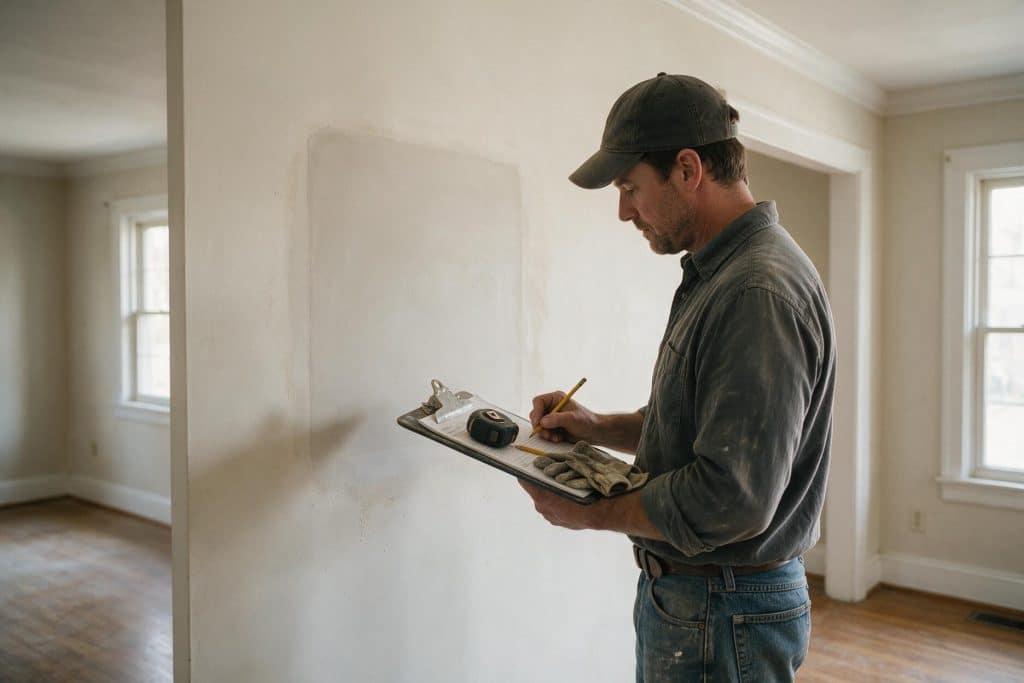
Nail pops and screw pops
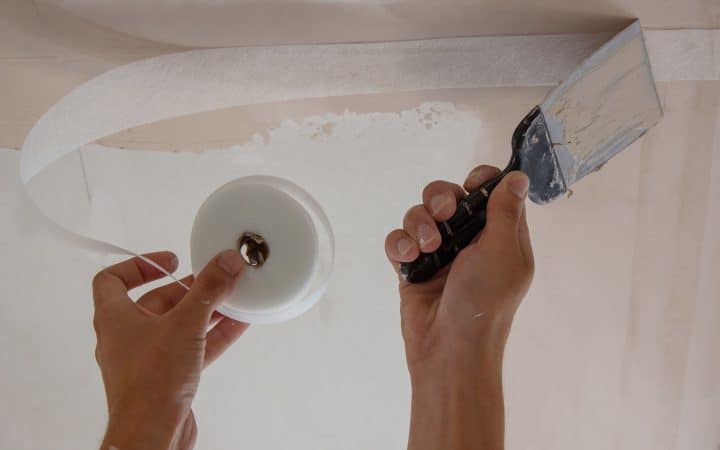
Cheapest thing on the list and the one people put off longest. A pro resets the fastener, adds a second screw about two inches away, and coats it. Ten pops in a room is still one visit, so the price barely moves: $150 to $300.
If pops keep coming back in the same ceiling, that is truss uplift or a framing moisture problem, not a fastener problem. Repainting it every spring is money thrown away.
Holes up to a fist
A 6 in hole takes a self-adhesive mesh patch or a California patch and three thin coats. $150 to $350. The spread is almost entirely texture: a flat painted wall is quick, a knockdown or orange peel finish needs a spray can, a test board, and a return trip if the pattern misses.
Large holes and cut-in pieces
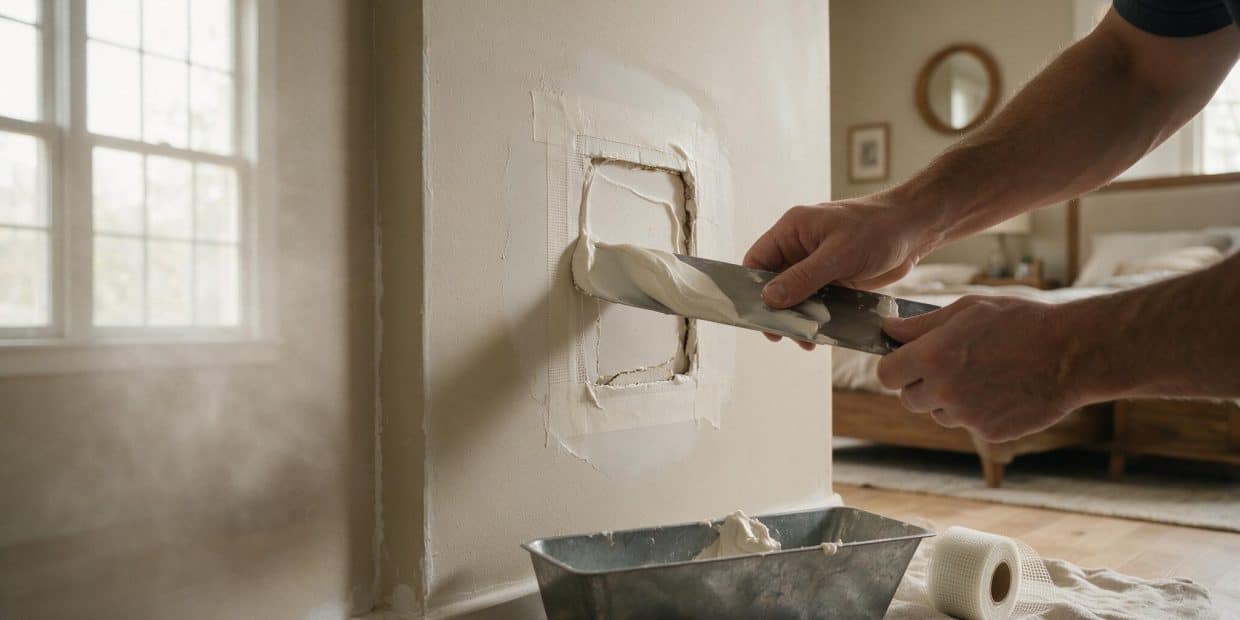
Past about 8 in, mesh stops being honest. The repair needs wood backing behind the opening, a cut piece screwed to it, then paper tape on all four joints. $250 to $500 for a wall, more if it is over 2 sq ft or the wall is above stair height.
Ceilings
Add 20 to 40 percent to the wall price for the same repair on a ceiling. Working overhead is slower, compound falls, and every ceiling in America seems to have a texture on it that has to be matched. Ceiling patches run $350 to $800.
Textured ceiling in a house built before 1980? Get it tested first
Sprayed textures applied before the 1978 US ban can contain asbestos. Do not scrape it, sand it, or cut into it to find out. A lab sample costs around $40. That test decides whether your ceiling job is a $600 repair or a job for a licensed abatement contractor.
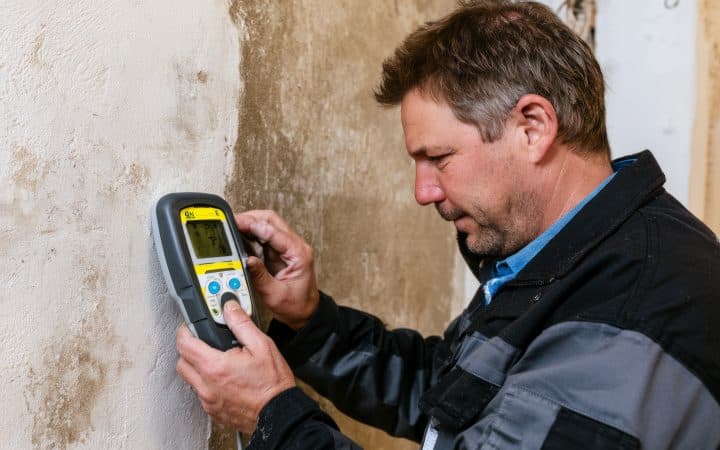
Same logic for water damage: if the wet area is bigger than roughly 10 sq ft and smells musty, the EPA treats that as a job past DIY scale. See moisture and mold before you open anything, and read our disclaimer on where my advice stops.
Cracks
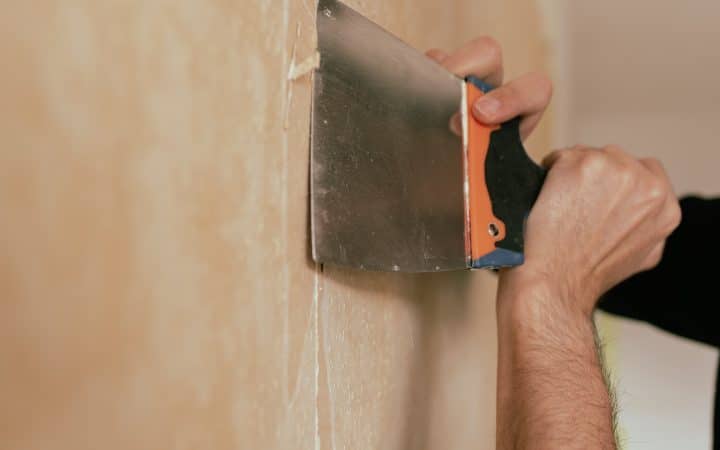
A hairline crack filled with compound comes back. Done right, the crack gets cut open, taped, and feathered 10 to 12 in wide: $200 to $400. Before anyone quotes you, the orientation matters. Vertical cracks over a door are usually shrinkage. Horizontal cracks, stair-step cracks, and anything wider than a credit card edge get an engineer, not a finisher.
Full sheet replacement
Remove, hang, tape, three coats, texture: $400 to $800 per 4×8 sheet. The board itself is $16 to $22. Everything else is time.
Drywall repair cost per square foot, and why I distrust it
Contractors quote new drywall installation at $2.00 to $3.50 per square foot, hung and finished. That number is useful when you are covering a whole room.
Applied to a patch, it produces nonsense. A doorknob hole is about 0.2 sq ft. Nobody is doing that for seventy cents. Divide a real $250 patch by its area and you get $1,250 per square foot, which tells you nothing except that the minimum charge swallowed the math.
Per square foot starts making sense at about 100 sq ft
Below that, ask for a flat price per repair. Above it, ask for a rate per square foot and check whether it includes finish level, texture, and paint. Those three lines are where quotes diverge.
The minimum charge nobody tells you about
Most drywall contractors carry a minimum of $150 to $250, and many will not book a single small patch at all. It is not greed. A half-day slot spent on one hole is a half-day not spent on a job worth $2,000.
What this means for you: one hole and eight holes cost close to the same. Walk the house, list every crack, pop, and dent, and hand over the whole list at once. I have written quotes where the eighth repair added $40.
Five things that move the price
- Texture. Matching knockdown, orange peel, or a hand-troweled finish adds $100 to $300 and sometimes a return visit. A flat wall is the cheap case.
- Height. Anything above about 10 ft needs staging. Add 15 to 30 percent.
- An occupied house. Masking furniture, containing dust, and cleaning up daily is real time. Empty rooms are cheaper to work in.
- What is behind the wall. A hole over a stud bay with wiring or a pipe stops being a patch and starts being coordination.
- Paint. Almost every quote I see prices the repair to primer only. Painting the wall corner to corner so the patch does not flash is a separate $150 to $400 per room.
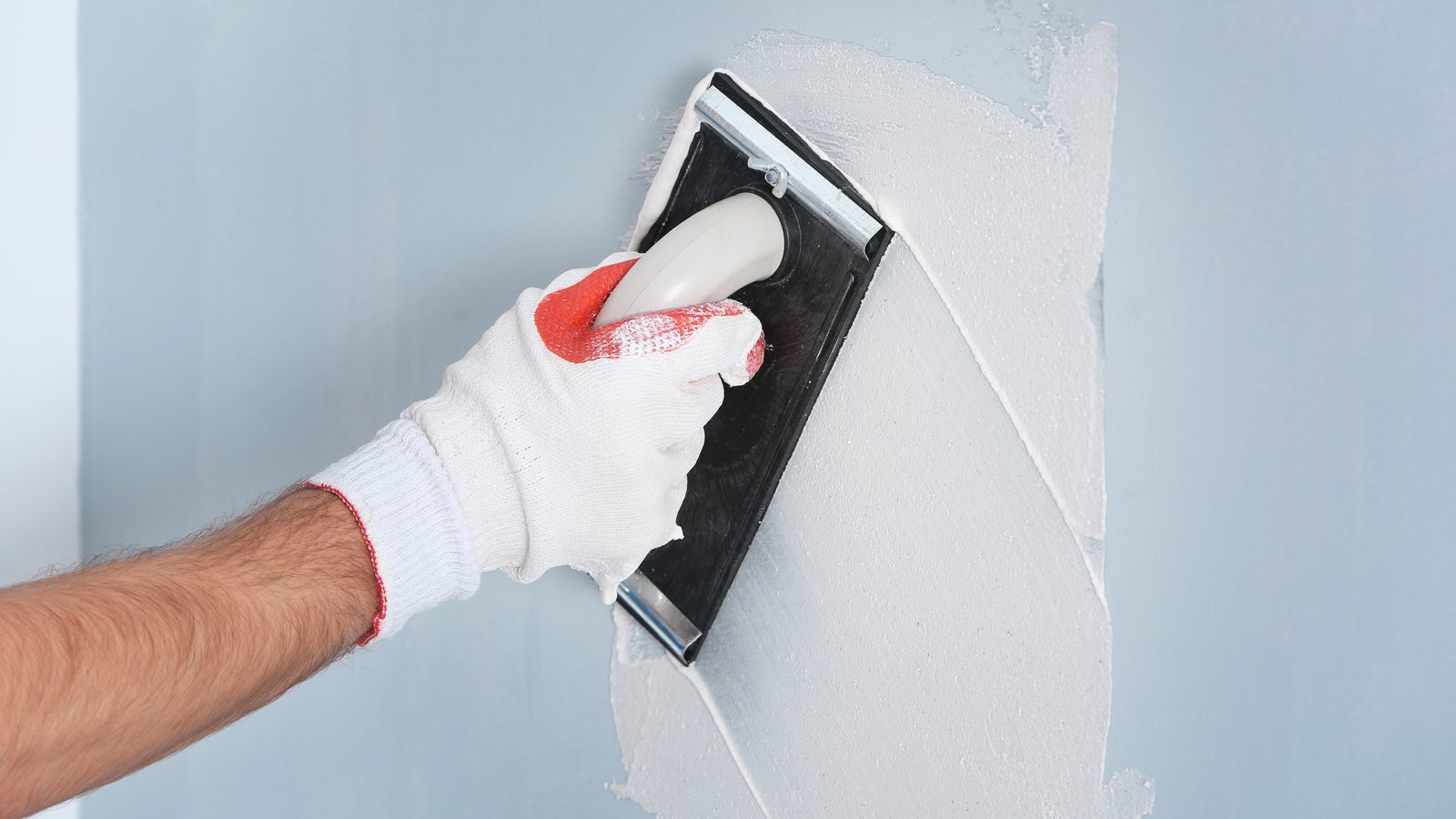
Finish level changes the price more than the hole does
The Gypsum Association publishes GA-214, which defines six levels of drywall finish, 0 through 5. Almost nobody outside the trade knows it exists, and it explains most of the arguments I have with clients after a repair.
- Level 3 is for heavy texture or wall covering. Cheap.
- Level 4 is the residential default: flat paint, light texture. Most quotes assume this without saying so.
- Level 5 is a thin skim over the whole surface. It is what you need under gloss, semi-gloss, or a wall raked by window light. It adds roughly $0.60 to $1.50 per square foot.
If your hallway has a window at one end and you paint it eggshell, a Level 4 patch will show. The repair was not bad. It was priced for a different standard than the one your lighting demands. Say the word “Level 5” when you ask for the quote and watch how fast the conversation gets precise. More on this in surface prep.
What the same repairs cost if you do them yourself
| Job | Materials only | Pro quote |
|---|---|---|
| Doorknob hole | $12 | $180–$350 |
| Ceiling water stain, sealed and painted | $28 | $250–$600 |
| Hairline crack, taped | $14 | $200–$400 |
| Full 4×8 sheet | $45 | $400–$800 |
| Skim coat, per sq ft | $0.85 | $1.90–$3.40 |
A gallon of premixed compound is about $18 and will outlive the repair. Paper tape is $4 a roll. A stain-blocking primer, which is the one product you cannot substitute on a water stain, runs $14 to $18 a quart.
When DIY costs more than hiring out
I am not going to pretend every repair needs me. A small hole in a flat painted wall in a closet is a Saturday and $12. Do that one yourself.
Where I see homeowners lose money is texture matching and large ceiling work. A failed knockdown match usually ends with the whole wall being skimmed flat, which is the expensive repair you were trying to avoid. Sanding an entire ceiling by hand, then hiring someone anyway, costs more than the original quote and a weekend.
My rule after 29 years: if the fix has to disappear under a light, and the surface is not flat and painted, get a price before you open the bucket.
How to read a drywall repair quote
-
Check how many coats are named
Three is the honest number for a taped repair. A quote that says “patch and finish” with no coat count is a quote that can be cut in half on site without lying to you.
-
Find the finish level
If GA-214 or a level number appears anywhere, you are dealing with someone who knows the standard. If not, ask which level is priced. The answer should be 4, or 5 if you have gloss or raking light.
-
Look for who paints
Priming the patch is not painting the wall. Confirm in writing which one you bought.
-
Ask about dust containment and debris
Sanding compound coats a room. Plastic, a shop vac with a fine filter, and hauling the old board away are real costs. If they are missing from the quote, they will either be missing from the job or added later.
-
Compare the minimum, not the total
Two quotes at $300 and $450 can invert the moment you add a second repair, because one contractor is mostly charging you to show up and the other is charging by the work.
How to get the number down
- Batch every repair in the house into one visit. This is the single biggest lever and it is free.
- Clear the room yourself. Furniture moved, pictures down, floor clear. That is 30 to 60 minutes you are not paying for.
- Book off-season. January and February are quiet in most markets. Quotes soften.
- Do your own painting. Ask for the repair primed only, then roll the wall yourself corner to corner.
- Accept a flat repaint of the wall instead of a texture match where you can. Skimming a small wall flat is sometimes cheaper than chasing a 1990s knockdown pattern.
Questions I get asked about drywall repair cost
Why is a small hole $250 when the patch kit is $8?
Because you are buying three trips across town and a finish that does not show, not the kit. Labor and travel are about 90 percent of that bill.
Does homeowners insurance cover it?
Sudden and accidental damage, often yes. A burst pipe usually is. Slow leaks, settlement cracks, and wear are usually not. Check your own policy rather than a stranger’s summary of one.
Handyman or drywall contractor?
A handyman at $60 to $90 an hour is the right call for holes in flat painted walls. For texture matching, ceilings, or anything over a couple of square feet, a drywall finisher costs more per hour and less per job.
How long before I can paint?
24 hours after the last coat of premixed compound in normal conditions, longer in a cold or humid room. Setting-type compound cuts that to a few hours, which is why we use it on jobs that have to finish in one day.
The patch shows through the paint. Who pays?
Depends on what was priced. A visible edge or a sanding scratch is a defect and gets fixed. A Level 4 patch flashing under a gloss paint or a raking window is a specification mismatch, and that argument is won or lost at quote stage. Which is exactly why the finish level belongs in writing.
Figures on this page are ranges collected from US supplier listings and contractor quotes in August 2026. They are not a quote. Regional labor rates move them, sometimes by half. I update the cost pages on the first of each month. If a number here is off in your market, tell me and I will correct it.