Most of the paint questions I get on a job site aren’t about color or technique. They’re some version of “can I touch this yet,” and the honest answer is almost never as simple as the number printed on the lid. A wall can feel bone-dry under your palm and still be nowhere near ready for a second coat, a piece of furniture pushed back against it, or a first real scrub down.
That gap between “feels dry” and “actually done” is where most avoidable paint failures start. Not bad paint, not bad technique, just the clock being read wrong. Latex paint that feels dry to the touch in about an hour can still take up to a month to finish curing, and every one of those in-between days matters more than most people assume.
Here’s what’s actually happening under that skin of paint at each stage, what changes the timeline in either direction, and what shows up on the wall later when one of those stages gets rushed.
Dry, ready to recoat, and cured are three different lines
“Is the paint dry” is really three separate questions wearing one trench coat, and mixing them up is how a good paint job goes wrong two days after it looked finished.
| Stage | What it actually means | What it does NOT mean |
|---|---|---|
| Touch dry | The surface skin has set enough that a light touch doesn’t transfer paint to your finger | Safe to recoat, safe to lean furniture on, safe to wash |
| Recoat-ready | Enough solvent or water has left the film that a second coat won’t lift, drag, or trap the layer underneath | The film has finished hardening all the way through |
| Fully cured | The paint has finished its chemical change (evaporation and coalescence for latex, oxidation for oil) and reached its final hardness | A stage most people wait for on purpose, since normal life on the wall doesn’t actually require it |
A technical bulletin from paint manufacturer Dunn-Edwards draws this same line: dry time is a surface event, cure time is the full chemical process, and the two are routinely off by weeks, not hours.
How long each stage takes, by paint type
Every can lists its own numbers, and the label is always the final word over anything general written here. But the ranges are consistent enough across brands to plan around.
| Paint type | Touch dry | Safe to recoat | Full cure |
|---|---|---|---|
| Latex / acrylic | 1-2 hours | 2-4 hours | 14-30 days |
| Oil-based | 4-8 hours | 8-24 hours (often just stated as overnight) | Roughly 7-10 days for an initial cure, continuing to harden gradually afterward |
Sheen changes the cure time too
Higher-gloss finishes carry more resin than flat paint, and more resin means a longer full cure, even though the touch-dry and recoat times barely move. A semi-gloss trim job stays more fragile for longer than a flat wall does, which is worth remembering before anyone leans a chair against freshly painted trim.
What actually controls the clock
The numbers above assume a fairly ordinary room. Move outside that range in any direction and the real wait time can stretch a lot further than the can suggests.
Temperature
Oil-based paint needs the room at or above roughly 45°F for a good 48 hours after application; latex wants roughly 50°F or warmer. Go colder than that and two different problems show up depending on how far it drops: paint thickens and both evaporation and oxidation slow down, or, in a sub-freezing swing, residual moisture in the not-yet-cured film can actually crystallize and ruin the finish outright.
Too hot does the opposite kind of damage. A wall in direct sun or a room running hot can let the surface of the film skin over before the paint underneath has had a chance to dry, which is exactly the setup for the bumps, blisters, and lifting covered below, except caused by heat instead of a rushed recoat.
Humidity
Water has to leave a latex film for it to dry, and humid air is slower to accept more water vapor, so every stage above simply takes longer in a muggy room. Push humidity high enough, especially paired with a cool surface, and the paint can develop a condensation problem on top of a drying problem: a blotchy brown or white discoloration from what’s called surfactant leaching, where water-soluble ingredients migrate to the surface instead of curing into the film.
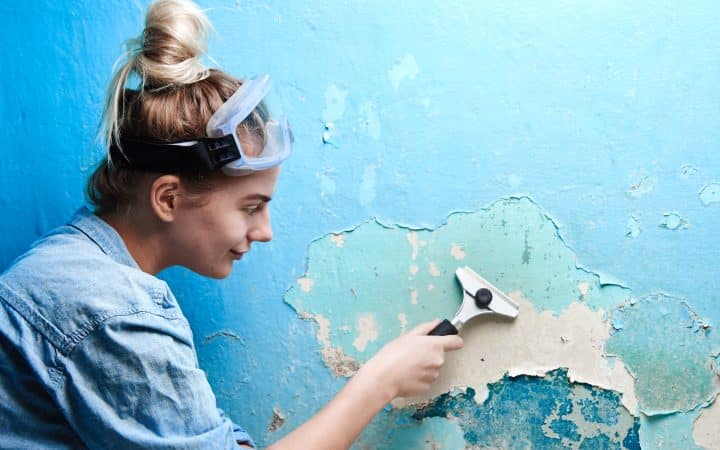
On a porous wall, that same excess moisture doesn’t just slow drying, it can work its way in far enough to cause the paint to lift or bubble once it does dry. Paint peeling off wall covers what that looks like once it’s already happened and how to tell it apart from the other common causes.
Film thickness and coat count
A thick, heavy coat doesn’t just look worse going on, it dries slower all the way through, because the surface can seal over while the paint underneath is still wet. Two thin, even coats dry faster and more consistently than one thick one, which is the opposite of what it feels like should be true when you’re trying to get a job done in a single pass.
Airflow
Closed windows and still air stack the humidity and temperature problems on top of each other. A fan, an air conditioner, or a dehumidifier all genuinely shorten the real-world wait, not by forcing the chemistry to finish faster, but by clearing the moisture-laden air that was slowing it down.
What recoating too soon actually does to the finish
None of this is about caution for its own sake. Each stage above gets skipped in a specific, recognizable way, and each one leaves a specific, recognizable mark.
| What shows up | Why it happens |
|---|---|
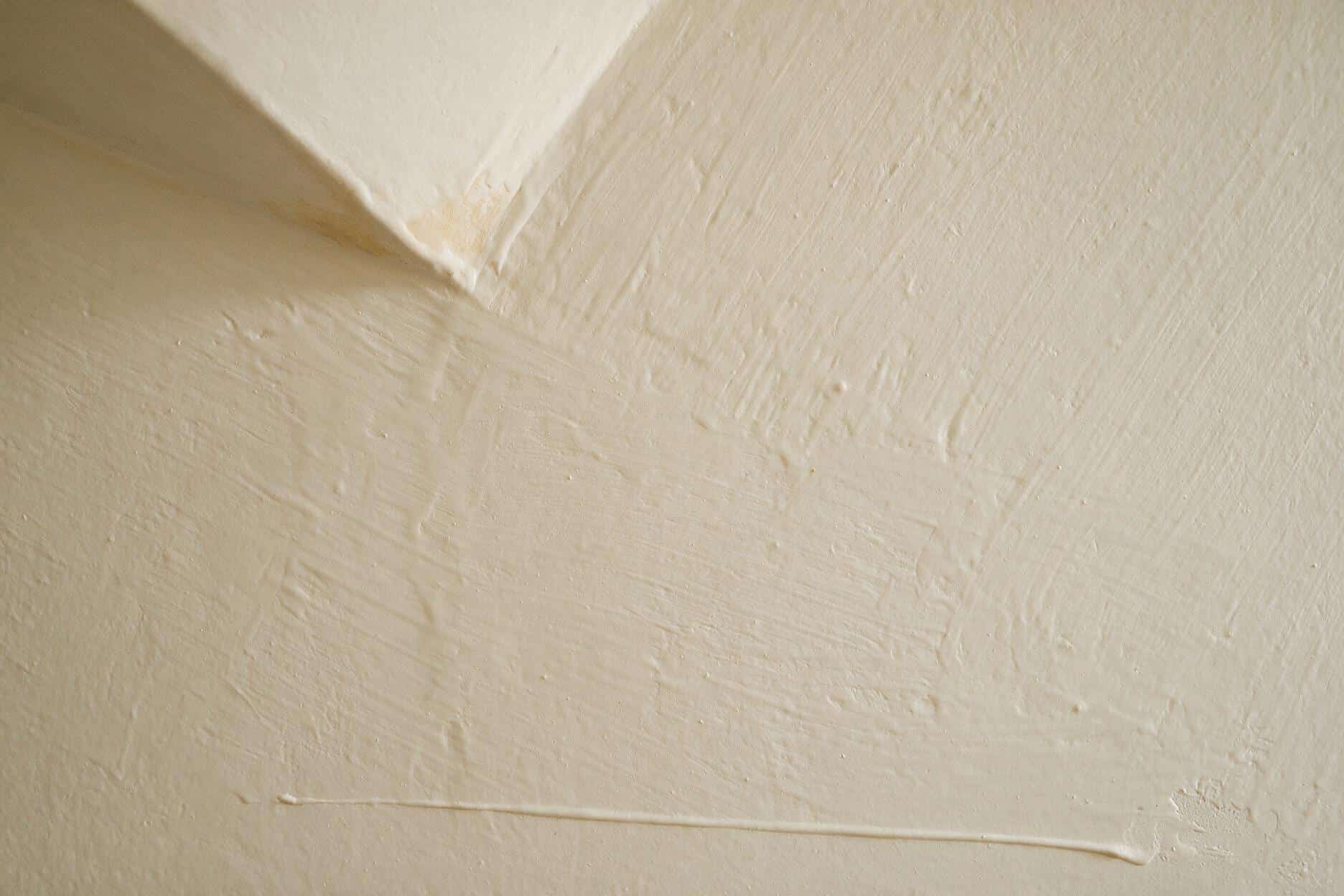
| Wrinkling or crawling | Solvent from the fresh coat soaks back into the still-soft layer underneath, which swells and raises the surface into a crinkled texture |
| Cracking or crazing | The outer face dries and shrinks faster than the paint still curing underneath, and the stress between the two shows up as fine surface cracks |
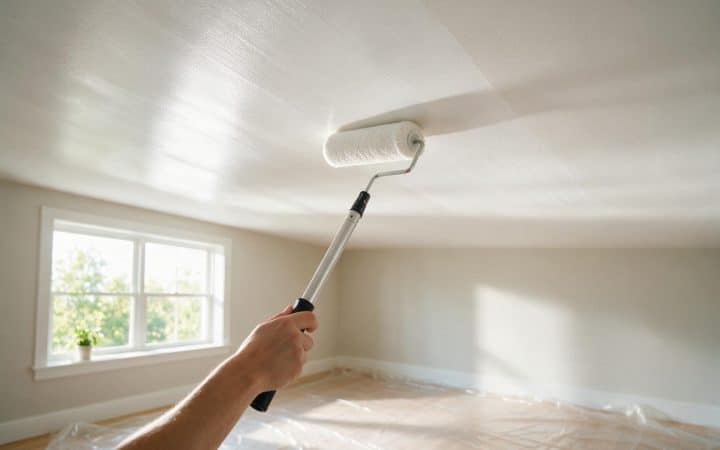
| Roller drag, streaks, and lap marks | The roller or brush physically drags the still-soft layer underneath instead of gliding over a set surface, leaving the pattern covered in how to paint a ceiling with a roller |
| Peeling or delamination, sometimes weeks later | The base coat is still shrinking as it finishes curing, and that ongoing movement pulls the topcoat away from underneath it |
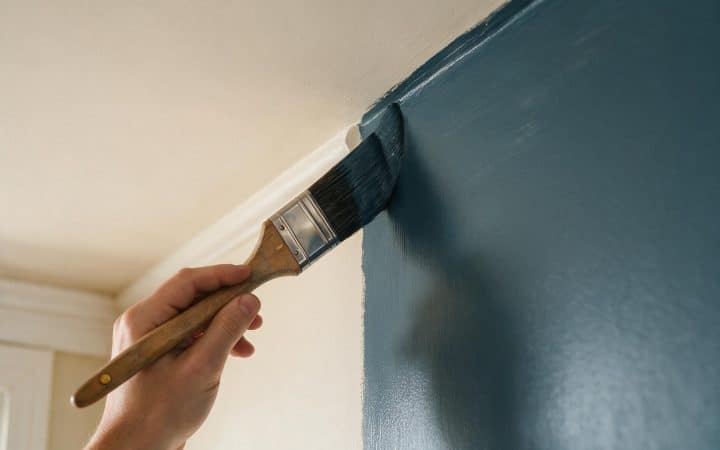
That last row is the one that catches people off guard, because the paint job can look completely fine for days or weeks before it lets go. It’s also why cutting in a clean edge a second time matters as much as the roller work: cutting a fresh line back into a first coat that hasn’t reached its recoat window is one of the more common ways an edge ends up visibly torn or doubled instead of crisp.
Ventilate for the cure, not just the smell
A fresh coat keeps releasing fumes well past the point it feels dry, oil-based paint longer than latex. Keep the room ventilated for the first day or two at minimum, and hold off closing a nursery or bedroom back up tight until the smell is genuinely gone, not just faint. This matters more than usual in a small or poorly-vented room.
A way to judge it that beats guessing
-
Start with the can, not a rule of thumb
The label reflects the exact formulation you bought, tested at a standard 70°F and 50% humidity. Everything else here is an adjustment on top of that number, not a replacement for it.
-
Use the fingertip test, but don’t trust it past what it actually tells you
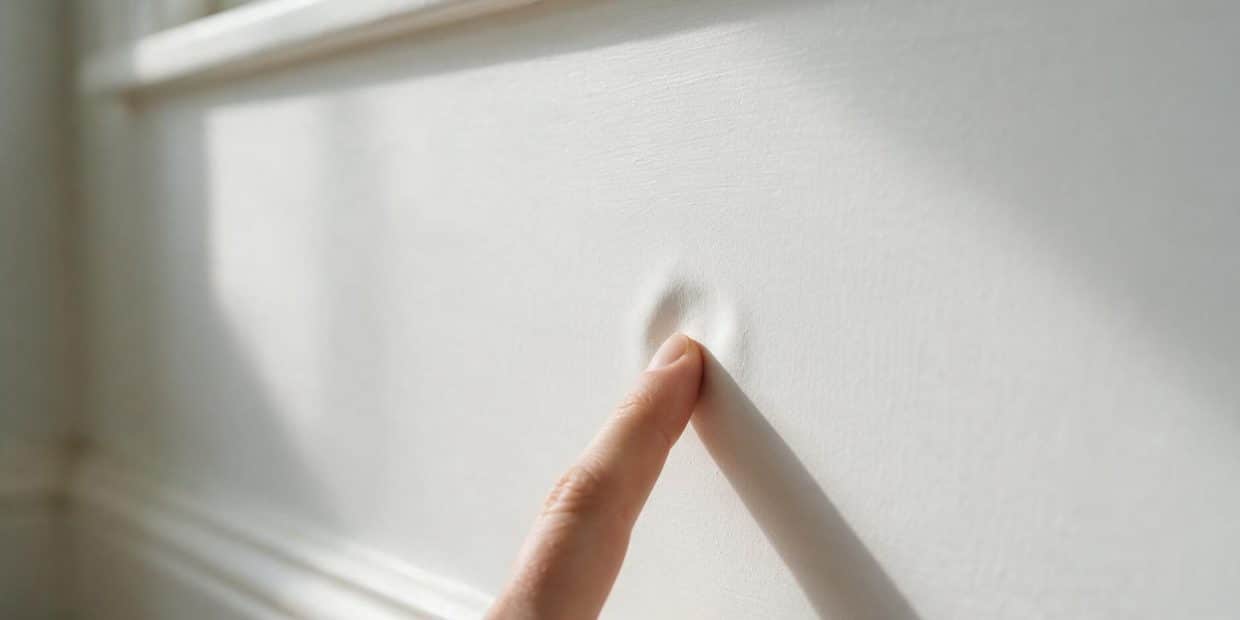
Press lightly in an inconspicuous spot. No transfer, no tack, no dimple means the surface is dry. It does not mean the recoat window has opened, and it’s nowhere close to full cure.
-
Check the room, not just the clock
Cold, humid, or still air pushes every number in this article later, sometimes by hours, sometimes by a full extra day. A cheap hygrometer removes the guessing.
-
Give cut lines the same patience as the field
It’s tempting to touch up an edge the moment it looks dry because it’s a small area. The paint doesn’t know it’s small; it’s on the same clock as the rest of the wall.
-
Let full cure win the tie
If a task can wait, let it. A day saved on the front end is a much smaller win than a redo caused by rushing the back end.
When it’s actually safe to wash the wall or push furniture back
This is the question the recoat window doesn’t answer, and it’s the one that trips people up on move-back day. A wall can be perfectly safe to recoat at four hours and still be far too soft to scrub, and a couch pushed tight against a wall before it’s cured can leave a faint permanent impression in the film.
As a rough guide: leave at least a week before the first real clean, and closer to the full 14-30 day cure window before anything gets scrubbed hard or wiped down often. How to clean flat paint walls covers the line between a light dust-off and a wipe-down aggressive enough to damage paint that hasn’t finished hardening yet. Furniture, picture hooks, and anything leaned or pressed against the wall for hours at a time are safest held off until that same window has passed.
Questions I get on site
Is paint dry if it doesn’t feel tacky anymore?
Dry to the touch, yes. Ready for everything else, not necessarily. Treat “not tacky” as the first checkpoint, not the finish line.
Can I paint a second coat the same day?
With latex, almost always, once the label’s recoat window has passed, usually a few hours. With oil-based paint, plan on the next day instead, especially in anything but warm, dry conditions.
Does a fan or heater really speed things up safely?
A fan or air conditioner that clears humid air, yes. A space heater aimed directly at wet paint is a different story: it can dry the surface film before the layer underneath has caught up, which sets up the same skinning-over problem covered above.
Why does my new paint still smell days after it feels dry?
Because dry and cured are different events. The film can feel completely set while it’s still releasing the compounds that carry the smell, which is exactly why the ventilation window in this article runs longer than the touch-dry time.
Does higher humidity really make that much difference?
Enough that a bathroom repaint in July and the same paint in a dry, air-conditioned room in October can land on noticeably different real-world recoat times, even from the same can.
I recoated once it felt dry and still got lap marks. What happened?
Touch-dry and recoat-ready aren’t the same checkpoint, covered above. The surface had set enough to stop transferring to a finger, but not enough to take a loaded roller without dragging the layer underneath.
Does the color or sheen change how long paint takes to dry?
Color, no. Sheen, yes, mainly at the cure stage: higher-gloss finishes carry more resin and take longer to fully harden than a flat paint in the same room, covered above.
Where this leaves you
Read the can first, adjust for the room you’re actually in, and treat touch-dry as a checkpoint rather than a green light. Everything that goes wrong in this article happens at the gap between what a wall feels like and what it actually is underneath, and that gap closes with time, not with a firmer touch test.
More on painting technique lives under painting technique, and what humidity does to a wall beyond the paint itself is under moisture and mold.